Braised Beef Shanks with Mushrooms
vote now

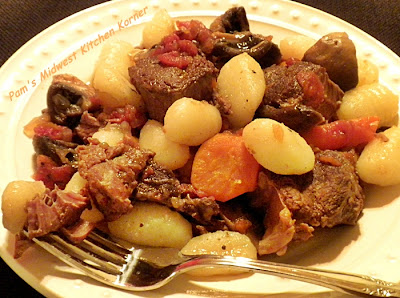
It?s a shame that the simpler cuts of meat are often the ones that are neglected by the food TV shows, restaurants and then by home cooks also, who pass over the not so fancy cuts of meat in their market. Cuts such as beef shanks are not only economical (mine were 89 cents per pound); they render inviting delectable flavors when cooked properly.

Braising is a great way to cook tougher cuts of meat. Braising is done by browning the meat on both sides in a hot skillet. This helps to seal the moisture inside the meat. Then the meat is placed in Dutch oven or pot with a lid and cooked with some liquid on low heat for a long time. The result is a juicy, tender dish with savory rich flavors.
There are no shortcuts here with cooking time. Just like the turtle, the long slow cooking wins the race. It?s the lengthy cooking time in the pot that allows the meat and vegetables to coalesce into robust flavors. Bill and I devoured his dinner with gusto. The meat was so tender it fell off the bone with each bite. It is a succulent hearty dish for yet another chilly windy evening!
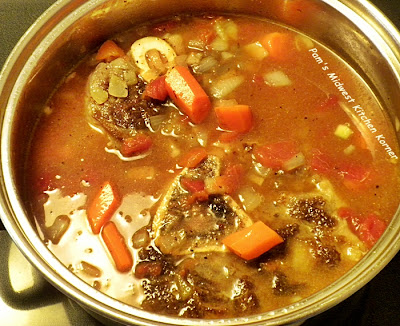
Braised Beef Shanks with Mushrooms
Ingredients:
1 tablespoon olive oil
2 bone-in beef shanks (about 2 pounds)
Salt and pepper, to taste
1 large onion, chopped
3 carrots, coarsely chopped
3 garlic cloves, minced
½ cup dry red wine or beef broth
1 (14-ounce) can undrained diced tomatoes with basil, garlic and oregano
1 cup beef broth
12 ounces button mushrooms, quartered
Gnocchi, small new potatoes or rice
Method:
Preheat oven to 275 degrees.
Season beef shanks with salt and pepper.
In a Dutch oven, heat olive oil over medium-high heat.
Add beef shanks and brown on both sides.
Remove beef from Dutch oven.
Add onions, carrots and garlic to Dutch oven.
Cook and stir for a couple of minutes.
Add wine and deglaze pan by scraping up any browned bits from the bottom.
Add undrained tomatoes, beef broth and beef shanks to pan.
Bring to boiling.
Cover and bake 5 hours or until beef is tender.
Add mushrooms the last 20 minutes of cooking time.
Meanwhile, cook gnocchi and strain well.
Remove beef shanks to a serving platter.
Strain vegetables from cooking liquid and spoon over meat.
Skim fat from cooking liquid and drizzle over beef shanks, vegetables and gnocchi.
ENJOY!!!
Be sure to visit my friend, Linda?s blog @My Kind of Cooking for great tips, recipes and cookbook giveaway!


Pam's Midwest Kitchen Korner
Comments