Farm Star Pizza in Chico

I have officially found my new favorite pizza place.
I’ve seen Farm Star Pizzaas I pass by on the Esplanade since it opened in November, but just hadn’t made my way through their doors yet. That was until fellow Chico food blogger Elise at Yum Foodie Foodie wrote a review with this to say: “So, my final word on Farm Star Pizza: GO. “
That was the final push I needed.
I only wish I went sooner.

Farm Star Pizzais owned by the same people who brought us The Red Tavern, a restaurant featuring locally grown, seasonal organic produce and meats. This same focus is seen at Farm Star Pizza, where their menu constantly changes with the season and availability of local ingredients. Now I’ve been eyeing Red Tavern for a long time, but their prices are just too high for a college student like me to afford. Farm Star Pizza is a great place to check out for local food at an affordable price.
The atmosphere of the restaurant is really awesome. It has a hip and trendy vibe to it. The coolest part is that they painted the tops of the tables with chalkboard paint. So while you’re waiting for your food you can doodle and keep yourself entertained.
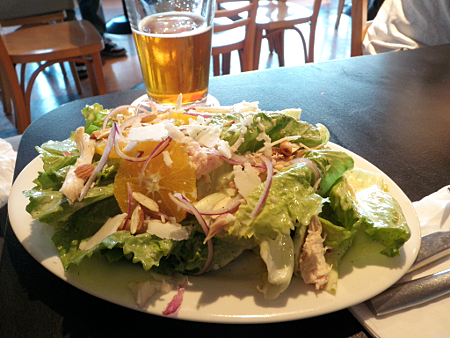
We started our night with the Go Away Winter! Salad($9.50) also known as the Spring Chicken Salad. It consisted of mixed lettuces, shredded smoked chicken, Sierra Nevada aged goat cheddar, oranges, toasted almonds, and shaved red onions. Then to top it off we threw on some extra parmesan cheese!
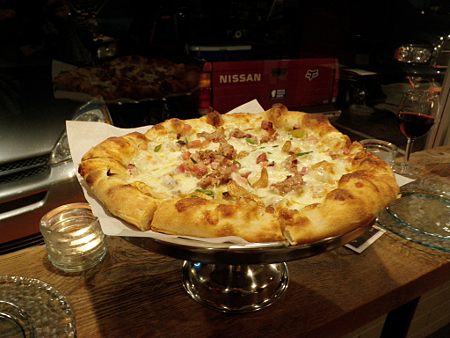
But this, is what I came for.
The Nanny Goat($14) This wonderful 14″ concoction was topped with bacon, goat cheese, roasted garlic, leeks, and scallions. Then if that wasn’t enough, we topped it with pork fennel sausage. It was an extra $2 more, but well worth it.
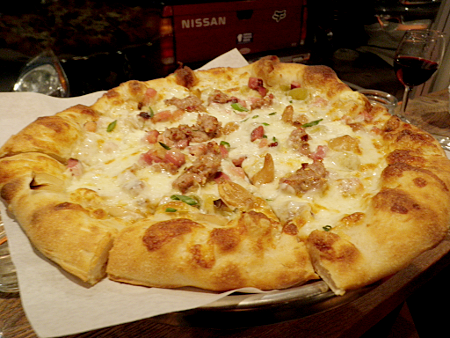
I have decided that this is the best pizza I’ve ever had in my life. Out of all the pizza places I’ve ever been, this was the best. The first bite was one of those moments where you ask yourself “why has pizza never tasted so good?” The cheese was absolutely amazing. The garlic was mild, but sweet. The sausage added a little bit of spice to the topping. And then there’s bacon, chunks of real thick cut bacon.
What really made this pizza spectacular was the crust. I love a good crust on my pizza and I feel like I’ve always been disappointed. Too crunchy, or way to often, too soggy. The crust was crispy around the edges, yet doughy and chewy in the center. Pure perfection.
I brought a piece home. I had to relive the experience the next day. In fact, the pizza was just as good the next day when I reheated it in the toaster oven. Still absolutely perfect.
I can’t wait to go again, but I don’t know what to try next. They have so many great pizzas! Green Eggs & Ham($14) with asparagus, coppa, parmesean, parsley, and a farm fresh egg. You know how much I love eggs. Though I’m not a fan of prawns myself, the Jaques($14) sounds good with garlic sauce, three cheeses, prawns, arugula salad, and lemon zest. There’s some really great sounding pizzas there, and there’s always going to be something new.
This is one of my new favorite restaurants in Chico and I highly highly recommend this to anyone living in Chico or just stopping by. It’s an awesome place for college students looking for affordable local, organic grub. And if you’re parents are visiting, a great way to impress them with the Chico lifestyle.
Farm Star Pizzais located at 2359 on the Esplanade in Chico. For more information, visit their website or check them out on Facebook.


Comments