Meringue lollipops - video recipe !


These cute lollipops are the perfect treat for any meringue lover ! Just go for it !
Ingredients
6
Estimated cost: 0.67Euros€ (0.11€/serving)
Materials
- wooden sticks
- Piping bag
- brush
Preparation
Preparation15 min
Cook time1 hour
 Whisk the egg whites at medium speed with half the sugar. When they start to form peaks, add the other half of the sugar.
 Whisk until it is very stiff and forms peaks.
 Put the piping bag into a deep container, like a glass, and using the brush, draw 4 lines in it with the food colouring.
 Fill the piping bag with the meringue, and form circles on a baking tray. Put a wooden stick in each one, like a lollipop.
 Bake one hour at 230°F (110°C). Ther eyou are, your meringue lollipops are ready !
FAQ ❓
What is the best way to achieve stiff peaks when making meringue?
To achieve stiff peaks, ensure that your mixing bowl and whisk are completely clean and free of grease. Whisk the egg whites at medium speed until they start to foam, then gradually add sugar while continuing to whisk until the mixture is glossy and holds stiff peaks.
Can I use different flavors or colors for my meringue lollipops?
Absolutely! You can experiment with various food colorings and flavor extracts, such as vanilla, almond, or lemon, to customize your meringue lollipops to your taste.
How do I store leftover meringue lollipops?
Store leftover meringue lollipops in an airtight container at room temperature to keep them crisp. Avoid refrigerating them, as humidity can make them chewy.
What can I do if my meringue is too runny?
If your meringue is too runny, it may be due to under-whipping the egg whites or not using enough sugar. Continue to whisk until you achieve the desired stiff peaks, or start over with fresh egg whites if necessary.
Can I make meringue lollipops without a piping bag?
Yes, if you don't have a piping bag, you can use a resealable plastic bag with a corner snipped off to pipe the meringue onto the baking tray. Just ensure the opening is small enough to create the desired shape.
Nutrition
for 1 serving / for 100 g
Calories: 104Kcal
- Carbo: 20g
- Total fat: 1.7g
- Saturated fat: 0.5g
- Proteins: 2.1g
- Fibers: 0g
- Sugar: 19.9g
- ProPoints: 3
- SmartPoints: 5
Nutritional information for 1 serving (37g)
Gluten free
 PetitChef_Official
 You may like

Santa claus meringues
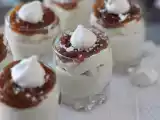
Mont blanc-style verrines with chestnut cream and meringue

Meringue christmas trees - video recipe !

Blackcurrant meringue pie

How to make meringue cookies?

Tartelette au citron meringue

The wonder of meringues

Vegan aquafaba meringues

Passion fruit meringue tart: one of the wicked desserts

Bourke street bakery's passion fruit meringue tart

Clementine meringue brulee: a diet dessert you'll crave

French meringue cookies
Questions
Photos of members who cooked this recipe
Comments
Rate this recipe:
5/5, 5 votes
Rate this recipe