Commandaria, the most ancient Cypriot wine, still in production

 During my recent trip to Cyprus we took a trip to my brother in law?s village. On our way, we passed from my mother’s village which is called Kyvides and is on the road which leads to the “krassohoria” which is the wine producing area of Limassol.
The settlement of Pano Kyvides, according to the Great Cyprus Encyclopaedia, ?existed at least from the Frankish period? and is linked to the medieval family de Quevides.
De Mas Latri mentions that during the Frankish period the village belonged to the Counts of Edessa. He also adds that in 1468, Pano Kivides, as well as the villages Lysos, Peristerona and Pelathousa were given as presents from the King of Cyprus James II to his mother Marietta of Patra. Regarding this action by James II, the Great Cyprus Encyclopaedia mentions that ?possibly King James had at the time acquired the village by Hector de Quevides (if the village belonged to him). Hector de Quevides, a kingdom official, had been executed by James for being a traitor a few years before (in 1461), because he had taken the side of James? opponent, queen Charlotte.?
The old village of Kyvides was destroyed by a major earthquake and the new village Pano Kyvides was built 3 km east of the old village in 1970 because of continuous landslips. As you may see from the collage the village has lots of new houses because it has a lovely climate and because of its proximity to Limassol, a lot of families build their summer or permanent houses there.
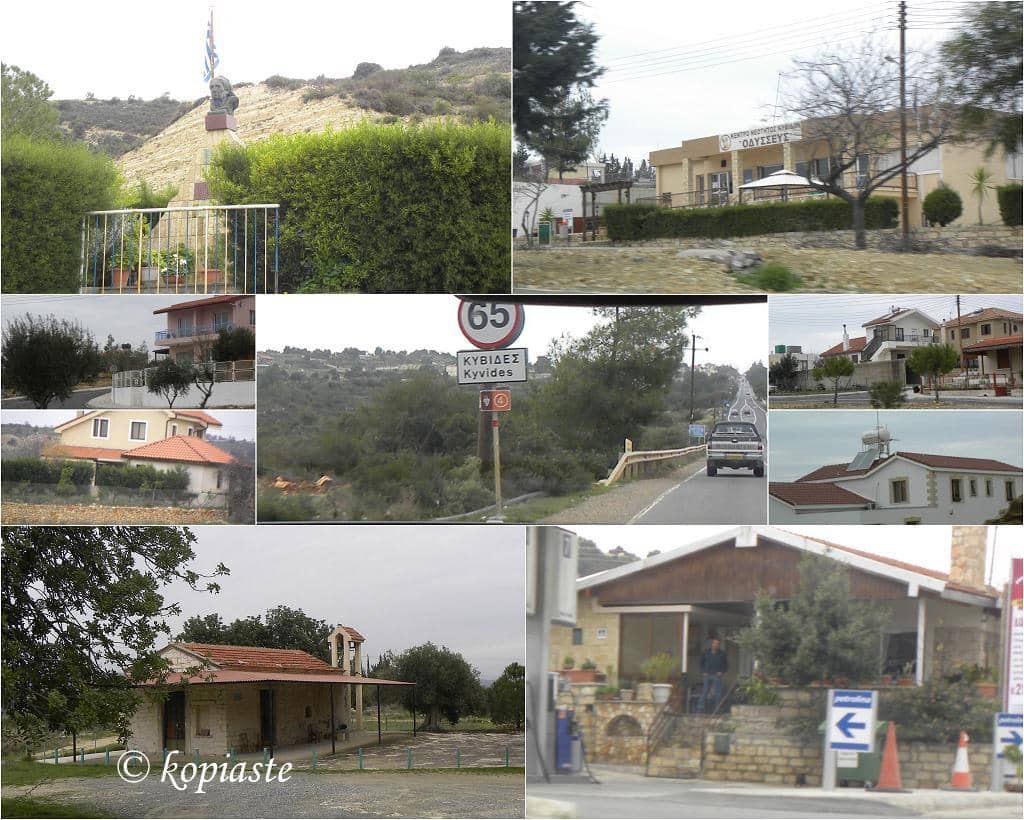
In the collage above, the monument of the old lady on the top left-hand side is the sculptured bust of a heroess, Aggeliki Sotiriou, known by the name Philimon, a woman fighter of Cyprus liberating fight of 1955-59, which is situated next to the medieval chapel of Stavrou (chapel of the Holy Cross), on a hill, just outside the village, picture on bottom left and the kafeneio (coffee shop) she used to own, bottom right corner of the picture.
Lemesos (Limassol) district is the center of the wine trade and wine making in Cyprus. The cultivation of the vine in Cyprus is as ancient as the roots of the people of Cyprus. The cultivation of the vine in Lemesos is also as ancient as the Kingdom of Amathus and Curium many centuries B.C.
It is a well known fact, confirmed by various historical references, that wine has been produced in Cyprus for over 4,000 years until now.
Ancient people, worshippers of nature and beauty, chose the famous wine producing island of Cyprus as the center for the adoration of Aphrodite the Goddess of fertility and love and of Dionysus the God of wine.
From the beginning almost all exports of wine and spirits were made from the port of Lemesos. Also in Lemesos there exists the region of Commandaria (in Greek ???????????), which is a de Facto wine with an appellation of origin. The method of making commandaria is basically the same today as it used to be many centuries ago. Also in the Lemesos district there are the two well known vine areas for the production of the quality table wines, Krasohoria and Pitsilia.
Lemesos is commonly recognized as the wine-making town of Cyprus and every September there is a Wine Festival taking place in the Municipal Garden. In 1987 the International Office of the Vine and Wine (O.I.V.) made a suggestion to declare Lemesos as the “City of Vine and Wine”.
The same year on October 31, during the General Assembly of the International Office of the Vine and Wine, which took place at Marino in Italy, Lemesos (Limassol) was declared as the “City of Vine and Wine” and the president of the International Office of the Vine and Wine, Mr. Mario Fregoni, awarded a medal and diploma to the Mayor of Lemesos.
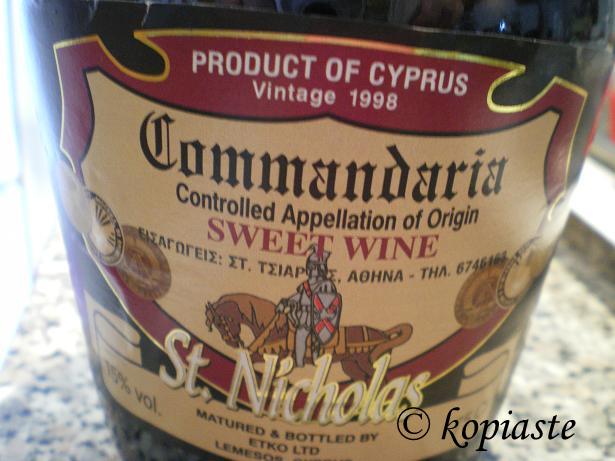
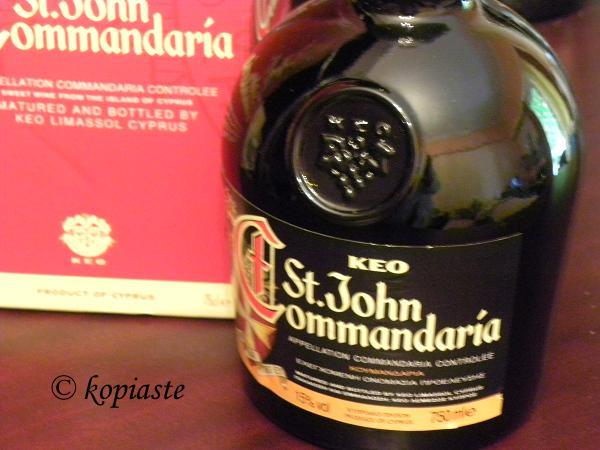
Commandaria, which is one of the best Cypriot wines, is a sweet dessert wine, produced in Cyprus for millenia, made from sundried grapes, xynisteri and mavro (black). In fact it has been documented since the 8th century b.C., by the Greek poet Hesiod, who named it Cypriot Manna. The name Commandaria was given much later, during the 12th century A.D. Thus it has the distinction of being the world’s oldest named wine still in production.
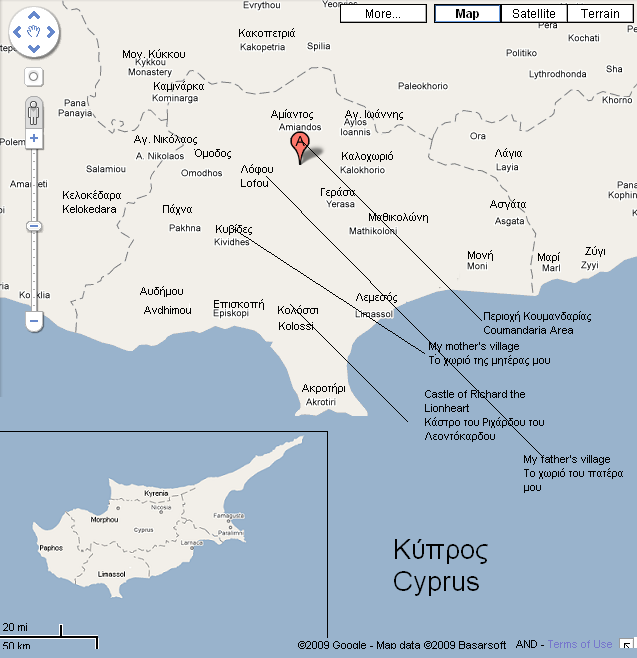
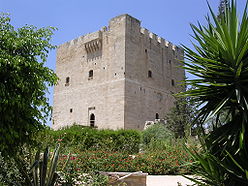
The history of this wine is that during the crusades, Richard the Lionheart, on his way to the holy lands in 1191, had to stay on the island after great thunderstorm. He and his men disembarked at the port of Limassol where he stayed and soon conquered the island. He built his castle in Colossi (my maternal grandmother was from this village) and during his wedding with Berengaria, they greatly enjoyed this local red wine. Richard the Lionheart pronounced Commandaria as the ?wine of the kings and the king of the wines?.
By the end of the century, he sold the island to the Templar Knights, who then sold it to Guy de Lusignan. However, they kept a large feudal estate close to Limassol, where they would cultivate vines. This estate was referred to as ?La Grande Commanderie?, to distinguish it from two other smaller estates, one close to Paphos and the other near Kyrenia. The knights learned to produce this local wine and when they started exporting it to the royal courts of Europe, it was then referred to as the wine of the Commanderie, which then became known as Commandaria and the area where it was produced is now known as the Coumadaria region.
It has been ascertained that in the 15th century vines from Cyprus were planted in Madeira by the Portuguese, whence the Madeira wine has been produced, similar to the Cyprus ?Commandaria?. This information is also written on the bottles of Madeira wine. Something similar is the case of the Hungarian Tokay wine which is similar to a good ?Commandaria?. The Marsala wine also seems to be a copy of ?Commandaria?. Thibaut IV the most renowned Count of Champagne, returning from the Crusades came to Cyprus to visit his cousin, Alice, Queen of Cyprus. In Cyprus it seems he was overwhelmed by its vineyards, its wines and its roses because it was looked upon as the most acceptable and covered present to be given, vine and roses. The vines were planted in the area of the Marne and from these grapes the world-famous Champagne was produced.
Sources: Wikipedia, Limassol Municipality, Pano Kyvides Community, Cyprus Wine Museum, Google Maps.
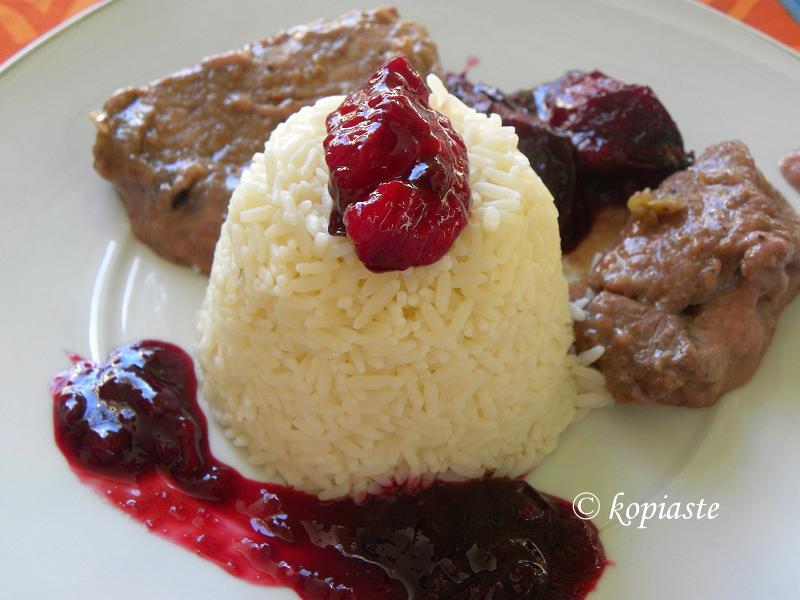
Commandaria braised Pork with leeks and plum sauce
I have experimented with Commandaria a lot of times, although I have not posted many recipes.
This is a recipe I made during last summer, when I was experimenting a lot with poached fruit and wine. I cooked the pork in a sautéing pan together with leeks and spring onions and cooked it with Commandaria wine and pomegranate or cranberry juice. The plumbs were poached separately and some of them were added to the dish when it was almost cooked. After cooking the meat, it was removed from the sautéing pan and everything in the sautéing pan was pureed in a food processor. I then prepared a roux and added the pureed ingredients to make the sauce, to which I added the meat again.
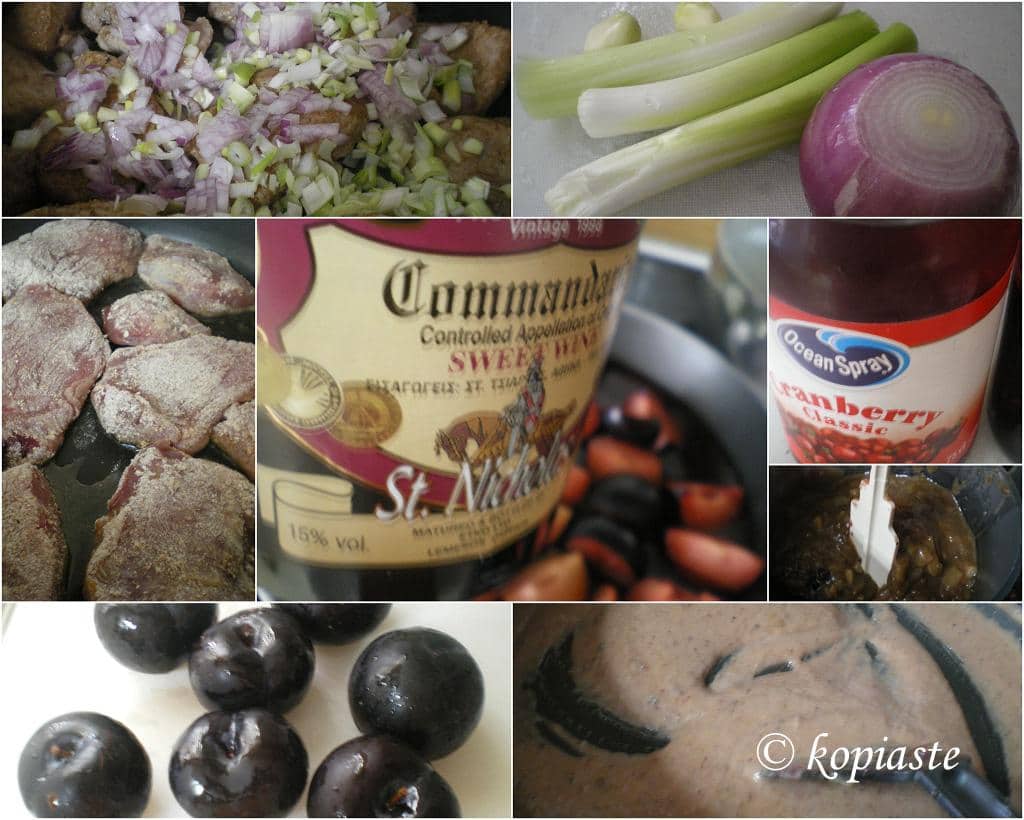
I am sorry I am not posting the recipe but I have to keep some of my recipes, that will go in the cookbook, unpublished.

 a2a_linkname="Commandaria, the most ancient Cypriot wine, still in production";
a2a_linkurl="http://kopiaste.org/2010/01/commandaria-the-most-ancient-cypriot-wine-still-in-production/";
Comments
anonymous
You are full of shit.