First Birthday Cake for Ruben
vote now
This is the first "1st Birthday" cake I've made, and sold today. I desperately undercharged after I thought about my ingredients and the time I put into the cake, but that's alright. I knew the customer and it was great practice with the fondant. Now I know why most cake decorators buy the crappy tasting stuff. Oh well- I'd rather be proud of the work and the taste.
This is a moist chocolate cake with vanilla buttercream filling, covered in buttercream and fondant. It's the same cake I'm making today and tomorrow for a Christening which I'll post by tomorrow.
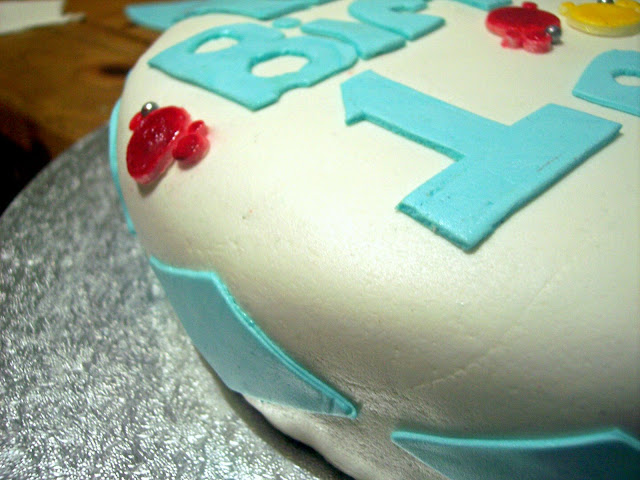
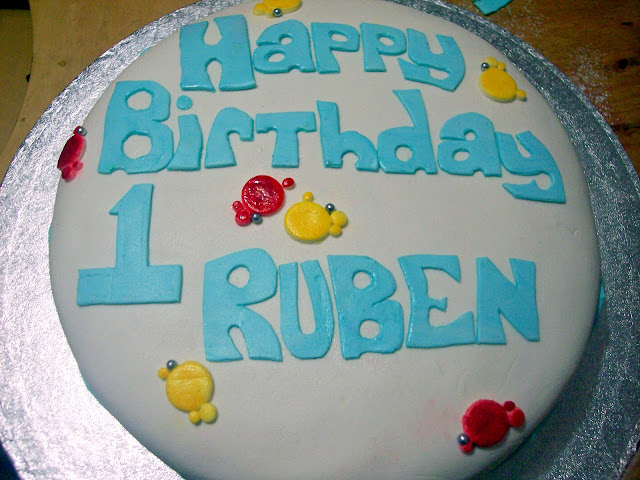 Again, I apologize for the quality of the photos. I blame it on lack of natural light this dim winter! I'm mostly annoyed that the light/flash bounces off any of the moist bits- those decorations don't actually appear so wet. The letters on this one were probably a tad too big. I wasn't completely happy with the text. I want to get some letter punches, but sometimes the bubble letters turn out great (see the 'Breda' cake). The customer was delighted, though, so that's all that matters!
I should also announce that I recently won the theme contest on the BakeBakeBake community on Livejournal for my LLL cake. Not so much the decoration but the cake/recipe. I won 2 months paid LJ account :)
This is a moist chocolate cake with vanilla buttercream filling, covered in buttercream and fondant. It's the same cake I'm making today and tomorrow for a Christening which I'll post by tomorrow.
Again, I apologize for the quality of the photos. I blame it on lack of natural light this dim winter! I'm mostly annoyed that the light/flash bounces off any of the moist bits- those decorations don't actually appear so wet. The letters on this one were probably a tad too big. I wasn't completely happy with the text. I want to get some letter punches, but sometimes the bubble letters turn out great (see the 'Breda' cake). The customer was delighted, though, so that's all that matters! I should also announce that I recently won the theme contest on the BakeBakeBake community on Livejournal for my LLL cake. Not so much the decoration but the cake/recipe. I won 2 months paid LJ account :)
Boho Kitchen Bakery. Wedding, Occasion, Birthday, Cakes, Cupcakes in Waterford, Ireland.
Comments