Saturday's Cake - Apple Crumble & Custard Muffins
vote now

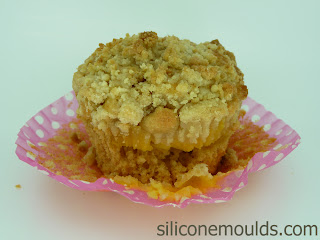
Most (but not all) Saturdays I make some sort of cake or treat to take into work. The shop is only open for a couple of hours on a Saturday and many customers that come have traveled a long way. It's nice to be able to offer a nice fresh cup of coffee and a cake....
This one was a bit of a last minute brainwave. So last minute that by the time they came out of the oven, I was running about 20mins late. Thankfully, Colin and Martin were already in the office. No one noticed I was late on arriving - they only noticed hot cakes !
We've got some new 12 cell HOT PINK silicone muffin / cup cake pan moulds in. This colour has been extremely popular over the last year in 24 mini muffin size and customers have been requesting the larger size so they can have a matching set.

Didn't I warn you it was bright ? Takes normal, standard muffin papers.
We also now have a large selection of paper cases in mini, standard and American Jumbo muffin papers in our online shop.
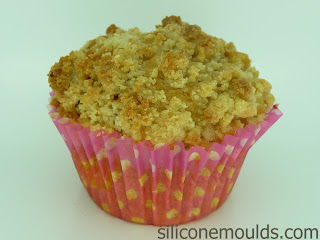
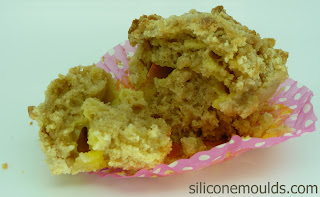
As you can see - the crumble topping worked really well and the hidden custard layer in the inside was really yummy. These are best eatem warm, but are perfectly nice cold too.
The muffins were very moist and this one kept 36 hours whilst waiting on being photographed (before being demolished this evening by the little cake tester....)
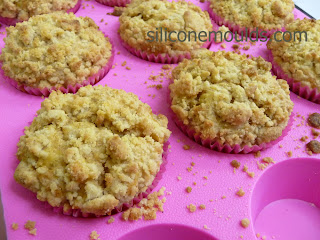
?Apple Crumble Muffins
(base muffin recipe adapted from MUFFINS, FAST AND FANTASTIC)
250g plain flour
1 tablespoon baking powder
1/2 tsp salt
2 tsp cinnamon
160g caster sugar
1 egg
190g of chopped eating apple
150ml milk
90ml vegetable oil
ready made custard (omit if you don't fancy it)
crumble topping was soft brown sugar, butter and flour (almost equal amounts) - I didn't weigh any of this... just winged it ! Rub together until it starts to bind and form lumpy crumbs.
Preheat oven to 180deg C. Basically, mix wet ingredients into dry and mix just enough to combine.
Spoon 1/2 of the batter into the paper cases. Spoon on a couple of heaped teaspoons of the custard into each case before adding the rest of the batter. Cover with a generous amount of crumble topping - enough to cover the batter and a bit more for luck :-P
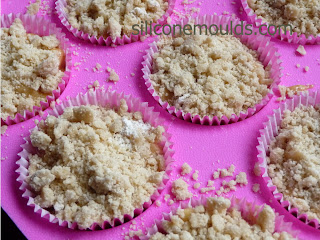
These are mine before baking. Bake for approx 20 > 25 mins until the top is taking on a little colour. Due to the custard, using a cake tester would be pointless. These came out the oven at 23mins.....
Enjoy !
Sarah-Jane Nash, a happy baker - http://www.siliconemoulds.com/ - the silicone bakeware cookshop, Norfolk, UK

SiliconeMoulds.com - See What's Cooking !
Comments