Why do we call it a 'bar'? The unexpected history of the everyday place where mornings begin
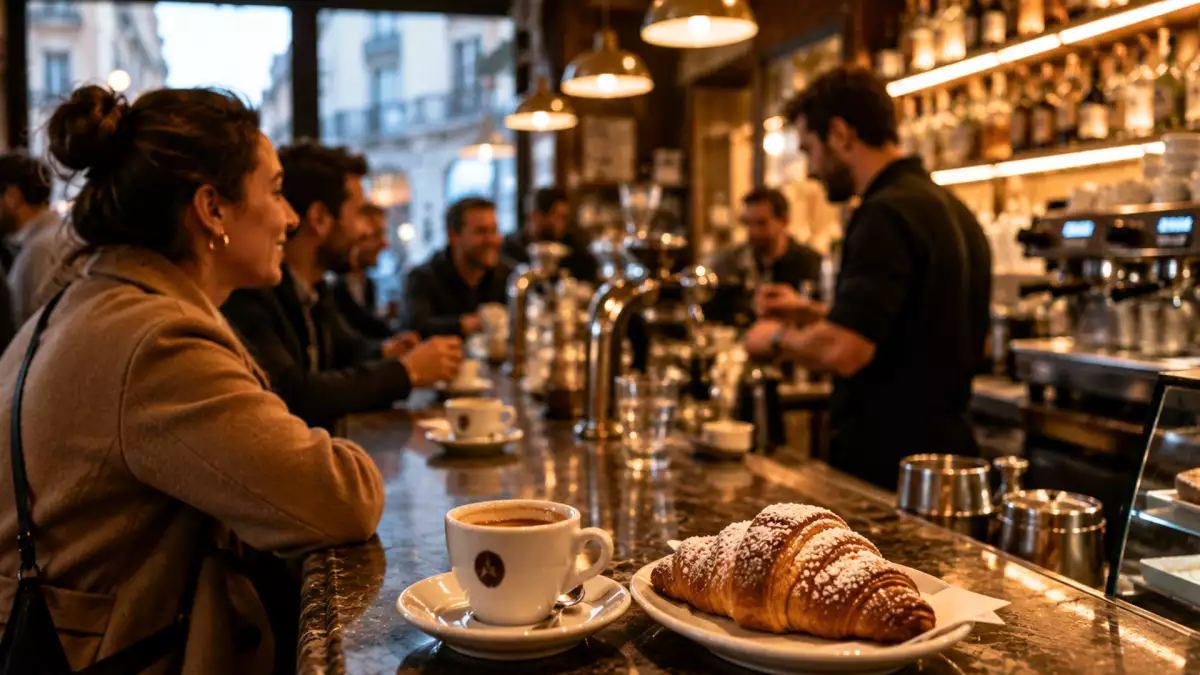
The word bar is derived from the English "the bar", which literally means "the bar." It originally denoted precisely the physical structure that separated the customer from those serving alcoholic beverages in Anglo-Saxon pubs. Over time, however, the term stopped identifying only the bar and became the name of the entire establishment.
In Italy, the bar has taken on a meaning all its own: it is not simply a place to have a drink, but a true daily ritual. Just think of the quick breakfast with cappuccino and cornetto, the espresso taken on the fly before work or the mid-morning break shared with colleagues and friends.
The bar as a symbol of modernity
The success of the bar is also linked to changes in modern society. With an increasingly fast pace, the coffee shop has become the perfect place to indulge in a short but intense break.
Coffee, consumed quickly at the counter, almost represents an answer to the hectic times of contemporary life: a few minutes to recharge, regain energy and restart. It is an immediate, accessible and everyday form of pleasure.
It is no coincidence that the Italian model of the bar is often associated with urban productivity: go in, order, drink an espresso and leave. A simple gesture that punctuates the days of millions of people.
A small microcosm is born behind the counter
Yet the bar is not just about speed. Right around the bar is created a small social microcosm of encounters, jokes, habits and relationships.
There are those who pass by every morning at the same time, those who exchange a few words with the bartender, those who comment on the news of the day over coffee. Even in a few minutes, the café manages to create a sense of familiarity that is hard to find elsewhere.
The counter, from which the bar's very name is derived, thus becomes a shared space where different people constantly cross paths. It is a spontaneous, fast-paced but authentic sociality.
The difference between bars and cafes: two different ways of experiencing time
We often use the terms cafe and bar as synonyms, but historically they are not the same thing.
The traditional café was thought of primarily as a place to linger: one sat at tables, read the newspaper, and discussed politics, art, and culture. They were slow environments, dedicated to conversation and reflection.
The bar, on the other hand, was born with a more dynamic identity. The protagonist is the counter, not the table. One enters quickly, consumes something standing and leaves again.
This difference also tells of the evolution of society: from the slow time of historic cafes to the rapidity of modern life, but without losing the need to socialize.
Why the bar continues to be so important
Even in the age of smart working and breaks consumed in front of the smartphone, the bar continues to maintain a central role.
Perhaps because it offers something beyond just a drink: a brief interlude in the day, a moment of human contact, a small reassuring habit.
And it is curious to think that it all originated from an English word that meant only a "counter." Today that counter has become one of the most recognizable symbols of Italian everyday life.
 Daniele Mainieri
Comments