Heirloom Sugee (Semolina) Cake

First it was Tiger Wood. In our backyard, we've got Jerk Jack Neo. These scandals had got me wondering secrets that people keep.
Haha, lucky for my friends, I am only interested in their kitchen secrets.
That day, I was chatting with to my malay colleague... and not sure how the subject went to sugee cake. I said "Yucks", relating an experience I had with the cake after a baking class. I still have the recipe that was handed out but let's just say I am more than happy to forget about cake!
In any case, I have to say that Sugee cake is either a love or hate affairs. No middle ground.
My dear fren, in her feeble attempt to convert me, offered to give me the recipe that her mum have perfected after decades of baking. "This cake is one of her best seller", R said in a very determined tone.
She added her mum uses Planta (a margarine), not butter, to make this cake She swears the cake tasted better than to the one using pedigree butter Lurpak! I have never been a great fan of margarine, so I stuck to my guns.
In any case, I have to say that Sugee cake is either a love or hate affairs. No middle ground.
My dear fren, in her feeble attempt to convert me, offered to give me the recipe that her mum have perfected after decades of baking. "This cake is one of her best seller", R said in a very determined tone.
She added her mum uses Planta (a margarine), not butter, to make this cake She swears the cake tasted better than to the one using pedigree butter Lurpak! I have never been a great fan of margarine, so I stuck to my guns.
That is, yesterday, when it was raining cats and dogs on a Sunday afternoon. Can't think of any exciting activity to do on a wet day, so I took out this recipe (with a little skepticism though) and decided to give it a go.
After 30 mins in the oven, I smiled, and knew I am going to thank my dear colleague the next day!
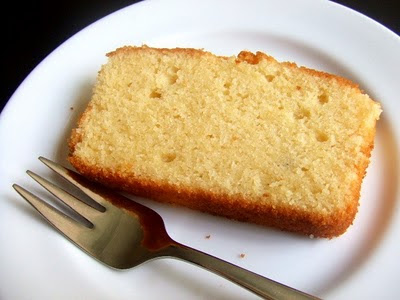
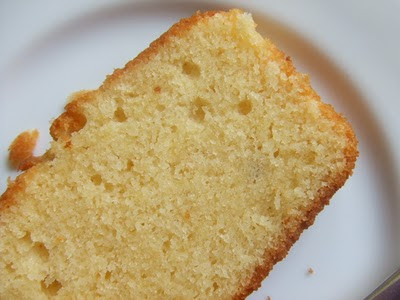
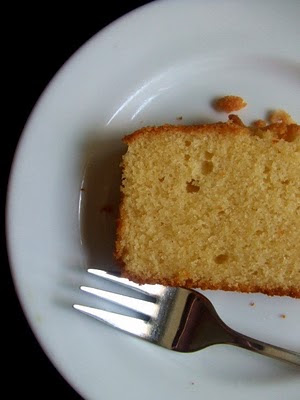
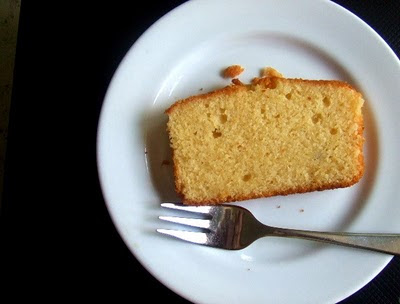
This is the richest, most flavourful cake I have ever baked. Its crumb is so moist and tender. The grittiness from semolina flour adds interesting bites! Even J who does not usually like cakes, can't resist a second helping.
Curosity got the better of me; I took out my workshop recipe and list all the ingredients on an excel spreadsheet to find out what makes this cake a gem.
Basically they contain about the same ingredients, using solid fat (either butter or margarine), self rising flour & semolina flour for structure, castor sugar to sweeten, almond meal for flavour, eggs for leavening and some liquid (one using milk while the other using water).
As for the method, the workshop recipe first mix semolina in butter for the flour to soak up the fat. Egg white and yolk is beaten separately before they are folded together with all the dry ingredients.
My friend's heirloom recipe uses a simply creaming method before folding this into a meringue.
Basically they contain about the same ingredients, using solid fat (either butter or margarine), self rising flour & semolina flour for structure, castor sugar to sweeten, almond meal for flavour, eggs for leavening and some liquid (one using milk while the other using water).
As for the method, the workshop recipe first mix semolina in butter for the flour to soak up the fat. Egg white and yolk is beaten separately before they are folded together with all the dry ingredients.
My friend's heirloom recipe uses a simply creaming method before folding this into a meringue.
From layman point of view, the difference is really minute... if you count the little more butter, less almond meal, 1 egg yolk and evaporated milk as their key differences
My dear fren, if you are still reading this, I have to apologise to you. I can't post the recipe here, but if you are keen, I gladly bake you a loaf. Just let me know, k.
My dear fren, if you are still reading this, I have to apologise to you. I can't post the recipe here, but if you are keen, I gladly bake you a loaf. Just let me know, k.

Happy Cup
Comments