Is your oven full of encrusted grease? The easy way to clean it without chemicals
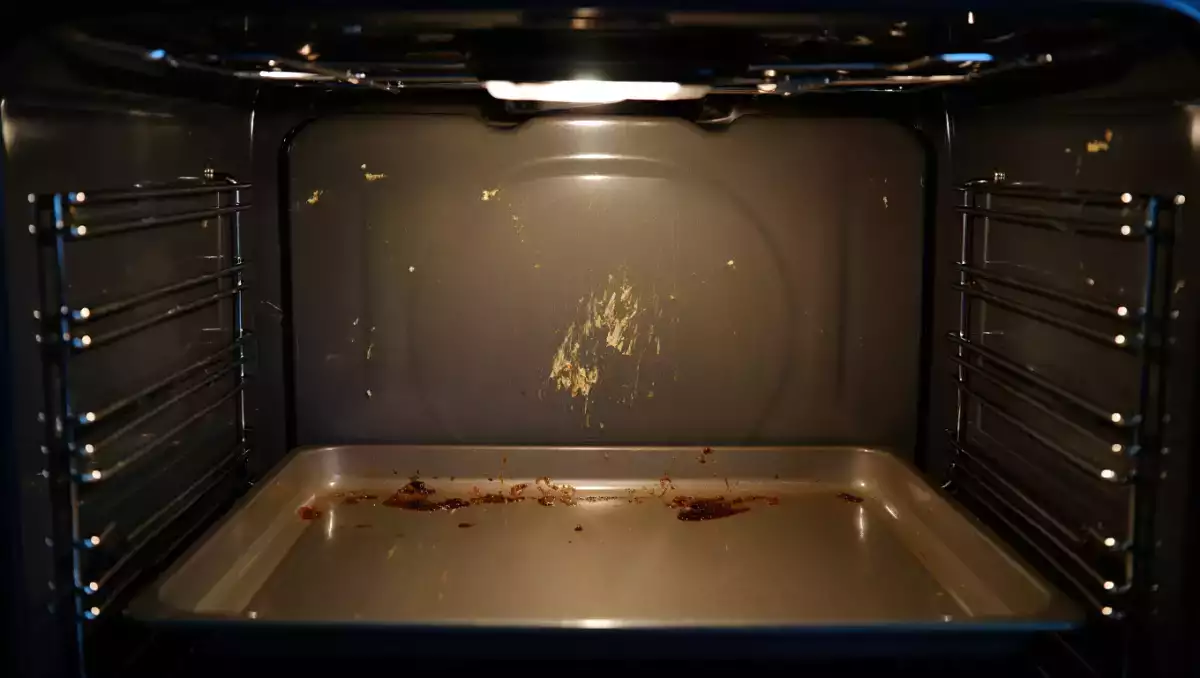
We all put it off. The oven starts to smoke a little, there’s that faint smell of burnt grease every time you bake… and you tell yourself, “I really need to clean this one of these days.”
Why does oven grease get so stubborn?
Every time you roast or bake, splatters of fat and juices hit the walls and floor of the oven. With repeated high heat, those splatters bake on and carbonize. Over time, this builds up into a hard, sticky, sometimes almost black layer that a regular sponge won’t touch. The longer you wait, the more those residues cook and recook; so yes, it really does get harder to clean the more you delay it.
The simple trick: baking soda + hot water
The easiest, safest method relies on a classic pantry staple: baking soda.
In the U.S., both the EPA and many cooperative extension services often recommend baking soda as a gentle, effective household cleaner thanks to its mild abrasiveness and alkaline pH (great against grease).
How to do it:
- Mix baking soda with a little hot water to form a thick paste.
- On a cool oven, spread this paste over the walls, floor, and door. Focus on greasy spots.
- Let it sit for several hours, ideally overnight.
- The next day, wipe down with a damp sponge or cloth, rinsing as needed.
The baking soda helps loosen and lift baked-on grease without scratching the enamel and without leaving harsh chemical residues. It’s one of the safest ways to clean an oven if you want to avoid strong chemical products.
Why it works
Baked-on grease is best attacked in an alkaline environment. Baking soda is mildly alkaline, which helps break down fats and loosen their grip on the surface.
Unlike heavy-duty oven sprays (which often use much stronger bases and solvents), baking soda:
- doesn’t release irritating fumes,
- is safe to handle (though gloves are still nice if you have sensitive skin),
- and rinses away easily.
For very dirty ovens: add steam
If your oven is really crusted with old grease, one extra step can help:
- Fill an oven-safe dish with hot water and add a good splash of white vinegar.
- Place it in the oven and heat to about 200°F (90–100°C) for 20–30 minutes.
- Turn off the oven and let it cool until it’s just warm.
- Then apply the baking soda paste as above and let it sit.
The steam softens the grime; the vinegar helps cut through some grease and mineral residues. In the U.S., white vinegar is widely recommended by consumer and extension organizations as a non-toxic helper for everyday cleaning (glass, limescale, light degreasing).
What you should avoid
Even if your oven is very dirty, it’s better to skip:
- Steel wool or metal scouring pads: they can scratch the enamel.
- Caustic soda (lye)–based mixtures made at home: very corrosive and dangerous to handle.
- Random chemical cocktails (mixing different cleaners “just to see”): some combinations (like bleach + acids) can create toxic gases.
How often should you clean your oven?
The ideal is not to wait until the situation is desperate.
- Wipe up big spills or splatters (like overflowed cheese or sauce) once the oven has cooled a bit.
- Do a more thorough baking-soda clean every 2–3 months for normal use, or more often if you roast a lot.
The earlier you act, the quicker and easier it is, no chisel required.
And what about self-clean (pyrolytic) ovens?
Self-clean cycles (pyrolysis) burn residues at extremely high temperatures until they turn to ash. It’s effective, but:
- it uses a lot of energy,
- heats up the whole kitchen,
- and can produce smoke and odors while it runs.
Using baking soda and steam in between self-clean cycles can reduce how often you need that long, power-hungry program.
A greasy oven isn’t a life sentence
With baking soda, a bit of hot water, and optionally white vinegar, you can bring an oven back from the “I don’t even want to look in there” stage without reaching for harsh chemical sprays.
It’s simple, inexpensive and gentler for you and your home. The only real secret is giving the mixture time to work.
Sometimes, the easiest solution really is the one sitting in your pantry.
 Adèle Peyches
Comments