Avoid this common freezing mistake with anchovies in vinegar at home - what to know about Anisakis
Sunday 23 August 2026 21:00 - Patricia González
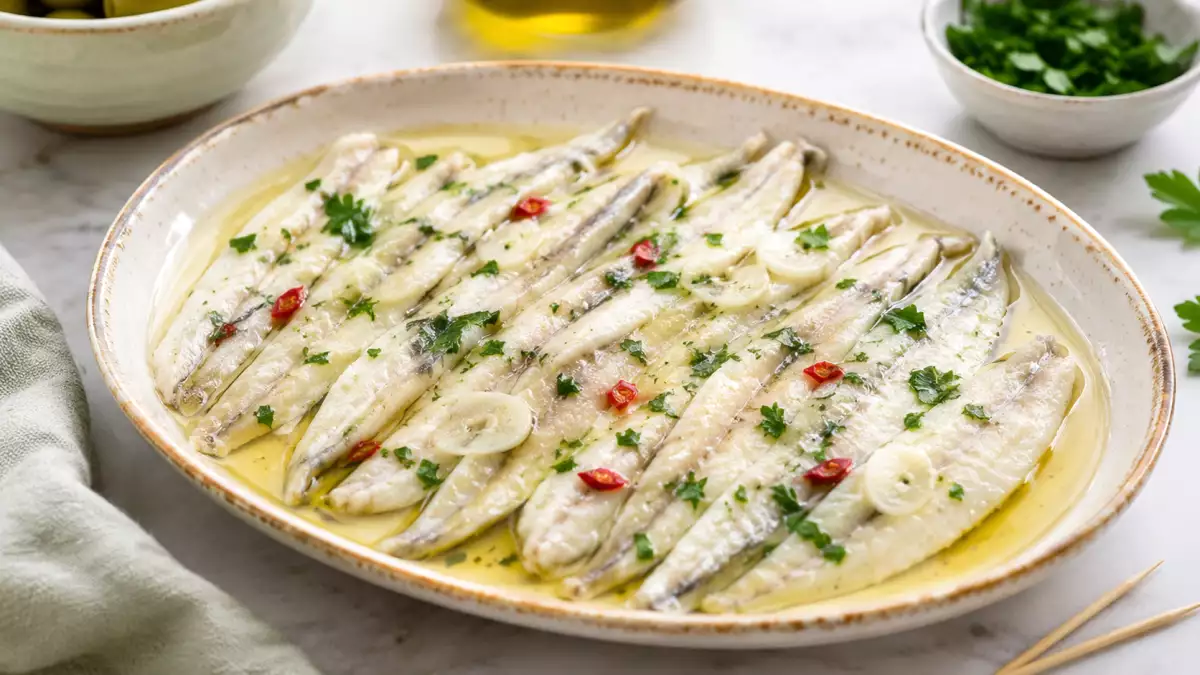
AESAN’s recommendation for home use is clear: if you plan to eat raw fish or fish prepared in ways that do not kill the parasite, the freezer must reach -4°F/-20 °C or lower, and the fish must remain frozen for five full days. For less powerful freezers, the prudent option is to buy fish that is already frozen.
Why anchovies in vinegar require special care
Anchovies in vinegar belong to a group of dishes in which the fish is consumed without being cooked sufficiently to eliminate parasites. The marinade changes the fish’s flavor, texture, and color, but it should not be confused with heat treatment or considered a health guarantee against Anisakis.
Anisakis is a parasite that can be found in marine fish and cephalopods. In humans, the problem arises when live larvae present in raw, undercooked, or improperly prepared fish are ingested. Therefore, for dishes such as anchovies in vinegar, ceviche, marinated fish, cold escabeche, or homemade sushi, prevention depends on proper freezing or using fish that has already been frozen.
Anisakis is a parasite that can be found in marine fish and cephalopods. In humans, the problem arises when live larvae present in raw, undercooked, or improperly prepared fish are ingested. Therefore, for dishes such as anchovies in vinegar, ceviche, marinated fish, cold escabeche, or homemade sushi, prevention depends on proper freezing or using fish that has already been frozen.
The mistake: freezing for too short a time or in a freezer that doesn't reach the required temperature
The mistake to avoid is miscalculating the freezing time or relying on a household freezer that doesn’t reach the necessary temperature. Just because the fish feels hard doesn’t mean that the entire interior has spent enough time at the correct temperature.
For home use, AESAN recommends that the freezer reach -4°F/-20 ºC or lower and that the fish remain frozen for five full days. The five-day guideline makes practical sense: at home, freezing is usually slower than in industrial settings, and it takes longer for the center of the food to reach a safe temperature.
The type of appliance also matters. Refrigerators with a freezer rated three stars or higher are capable of meeting these conditions. If the appliance does not have that capacity, the safest recommendation is to buy fish that is already frozen.
For home use, AESAN recommends that the freezer reach -4°F/-20 ºC or lower and that the fish remain frozen for five full days. The five-day guideline makes practical sense: at home, freezing is usually slower than in industrial settings, and it takes longer for the center of the food to reach a safe temperature.
The type of appliance also matters. Refrigerators with a freezer rated three stars or higher are capable of meeting these conditions. If the appliance does not have that capacity, the safest recommendation is to buy fish that is already frozen.
Vinegar is not a substitute for freezing
One of the most persistent misconceptions is the belief that vinegar “cooks” the fish and therefore eliminates the risk. In reality, the acid in the marinade alters the surface and provides organoleptic preservation, but it is not equivalent to cooking or freezing.
Safety against Anisakis relies on treatments capable of destroying the parasite: sufficient cooking or proper freezing. Since there is no actual cooking involved in vinegar-marinated anchovies, preventive measures must be taken before seasoning or marinating the fish, unless a product that has been previously frozen by a reliable supplier is used.
Safety against Anisakis relies on treatments capable of destroying the parasite: sufficient cooking or proper freezing. Since there is no actual cooking involved in vinegar-marinated anchovies, preventive measures must be taken before seasoning or marinating the fish, unless a product that has been previously frozen by a reliable supplier is used.
Ow to follow the recommendation at home without making it complicated
The rule of thumb is simple: if you’re going to make anchovies in vinegar with fresh fish, freeze it before preparing it. Clean the fish, wrap it securely to prevent cross-contamination and freezer burn, note the date it was placed in the freezer, and wait five full days before thawing it in the refrigerator.
It’s not advisable to speed up the thawing process at room temperature. Safe handling is also part of prevention: clean hands, separate utensils for raw and ready-to-eat foods, sealed containers, and continuous refrigeration until it’s time to season and serve.
It’s not advisable to speed up the thawing process at room temperature. Safe handling is also part of prevention: clean hands, separate utensils for raw and ready-to-eat foods, sealed containers, and continuous refrigeration until it’s time to season and serve.
What the regulations say and why this isn't a food safety concern
European legislation requires food business operators to implement specific hygiene measures for fishery products, including obligations related to parasite control when the product is intended to be consumed raw or nearly raw. At home, the recommendation boils down to an easy-to-remember guideline: for raw or marinated fish, make sure to freeze it properly first.
This does not mean that eating fish is dangerous. On the contrary: health authorities emphasize that fish is a healthy food as part of a balanced diet. The key is to distinguish between cooked dishes and raw or marinated dishes. With the right information, sufficient cold storage, and enough time, the risk can be easily reduced.
This does not mean that eating fish is dangerous. On the contrary: health authorities emphasize that fish is a healthy food as part of a balanced diet. The key is to distinguish between cooked dishes and raw or marinated dishes. With the right information, sufficient cold storage, and enough time, the risk can be easily reduced.
 Patricia González
Passionate about cooking and good food, my life revolves around carefully chosen words and wooden spoons. Responsible, yet forgetful. I am a journalist and writer with years of experience, and I found my ideal corner in France, where I work as a writer for Petitchef. I love bœuf bourguignon, but I miss my mother's salmorejo. Here, I combine my love for writing and delicious flavors to share recipes and kitchen stories that I hope will inspire you. I like my tortilla with onions and slightly undercooked :)
Comments