Climate Week NYC 2026: food waste, young farmers and school meals step into the climate spotlight
Monday 21 September 2026 11:00 - Juliette Hess
Food becomes a climate headline
Climate Week NYC returns from September 20 to 27, 2026, with food and agriculture listed among its official themes. The schedule highlighted by the New York City Food Policy Center shows a broad, energetic food program: discussions on the Farm Bill, regenerative agriculture, nutrition, food security, livestock supply chains, school gardens, food education, food rescue and local markets. In other words, the food system is being treated as a climate system in its own right. This matters because food touches almost everyone several times a day. A climate conversation built around meals can feel more concrete than one built only around distant targets. When an event asks how to reduce waste, support farmers or serve healthier school lunches, it invites people to imagine solutions that are visible, practical and close to home. The agenda also suggests that food policy is becoming more joined-up: environment, nutrition, equity, public health and farming livelihoods are increasingly being discussed together rather than in separate rooms.
Food waste moves from guilt to action
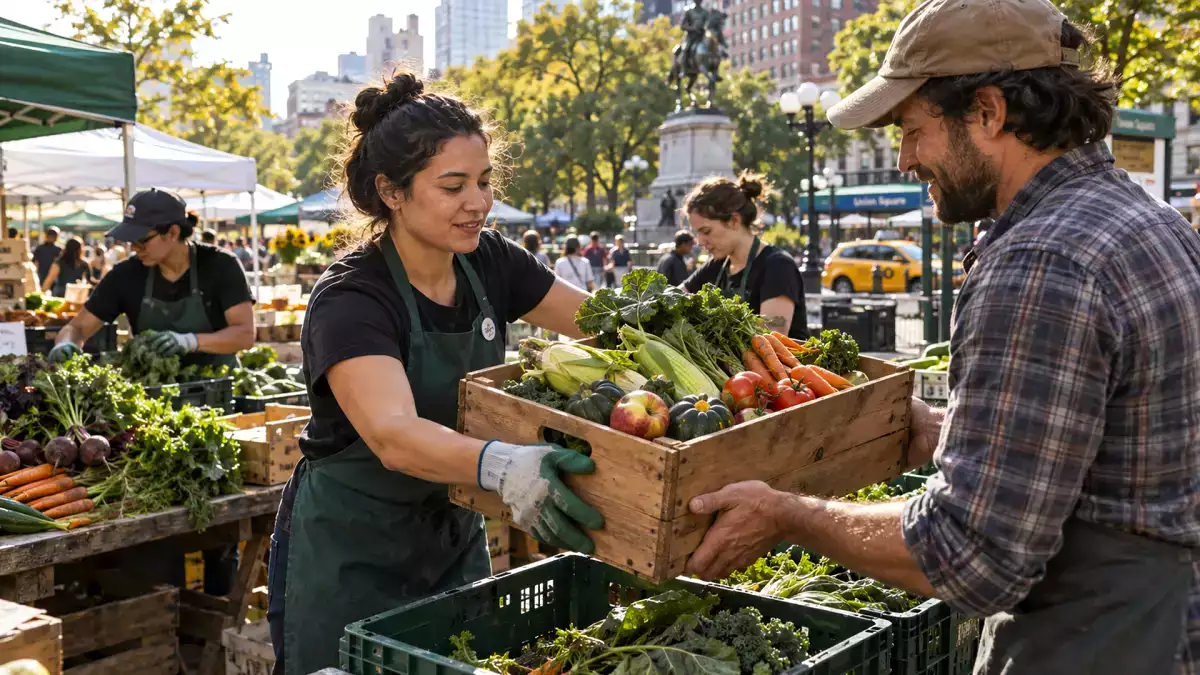
One of the clearest themes is food waste. On Monday, September 21, Food Tank is hosting a session called “Solving Food Waste is a Key Solution to the Climate Crisis,” with organizations including UNEP, NRDC and the Food Planet Prize. The framing is simple and powerful: reducing waste can help shrink emissions while making more food available to people. The week also includes hands-on food rescue opportunities. A City Harvest volunteer shift at Union Square Greenmarket invites participants to help rescue surplus produce, while a later City Harvest event focuses on repacking rescued food at a Brooklyn warehouse. These events are important because they move the issue beyond awareness. Food waste can sound abstract until people see perfectly edible food being collected, sorted and redirected. At that point, the climate solution looks less like a slogan and more like a system: farmers, markets, volunteers, logistics teams and community organizations working together so good food does not end up in the wrong place.
Young farmers bring the future into the room
Climate Week NYC 2026 also gives prominent space to young farmers. The week opens with “Putting Farmers First: How Young Farmers are Shaping the Future of Food,” bringing together young growers and food leaders for a public-facing conversation. The following morning, a Young Farmer Climate Roundtable focuses on climate solutions coming from farms, the policies needed to support them and the pressure created by funding uncertainty. Later in the week, the “Farming is Hot Multimedia Gallery & Happy Hour” presents portraits and first-person accounts from young farmers facing a changing climate. This storytelling approach is especially useful because it connects policy to real lives. Young farmers are not only symbols of tomorrow’s food system; they are already managing soil, water, markets, land access, weather extremes and economic risk. Putting them on the agenda helps shift the conversation from “what should agriculture become?” to “what support do farmers need now to build that future?”
School meals become a climate classroom
Another standout event is “Climate Action Is On the Menu!” on Friday, September 25. The Plant Powered School Meals Coalition, NYC Public Schools’ Office of Food and Nutrition Services and the Mayor’s Office of Food Policy are set to serve a plant-based NYC school lunch while sharing new data on the climate impact of the city’s plant-forward K–12 menus. This is a smart place to focus attention. School meals sit at the intersection of nutrition, education, public procurement and climate. When a city changes what appears on cafeteria trays, the impact can extend beyond a single lunch period. Children discover new foods, families hear about them at home, suppliers respond to demand and public institutions show what large-scale food change can look like. The week also includes an event on school gardens as hubs for climate action and community, which reinforces the idea that children can learn about climate not only through textbooks, but by growing, tasting and understanding food.
Regenerative agriculture and local food systems take center stage
The program is also packed with events on regenerative agriculture, soil health, biodiversity, Indigenous agriculture, resilient rural systems and regional markets. Sessions look at investment, procurement, policy and evidence: how to finance regenerative landscapes, how to make sourcing work for both farmers and buyers, how local food markets can become climate solutions and how data can support climate-smart food systems. The variety is notable. Some events focus on business and finance, others on public policy, others on culture and community. Together, they suggest that food-system climate action cannot rely on one hero solution. It needs better farming practices, fairer markets, stronger public institutions, smarter procurement and more respect for the people who grow, cook and serve food. That may be less tidy than a single campaign slogan, but it is much closer to how real change happens.
What this agenda says about the future of food
The most encouraging part of the Climate Week NYC food agenda is its sense of connection. Food waste is linked to hunger and emissions. School meals are linked to children’s health and public climate action. Young farmers are linked to land, policy and the next generation of agriculture. Local markets are linked to resilience, and food education is linked to long-term cultural change. For everyday eaters, the message is pleasantly empowering: climate-friendly food is not only about perfection or complicated rules. It can begin with wasting less, valuing farmers more, choosing more plant-forward meals when possible, supporting local food systems and asking public institutions to make nourishing, sustainable food easier to access. Climate Week NYC 2026 may be full of summits and panels, but its food agenda brings the conversation back to something beautifully familiar: the plate in front of us, and the choices that surround it.
 Juliette Hess
I have been creating culinary content for Petitchef since 2017.
I love travelling and discovering new dishes, trying out new food trends and exploring new restaurants.
I’m a huge fan of pasta and noodles in all their forms ❤ from udon noodles to tagliatelle, I love cooking them and even making them from scratch!
I’m currently preparing, filming and photographing your next recipe, and I hope you’ll enjoy it!
I love travelling and discovering new dishes, trying out new food trends and exploring new restaurants.
I’m a huge fan of pasta and noodles in all their forms ❤ from udon noodles to tagliatelle, I love cooking them and even making them from scratch!
I’m currently preparing, filming and photographing your next recipe, and I hope you’ll enjoy it!
Comments