Before ordering a kebab, check these details: they can help you determine if it's high-quality
Saturday 21 November 2026 21:00 - Francesco Rosso
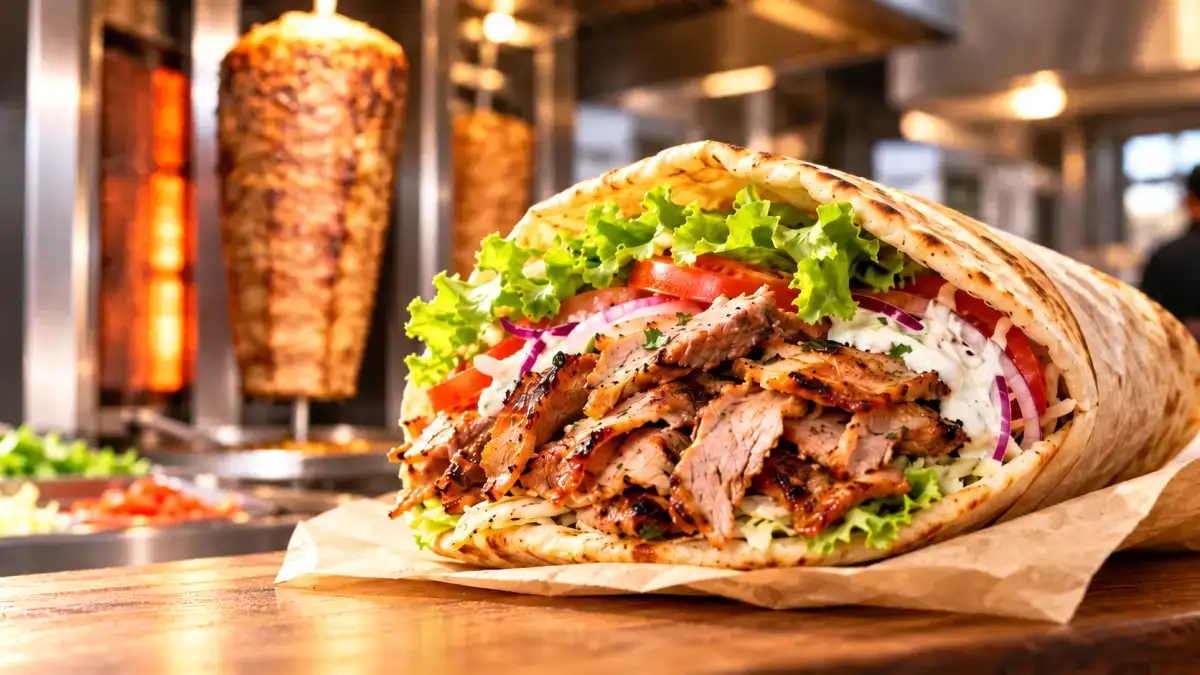
There’s a moment, standing at the counter of a kebab shop, when hunger takes over: you see the rotisserie, smell the spices, and you’re already ready to pick a sauce. Yet it only takes a few seconds to tell if that sandwich looks promising.
A quality kebab isn’t judged solely by the amount of meat: cooking, hygiene, ingredients, and the way it’s prepared all matter. Here’s what to look for without turning your lunch break into an inspection.
The rotisserie: the first thing to look for
The kebab rotates on a spit in front of a heat source, but not all the meat cooks at the same time: the surface cooks first, then the slices are cut. Pay attention to when it’s cut: the meat should come from the well-cooked outer part, not from the layers that are still raw. A quick pass over the griddle can be a helpful extra step.
A golden-brown rotisserie looks inviting, but color and aroma don’t guarantee safety. Heat management also matters: leaving the rotisserie off for a long time with the meat exposed isn’t a good sign.
A golden-brown rotisserie looks inviting, but color and aroma don’t guarantee safety. Heat management also matters: leaving the rotisserie off for a long time with the meat exposed isn’t a good sign.
What kind of meat is in a kebab? A simple question
Chicken, turkey, beef, veal, lamb, or a mix: there’s no single recipe. Some kebabs use layered slices, while others use ground and processed meat. Ground meat doesn’t automatically mean poor quality—it’s the composition and preservation that matter.
What kind of meat is in a kebab? Ask without hesitation, especially if you want to know the ingredients or have dietary needs. A precise answer shows transparency; a vague description doesn’t help you choose. A few words are enough—no need for an interrogation at the counter.
What kind of meat is in a kebab? Ask without hesitation, especially if you want to know the ingredients or have dietary needs. A precise answer shows transparency; a vague description doesn’t help you choose. A few words are enough—no need for an interrogation at the counter.
A restaurant's cleanliness is evident in the way it's run, not in its furnishings
A shiny floor doesn’t tell the whole story. Pay close attention to prep surfaces, tongs, knives, and the hands of the staff. Ready-to-eat vegetables shouldn’t come into contact with utensils used for raw meat. Even going from the register to making a sandwich without washing your hands is a red flag.
Disposable gloves aren’t a magic wand: if they come into contact with money, phones, and food without being changed, they lose their effectiveness. A tidy counter, properly covered containers, and hygienic handling matter more than decorations.
Disposable gloves aren’t a magic wand: if they come into contact with money, phones, and food without being changed, they lose their effectiveness. A tidy counter, properly covered containers, and hygienic handling matter more than decorations.
Vegetables and sauces: freshness is no small matter
Crisp salad, fresh tomatoes, carefully chopped onions: these are details that enhance texture and flavor. But there’s one important point: prepared vegetables and perishable sauces must be stored properly, especially those containing yogurt or milk.
Containers left out in the heat for too long and spoons shared among multiple sauces aren’t encouraging signs. Asking for the sauce on the side also helps you assess the flavor of the meat. And no, adding three sauces doesn’t automatically make a kebab better—sometimes it just masks the rest.
Containers left out in the heat for too long and spoons shared among multiple sauces aren’t encouraging signs. Asking for the sauce on the side also helps you assess the flavor of the meat. And no, adding three sauces doesn’t automatically make a kebab better—sometimes it just masks the rest.
Bread should complement the meal, not give way at the first bite
Bread isn’t just a wrapper. Whether it’s pita, piadina, or a sandwich roll, it should be warmed just before serving, soft yet firm enough to hold the filling. If it falls apart right away, eating it becomes a hassle; if it’s already soggy, every ingredient loses its texture.
Light toasting can create a contrast between the warm exterior and the fresh vegetables. Balance is the real key: the best kebab isn’t necessarily the puffiest one, but the one where every bite makes sense.
Light toasting can create a contrast between the warm exterior and the fresh vegetables. Balance is the real key: the best kebab isn’t necessarily the puffiest one, but the one where every bite makes sense.
How can you tell if a kebab is good? The checklist before you pay
When you're not sure where to get a kebab, you can use this quick checklist to help you decide. It's not a safety certification, but it helps you evaluate the service and attention to detail:
- Meat: It’s cut from the well-cooked outer part.
- Heat: The rotisserie is used correctly.
- Utensils: Those used for prepared food are clean and kept separate from raw ingredients.
- Vegetables: They’re protected, well-maintained, and not wilted.
- Sauces: Perishable sauces are kept refrigerated.
- Bread: It is warmed without becoming chewy.
- Information: The staff can explain ingredients and allergens.
Is the kebab already cooked? The difference that matters
The large skewer may look like a block of meat that’s already ready to eat, but that’s not the case. The surface cooks gradually, while the inner layers reach the desired temperature at different times. That’s why the meat should only be sliced once it’s properly cooked.
A quick pass over the burner isn’t enough to ensure this. A griddle can provide a final sear, but it does not replace proper cooking procedures. Once sliced, the meat should be served hot or kept at a safe temperature; it should not be left for long on a warm serving platter.
A quick pass over the burner isn’t enough to ensure this. A griddle can provide a final sear, but it does not replace proper cooking procedures. Once sliced, the meat should be served hot or kept at a safe temperature; it should not be left for long on a warm serving platter.
How much does a good kebab cost? The price doesn't tell the whole story
An expensive kebab isn’t automatically better, just as a low price doesn’t mean the ingredients are subpar. The restaurant’s location, portion size, and type of meat all affect the bill.
It’s better to ask yourself: what am I paying for? Freshly toasted bread, recognizable ingredients, a well-balanced filling, and attentive staff are worth more than a gigantic portion. Reviews can also help, if you read recent, detailed comments rather than just looking at the star ratings.
It’s better to ask yourself: what am I paying for? Freshly toasted bread, recognizable ingredients, a well-balanced filling, and attentive staff are worth more than a gigantic portion. Reviews can also help, if you read recent, detailed comments rather than just looking at the star ratings.
Is a takeout kebab safe? Be careful on the way home
With home delivery, you have less direct control. Check whether the restaurant lists the ingredients, provides information on allergens, and packages the product carefully. Stylish packaging doesn’t guarantee proper preservation.
The meat should still be warm upon arrival. If the kebab has been sitting at room temperature for a long time, a pleasant smell alone isn’t enough to consider it safe. It’s best to eat it right away and not leave the sandwich on your desk for hours.
The meat should still be warm upon arrival. If the kebab has been sitting at room temperature for a long time, a pleasant smell alone isn’t enough to consider it safe. It’s best to eat it right away and not leave the sandwich on your desk for hours.
Is kebab bad for you? It depends on your choices
Kebab isn’t, by definition, a food to avoid. What matters are the ingredients, portion size, amount of sauce, and how often you eat it. Well-cooked meat, plenty of vegetables, and moderate amounts of condiments can make for a more balanced meal than a version loaded with sauces and fries.
If you have allergies or intolerances, don’t trust appearances: bread and sauces may contain gluten, milk, eggs, sesame, or mustard. Ask for information about allergens: it must be available even for foods sold unpackaged.
If you have allergies or intolerances, don’t trust appearances: bread and sauces may contain gluten, milk, eggs, sesame, or mustard. Ask for information about allergens: it must be available even for foods sold unpackaged.
The most valuable signal of all
Ultimately, the criterion is simple: a reliable restaurant should be able to explain what it serves and how it prepares it. You don’t need to know every spice: just watch how the meat, vegetables, and utensils are handled.
You choose the right kebab with your eyes, a few questions, and, of course, your taste buds. Next time, take a look at the counter first—it might tell you a lot more than a photo of the sandwich.
You choose the right kebab with your eyes, a few questions, and, of course, your taste buds. Next time, take a look at the counter first—it might tell you a lot more than a photo of the sandwich.

I grew up in Piedmont among vineyards and family tables. As a journalist, I love traditional Italian dishes, wine and the stories behind regional food.
Comments