Decanting wine: when to do it and why it’s not just for aged reds
Thursday 19 November 2026 21:00 - Daniele Mainieri
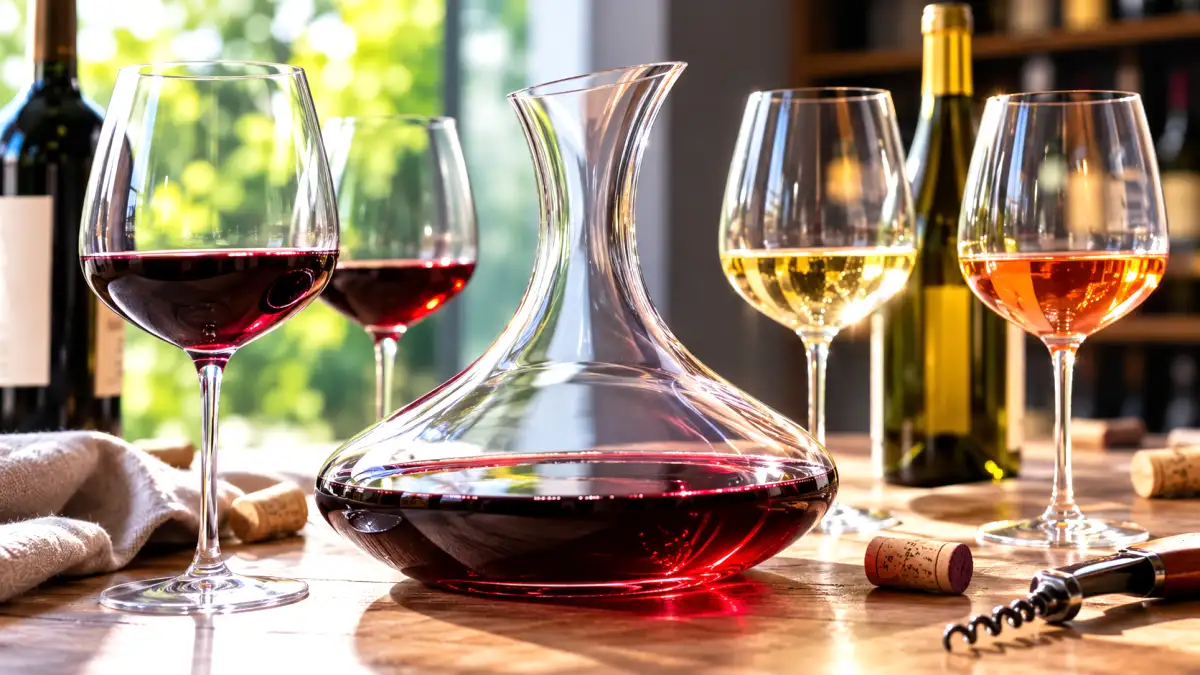
For those who love to cook, entertain friends, or choose a bottle to pair with a meal, knowing when to decant wine helps you serve it better without turning the dinner table into a sommelier’s lecture. No complicated tools are needed: all you need is a clean decanter, a little attention, and the ability to observe how the wine changes in the glass.
Pouring into a carafe or decanting: they aren't exactly the same thing
In everyday language, they are often used as synonyms, but “decanting” and “pouring into a carafe” refer to two different processes.
Pouring wine into a carafe means transferring it to a carafe to increase its contact with oxygen. This process can soften harsh tannins, open up closed aromas, and make the wine more balanced on the palate.
Decanting, on the other hand, serves primarily to separate the wine from the sediment that forms in some bottles after years of aging. In this case, the movement must be slow and gentle, because a mature wine can be fragile and quickly lose its elegance if exposed to too much air.
The rule of thumb is simple: young wines are decanted to allow them to breathe, while older wines are decanted with care to remove sediment.
Young, full-bodied reds are the top contenders
The wines that most often improve when decanted are young, full-bodied, and tannic reds. Think of bottles with deep color, substantial structure, aromas that are still closed, and a dry sensation on the gums. In these cases, oxygen can help the wine open up.
A young Cabernet Sauvignon, a concentrated Syrah, a robust Malbec, a full-bodied Tempranillo, or a still austere Nebbiolo can take on a different character after 30–60 minutes in a decanter. The same applies to many Mediterranean reds rich in fruit, spices, and alcohol, which can seem tight or a bit aggressive when first opened.
Don’t expect miracles: decanting won’t turn a mediocre wine into a great bottle. However, it can make the aromas more distinct, smooth out the rough edges, and bring out notes of fruit, spices, herbs, cocoa, or forest floor that seemed hidden on the first taste.
Some white wines should also be decanted
Here’s the most underrated tip: it’s not just reds that should be decanted. Some full-bodied whites—especially if they’re young or aged in wood—can benefit greatly from a brief exposure to oxygen.
Premium Chardonnays, dry Chenin Blancs, complex Rieslings, Rhône whites, great Italian whites made from grapes like Verdicchio, Fiano, or Timorasso—and, in general, white wines with body, acidity, and depth—can open up slowly. Right after being uncorked, they may seem stiff, reduced, or lacking in expression; after 15–30 minutes in a decanter, they become more open and food-friendly.
In this case, it’s important to monitor the temperature. A white wine served too warm loses its freshness; one served too cold seems flat. The best solution is to decant briefly and then keep the decanter cool, without chilling the wine.
What about very old wines? Yes, but with caution
Aged wines are the ones we most often associate with decanting, but they are also the ones that require the most delicate handling. After many years in the bottle, a wine may contain natural sediment. Removing this sediment is helpful because it can make the wine taste bitter, gritty, or unpleasant.
Before opening an important, very old bottle, it’s best to let it stand upright for a few hours so the sediment settles to the bottom. Then pour it slowly into a narrow decanter, stopping when the sediment nears the neck of the bottle.
Be careful, though: not all old wines need to breathe for a long time. Some are extremely delicate and can lose their aroma in just a few minutes. For this reason, it’s best to taste them immediately after opening and decide then. If the wine is already harmonious, lively, and fragrant, leaving it in the decanter for too long can do more harm than good.
Sparkling wine in a carafe: heresy or a smart choice?
Pouring sparkling wine into a decanter may seem counterintuitive, as there’s a fear of losing the bubbles. In reality, for some highly structured, young, or full-bodied cuvées, a wide—but not enormous—decanter can help the wine express itself more fully.
We’re not talking about simple, fresh, and easy-drinking sparkling wines meant to be enjoyed immediately after opening. We’re talking about gastronomic Champagnes, prestigious classic-method wines, young vintage Champagnes, or sparkling wines that have spent a long time on the lees. In these cases, a few minutes in a decanter can soften an overly sharp edge and release aromas of citrus, toasted bread, dried fruit, or flowers.
This is a choice to be made with moderation: a clean decanter, brief decanting, and immediate service. If the wine’s main appeal lies in its crisp freshness and lively effervescence, it’s best to avoid decanting.
When to Use a Carafe: Practical Signs to Look For
You don't need to know every wine appellation in the world to tell if a bottle will improve with aeration. There are some very simple signs to look for on the first sip:
In all these cases, you can try a simple test: pour a small glass, taste it, then decant the rest and taste it again after 15 minutes. The wine itself will tell you if you made the right choice.
- The aroma is closed, indistinct, or almost nonexistent.
- The palate is harsh, with dry tannins and a rough texture.
- The alcohol seems dominant and masks the fruit and freshness.
- The wine seems tight, as if it needs time to open up.
- There are slightly reduced notes, such as matchstick, rubber, or a musty cellar, which often disappear with oxygen.
In all these cases, you can try a simple test: pour a small glass, taste it, then decant the rest and taste it again after 15 minutes. The wine itself will tell you if you made the right choice.
How long should wine sit in a decanter?
There is no universal time frame, because every wine reacts differently. As a practical guideline, young, full-bodied reds can be decanted for 30 minutes to 2 hours. Complex whites often only need 15–30 minutes. Mature wines require much shorter times, sometimes just long enough to separate the sediment.
The most reliable advice is to taste it. A wine that improves becomes more aromatic, more harmonious, and more enjoyable. A wine that deteriorates loses its fruitiness, seems flat, or takes on oxidized notes. For this reason, when you have a precious or unfamiliar bottle, it’s best to proceed gradually .
The shape of the decanter also matters: a wide decanter aerates quickly, while a narrower one is gentler. For young, full-bodied wines, you can use a wide decanter; for mature or delicate wines, a more compact shape is preferable.
When should you not use the carafe?
There are wines that don’t need to be decanted, and some may even lose some of their charm if they are. Very light, fresh, and approachable wines—such as many aromatic whites, summer rosés, fragrant reds meant to be drunk young, and simple sparkling wines—are at their best when poured immediately.
It’s also best to avoid decanting with older, already fragile bottles, wines with subtle aromas, or labels that rely entirely on freshness, immediacy, and aromatic precision. In these cases, a glass is sufficient: pour a small amount of wine and let it breathe naturally while you eat or converse.
The decanter is not a matter of elegance, but a tool. It should be used when needed, not to impress guests.
The easiest way to avoid making mistakes
To serve a bottle of wine better, all you need to do is follow a simple method: open, smell, taste, and decide. If the wine is closed, harsh, or too concentrated, decanting can help. If it’s already balanced, bright, and pleasant, it needs nothing else.
The beauty of wine is that it changes over time—even during the course of a single dinner. Decanting means accompanying this evolution, not forcing it. That’s why the answer to the question of which wines should be decanted is broader than you might think: young, powerful reds; certain prestigious whites; specific gastronomic sparkling wines; and mature wines with sediment. Not all of them, not always, but far more than we imagine.
In the end, the best choice remains the most practical one: taste it first and trust your nose. It’s the simplest way to turn a well-chosen bottle into a more complete experience, without technical jargon or unnecessary rituals.

I love Italian cooking, French and Italian vineyards and discovering food and wine pairings. At Petitchef I share my findings in a friendly, jargon-free way.
Comments