Eating for better sleep? Start with when you eat, not a magic bedtime food
Tuesday 8 September 2026 17:00 - Juliette Hess
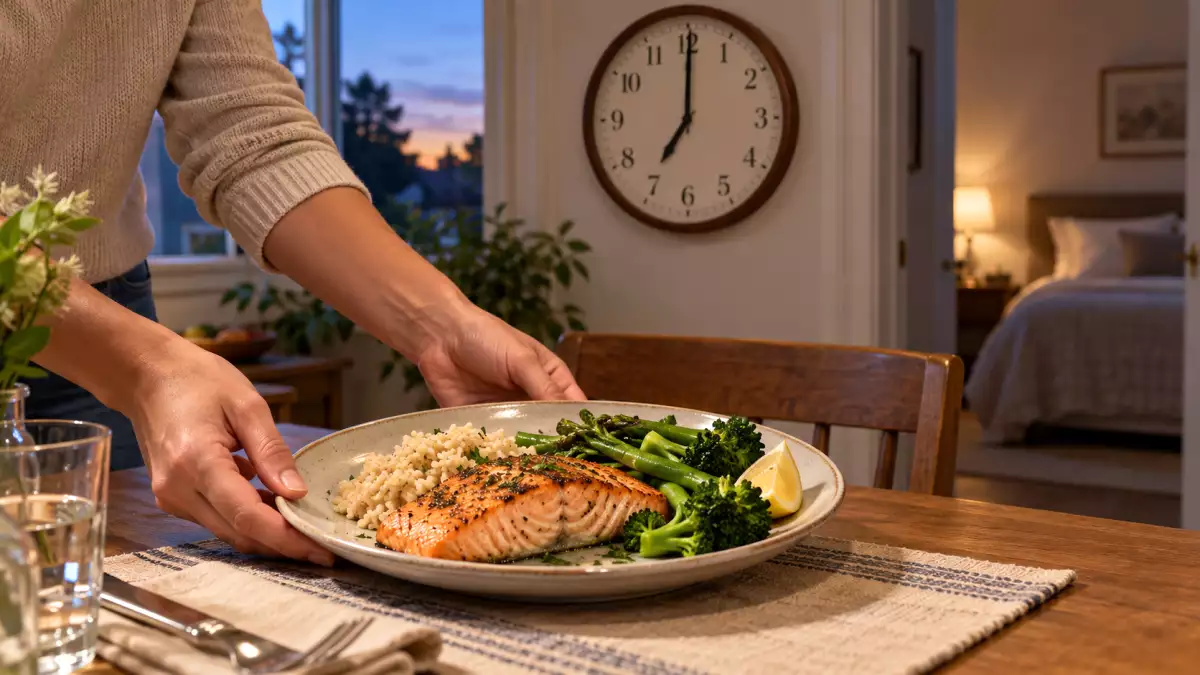
Food can be part of a better sleep routine, but it works best as a pattern rather than a single magic ingredient. A heavy late dinner can keep digestion active, increase discomfort or reflux, and make it harder for the body to settle. A small balanced snack may help if you are genuinely hungry, but it is not the same as eating a large meal right before bed.
The practical rule is simple: build satisfying meals earlier in the evening, keep late snacks small if you need them, and avoid making bedtime the biggest eating moment of the day. Sleep-friendly eating is not about perfection. It is about giving your body enough time and comfort to wind down.
Why the title focuses on timing
A “food for sleep” headline can easily turn into a promise that one ingredient will solve the problem. That is not the most useful approach for everyday readers.
The stronger question is: is your evening meal helping your body wind down, or making it work harder right before bed?
That is why timing comes first. A balanced dinner eaten with enough time before sleep is often more practical than chasing one miracle food.
The stronger question is: is your evening meal helping your body wind down, or making it work harder right before bed?
That is why timing comes first. A balanced dinner eaten with enough time before sleep is often more practical than chasing one miracle food.
A heavy dinner close to bed can work against sleep
Large meals late in the evening can make sleep feel less settled because digestion continues when the body is trying to rest. For some people, late heavy meals can also worsen heartburn or reflux, which can make lying down uncomfortable.
This does not mean dinner has to be tiny or joyless. It means the biggest, richest meal of the day is usually not ideal right before bed.
A helpful target is to finish a larger dinner a few hours before bedtime when possible.
This does not mean dinner has to be tiny or joyless. It means the biggest, richest meal of the day is usually not ideal right before bed.
A helpful target is to finish a larger dinner a few hours before bedtime when possible.
A small snack is different from a late meal
Going to bed hungry can also make sleep harder. If you are genuinely hungry, a small snack may be more helpful than trying to fall asleep distracted by hunger.
The difference is size and composition. A small snack is meant to take the edge off; a late meal asks your body to digest a full dinner when you are about to lie down.
Keep late snacks simple: small, not too sugary, not too fatty, and easy to digest.
The difference is size and composition. A small snack is meant to take the edge off; a late meal asks your body to digest a full dinner when you are about to lie down.
Keep late snacks simple: small, not too sugary, not too fatty, and easy to digest.
What to avoid late at night
Some evening choices are more likely to disturb sleep than support it. Very heavy meals, greasy foods, spicy dishes, large desserts, alcohol, caffeine and chocolate can all be problematic for some sleepers.
The issue is not that these foods are forbidden forever. It is that they may be poorly timed if you eat them close to bed and then wonder why the night feels restless.
If sleep is your priority, keep the last hour before bed calmer for your stomach too.
The issue is not that these foods are forbidden forever. It is that they may be poorly timed if you eat them close to bed and then wonder why the night feels restless.
If sleep is your priority, keep the last hour before bed calmer for your stomach too.
The whole day matters too
Sleep-friendly eating is not only about the final snack. What happens earlier in the day matters: balanced meals, enough fiber, steady energy and not arriving at night overly hungry.
If dinner is the first real meal after a chaotic day, it is easier to overeat late. A better pattern is to make daytime meals satisfying enough that the evening does not become a rescue mission.
Think of better sleep as a daily rhythm, not a single bedtime trick.
If dinner is the first real meal after a chaotic day, it is easier to overeat late. A better pattern is to make daytime meals satisfying enough that the evening does not become a rescue mission.
Think of better sleep as a daily rhythm, not a single bedtime trick.
A simple sleep-friendly evening plate
A useful dinner can include vegetables, a moderate portion of whole grains or starchy foods, a protein source and a little fat for satisfaction. That kind of plate is filling without needing to be extremely heavy.
Examples include rice with vegetables and fish, pasta with vegetables and a light sauce, soup with bread and protein, or eggs with vegetables and a small side of starch.
The goal is not a perfect formula. It is a dinner that leaves you comfortable enough to sleep.
Examples include rice with vegetables and fish, pasta with vegetables and a light sauce, soup with bread and protein, or eggs with vegetables and a small side of starch.
The goal is not a perfect formula. It is a dinner that leaves you comfortable enough to sleep.
The takeaway
Food can support better sleep, but the most useful starting point is not a magic ingredient. It is meal timing, portion size and evening comfort.
Eat satisfying meals earlier when you can. Avoid making bedtime the moment for a large, rich meal. If you need a snack, keep it small and simple. Pay attention to reflux, caffeine, alcohol and foods that personally make your sleep worse.
Better sleep often begins with a calmer evening rhythm — and dinner is part of that rhythm.
Eat satisfying meals earlier when you can. Avoid making bedtime the moment for a large, rich meal. If you need a snack, keep it small and simple. Pay attention to reflux, caffeine, alcohol and foods that personally make your sleep worse.
Better sleep often begins with a calmer evening rhythm — and dinner is part of that rhythm.
 Juliette Hess
I have been creating culinary content for Petitchef since 2017.
I love travelling and discovering new dishes, trying out new food trends and exploring new restaurants.
I’m a huge fan of pasta and noodles in all their forms ❤ from udon noodles to tagliatelle, I love cooking them and even making them from scratch!
I’m currently preparing, filming and photographing your next recipe, and I hope you’ll enjoy it!
I love travelling and discovering new dishes, trying out new food trends and exploring new restaurants.
I’m a huge fan of pasta and noodles in all their forms ❤ from udon noodles to tagliatelle, I love cooking them and even making them from scratch!
I’m currently preparing, filming and photographing your next recipe, and I hope you’ll enjoy it!
Comments