How to make delicious roast gravy without wine for Thanksgiving or Christmas
Tuesday 10 November 2026 10:00 - Adèle Peyches
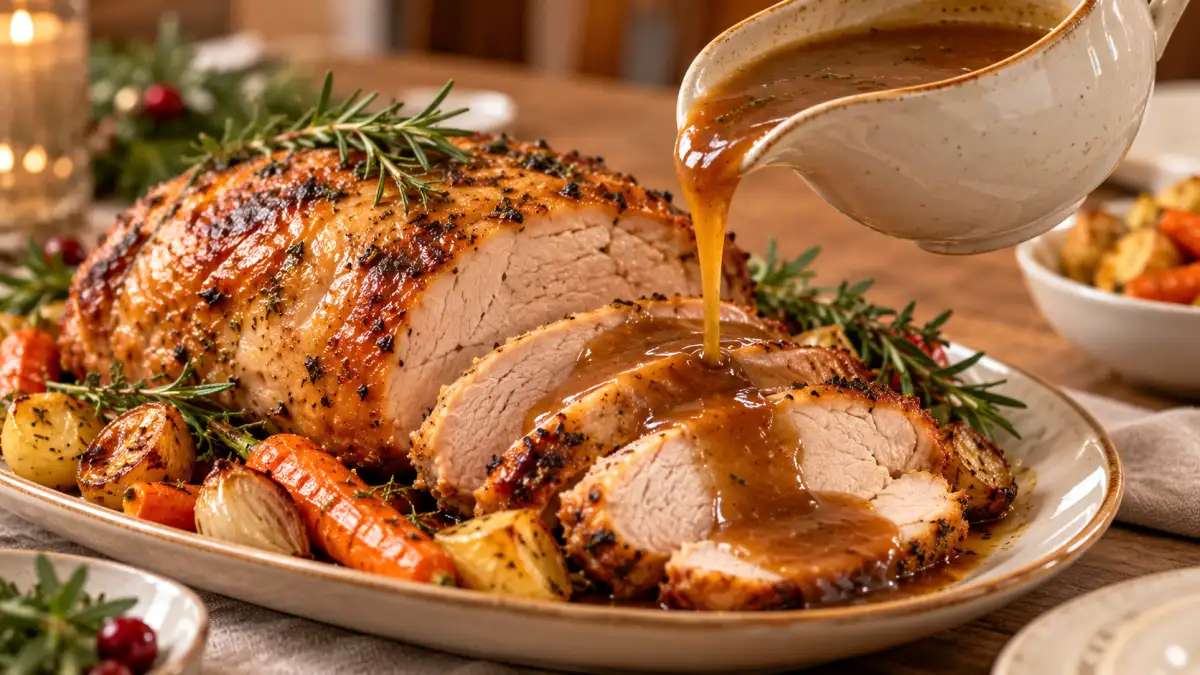
Good news: a delicious roast gravy doesn't need wine. The browned bits in the pan, a little broth and a few well-chosen seasonings can do most of the work. Whether you're serving turkey at Thanksgiving or a Christmas roast, here's how to make a rich, flavorful sauce without opening a bottle.
Start with the tasty bits left in the roasting pan
After roasting turkey, chicken, beef or pork, take a look at the bottom of the pan. Those golden-brown patches stuck to the surface are called fond, and they're packed with roasted flavor. This is the best place to start.
First, transfer the roast to a platter to rest. Carefully spoon off excess fat, leaving roughly 2 tablespoons if you plan to thicken the gravy with flour. Don't worry if your pan doesn't have much liquid: the browned deposits are what you're after.
One warning: dark brown is delicious, but blackened, bitter residue isn't. If the pan has burned, don't scrape every last speck into the sauce. Use fresh broth as your base instead. And if the roasting dish isn't stovetop-safe, transfer the drippings to a saucepan before heating.
Use broth to lift all that flavor—no wine required
Pour about 1 cup of low-sodium chicken or turkey broth into the warm roasting pan, or into the saucepan containing its juices. Gently scrape up the browned bits with a wooden spoon or heat-safe spatula. This is called deglazing, and broth does the job beautifully.
Choose the broth to match the main course: turkey or chicken broth for poultry, beef broth for a beef roast, and vegetable broth for a meat-free sauce. For Christmas ham, a mild broth is often better than a strongly salted one.
Let the mixture simmer briefly so the flavors come together. If you'd like more gravy, add another cup of broth. Taste before salting, especially when working with store-bought broth or salty roasting juices. A sauce that tastes perfect now can become too salty after reduction.
A little onion and a few herbs go a long way
For a deeper flavor, soften 1 finely chopped shallot or a little onion in the reserved pan fat before adding your broth. A small clove of garlic is lovely too. If the roast was cooked with carrots or onions, you can mash in a little of those vegetables, provided they're not burnt.
Keep the seasonings simple: thyme and sage are wonderful with Thanksgiving turkey; rosemary and thyme suit Christmas beef or chicken. A bay leaf can add depth, but remember to remove it before serving.
We know the temptation to throw in every spice in the cabinet! Resist it. Two complementary herbs usually do more for a gravy than six competing ones. You want the sauce to taste like the roast, only even better.
How to thicken gravy without making lumps
Prefer gravy that coats the back of a spoon? There are two easy ways to get there.
For a classic flour-thickened gravy, whisk 2 tablespoons all-purpose flour into the roughly 2 tablespoons of fat you've kept from the roasting pan. Cook gently for a minute or two, stirring, before gradually whisking in 2 cups of broth and pan juices. Simmer until smooth and thickened. This makes roughly enough for four to six servings, depending on how generously everyone pours.
If you have already removed all the fat, mix 1 tablespoon cornstarch with 1 tablespoon cold water until smooth. Whisk it into approximately 2 cups of simmering gravy and cook until thickened. Never sprinkle dry cornstarch directly into hot liquid unless you enjoy chasing lumps around the pan!
Too thick? Add a splash of broth. Too thin? Simmer a little longer or use a small extra cornstarch slurry.
Want the balance wine usually brings? Try this
Wine can provide acidity, but a few drops of lemon juice or mild vinegar can brighten a wine-free gravy just as well. Add them at the very end, taste, and stop as soon as the sauce seems livelier.
For a Thanksgiving turkey gravy, a tiny splash of apple cider vinegar can work nicely. For a Christmas beef roast, a little lemon juice or mild apple cider vinegar can add balance without making the sauce taste sour.
Not every gravy needs extra acidity. A well-browned roast and tasty broth may already provide everything you want. If it tastes rich but flat, that's the moment to experiment, one drop at a time.
Can you make it ahead for Thanksgiving or Christmas?
Absolutely. You can prepare a broth-based gravy the day before, then stir in fresh pan juices after the roast comes out. That's especially helpful when the oven is full and guests are arriving.
For food safety, refrigerate gravy within two hours in shallow containers at 40°F or below. The USDA recommends using refrigerated gravy within 3 to 4 days, or freezing it for longer storage. When reheating, bring gravy to a boil, stirring well. Don't leave the gravy boat sitting at room temperature all afternoon.
Just before serving, taste again and adjust the thickness with a splash of broth. Then pour it into a warm gravy boat and bring it to the table. Thanksgiving turkey, Christmas roast or even mashed potatoes: they all deserve that last delicious spoonful!
 Adèle Peyches
Editorial manager who just can't wait for winter to enjoy fondue! Passionate about gastronomy and always on the lookout for new culinary gems, I first studied law before returning to my first love: the taste of good products and the joy of sharing around the table :)
Comments