Find the perfect wine for any pizza: sommelier-approved pairing tips for crusts and toppings
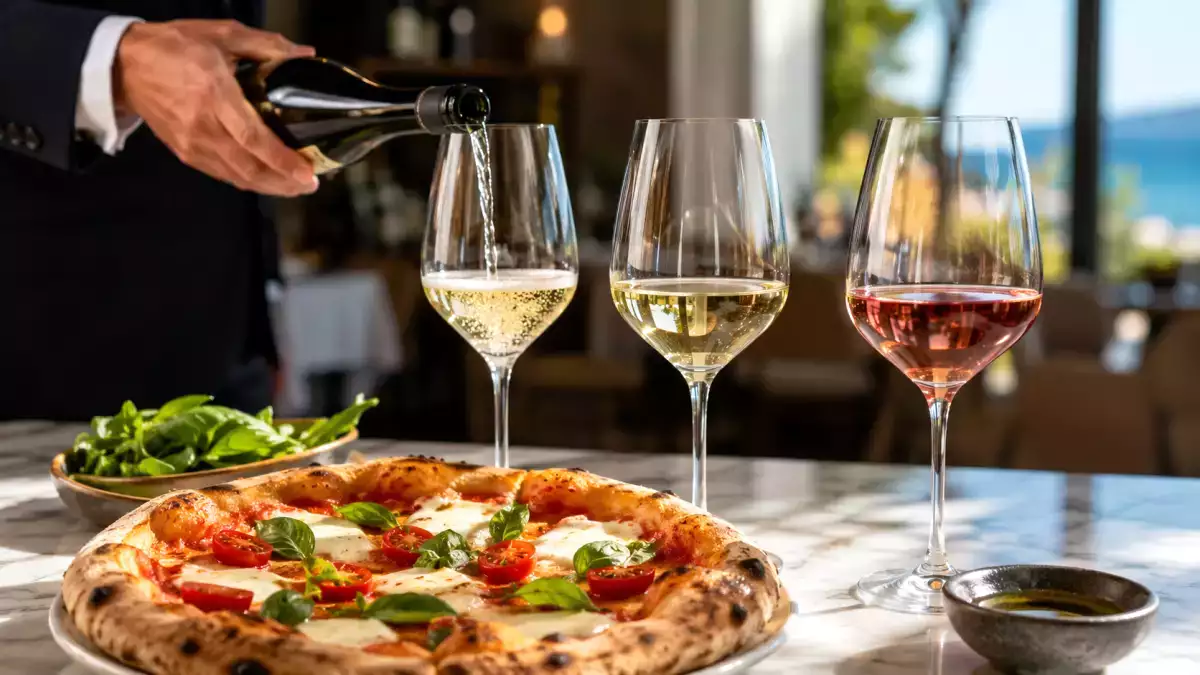
Choosing a wine to pair with pizza seems easy, but then doubt sets in: is red, white, sparkling, or rosé better? The answer depends on the dough, tomatoes, mozzarella, and toppings.
The wine-and-pizza pairing works when the wine doesn’t overpower the bite, but rather lightens it and makes it more enjoyable. Today, even many sommeliers approach pizza with the same attention they give to signature dishes: no longer just beer, but fresh, versatile wines that pair well with the meal without getting too complicated.
Why pizza changes the way we choose wine
The wine’s freshness —that lively sensation that makes your mouth water—pairs well with tomatoes and cheeses. The bubbles cleanse the palate after each bite. Red wines, on the other hand, work best when they have soft tannins: tannins are that dry sensation that some reds leave on the gums—pleasant when balanced but heavy if the wine is too full-bodied.
Wine and pizza pairings according to sommeliers: a useful rule of thumb
Antonella Amodio, a journalist and sommelier who has dedicated her book “Calici & Spicchi” to pizza-wine pairings, demonstrates just how deeply this topic has now become part of Italian gastronomic culture. The point is this: with pizza, you don’t necessarily need to look for the most prestigious wine, but rather the one that’s the most dynamic, easy to drink, and consistent with the ingredients.
Margherita, Marinara, and Neapolitan: fresh, unobtrusive wines
The Marinara—without mozzarella but with garlic, oregano, and tomato—calls for even lighter wines: Falanghina, Vermentino, a young Greco di Tufo, or a light red like a Grignolino. The classic Neapolitan pizza, with a soft crust and balanced toppings, pairs best with wines that don’t leave the mouth feeling too dry: it’s best to avoid reds that are very high in alcohol or have a woody character.
Diavola, salami, and sausage: watch out for the heat
With sausage, friarielli, or cured meats, you need a wine with more intensity, but one that’s still fresh. A Syrah that isn’t too high in alcohol, a young Primitivo, Cerasuolo, or a sparkling red can work well. If the pizza is very rich, a classic-method Brut or Extra Brut sparkling wine cleanses the palate and makes the bite feel less heavy.
Four cheeses, white pizza, and mushrooms: the wine should be light
White pizza with mozzarella, ricotta, potatoes, or rosemary pairs well with a Chardonnay that isn’t overly oaked, Fiano, Verdicchio, or Pinot Bianco. With mushrooms, on the other hand, an elegant, low-tannin red is perfect: Pinot Nero, Etna Rosso, young Nebbiolo served chilled, or a young Rioja if you’re looking to Spain.
Vegetarian, gourmet, and seafood pizzas: the most interesting pairings
Gourmet pizzas offer more freedom: with anchovies, raw seafood, or burrata, you can serve Champagne, Franciacorta, Cava, or an Italian Metodo Classico. With mortadella and pistachios, a Lambrusco di Sorbara or a savory rosé works well. With figs, speck , or sweet-and-savory ingredients , a slightly off-dry Riesling— that is , one with a very light residual sugar—can also be a good choice.
How to choose a bottle for a pizza night
For a casual dinner, the goal is to find a bottle that everyone will enjoy and that pairs well with a variety of pizzas. Here are the most practical guidelines:
- Choose wines with good acidity, which pair well with tomato and mozzarella;
- opt for young, low-tannin reds, especially with spicy pizzas;
- serve sparkling wine when the pizza is rich, fried, or loaded with cheese;
- serve light reds slightly chilled, around 14–16°C;
- avoid wines that are too high in alcohol, have vanilla notes, or have been heavily aged in oak;
- Keep a dry rosé on hand as a versatile option for Margherita, vegetables, and cured meats;
- opt for Lambrusco, Falanghina, Cerasuolo, Barbera, or Metodo Classico when you want to play it safe.
Mistakes to avoid when pairing wine with pizza
- The first mistake is to think that pizza always calls for a full-bodied red wine. In reality, a simple pizza can become too heavy when paired with a wine that’s too high in alcohol.
- The second is to ignore the tomato: its acidity calls for lively wines, not soft ones.
- The third is to underestimate the heat, which can become more intense when combined with tannins and alcohol.
It’s better to think in terms of balance: light pizza, light wine; rich pizza, a fresher wine or sparkling wine; spicy pizza, a smooth red or a savory rosé. And if there are very different types of pizza on the table, a dry sparkling wine or a well-made Lambrusco can easily round out the evening.
How do you choose the right wine for each pizza?
The best wine-and-pizza pairing isn’t a rigid formula, but a smart way to make one of Italians’ favorite dinners even more enjoyable.
Sommeliers today confirm it : pizza deserves carefully chosen wines, but without any snobbery. Margherita and rosé, Diavola and Barbera, four-cheese and sparkling wine, gourmet pizza and Metodo Classico are just starting points. The bottom line remains simple: the right wine is the one that makes you want to take another bite.
 Daniele Mainieri
Comments