How long does summer-made frozen pesto really last, and the best way to store it so it won't spoil
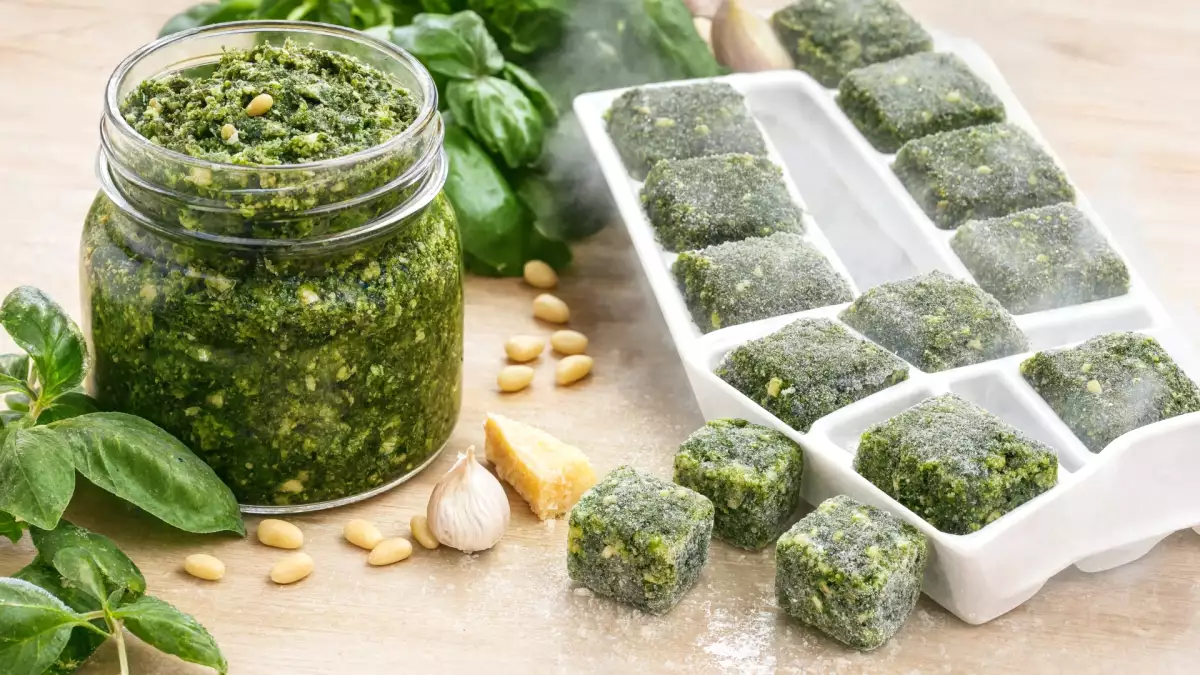
There are scents that instantly evoke summer: freshly picked basil, high-quality extra virgin olive oil, garlic with its bold flavor, and that bright green color that makes your mouth water at first glance. Making homemade pesto in the summer and freezing it for the winter is a simple yet truly clever idea: when the cold weather arrives and fresh basil loses its intensity, all you’ll need to do is open the freezer to bring a little sunshine to the table.
Freezing pesto, however, requires a bit of care. To preserve its color, aroma, and flavor, you’ll need to take a few precautions: choose the right containers, divide it into convenient portions, limit exposure to air, and thaw it properly. With just a few simple steps, your summer pesto will stay fresh and fragrant even during the coldest months.
How long does frozen pesto last?
Frozen pesto can be stored for several months, but it’s best to use it within 3–6 months, when its aroma, color, and flavor are still at their peak. Freezing, when done correctly, helps preserve food for a long time, but over time the quality may decline: the basil loses its intensity, the oil may change aroma slightly, and the bright green color may become less vibrant.
In practice: if you find it after eight months, it’s not automatically a waste, but the best-tasting pesto is the one eaten by winter. Writing the date on the container is the most tedious (and most useful) part of the entire recipe.
What's the right way to freeze homemade pesto?
The secret is to freeze the pesto when it’s at its freshest. Don’t wait for days in the refrigerator: if you’ve just made pesto with fresh basil, extra virgin olive oil, pine nuts, garlic, and cheese, that’s the right time to freeze it.
Rule number one: use clean, dry, freezer-safe containers. Rule number two: don’t fill them to the brim, because food expands slightly as it freezes. Third rule: protect the surface of the pesto with a drizzle of oil; this will limit contact with the air and help preserve its color and aroma.
You can freeze it in two very practical ways:
- In small jars, perfect for dressing 2–4 servings of pasta.
- In ice cube trays, which are ideal for making pre-portioned pesto cubes.
- In tightly sealed freezer bags, flattened into a thin layer, so they freeze quickly and take up little space.
- In single-serving containers, which are convenient if you often cook just for yourself or want to avoid waste.
Can you freeze pesto with cheese?
Yes, you can freeze pesto even with Parmesan and Pecorino already added. However, for a fresher and creamier result, many people prefer to freeze a cheese-free pesto base and add the cheese after thawing.
This approach has an advantage: the flavor stays more vibrant and the texture is more pleasant. In fact, the cheese can become slightly grainy after being frozen. It’s no big deal, mind you: the pesto is still delicious. But if you want a result that tastes more like it was “just made,” try freezing the basil, oil, pine nuts, and garlic, then add the cheese right before serving.
Is it better to freeze pesto in jars or in ice cube trays?
It depends on how you use it. Jars are convenient if you often make pasta for the whole family. The cubes, on the other hand, are perfect for measuring out the pesto without thawing too much.
The problem with a large jar is always the same: you thaw it, use half of it, and then don’t know what to do with the rest. Thawed pesto shouldn’t be refrozen, so it’s best to plan your portions ahead of time. The freezer loves those who are organized, even if they improvise in the kitchen.
For a plate of pasta, 2 or 3 cubes are usually enough, depending on their size and how much you love a generous helping of pesto. To add flavor to soups, minestrone, roasted vegetables, or hot sandwiches, even just one is enough.
How can I keep pesto green after freezing it?
Basil tends to oxidize (that is, to turn brown) when it comes into contact with air. To keep the pesto green and fragrant, work quickly and use cold ingredients. Wash the basil gently, dry it very well, and don’t leave it wet: excess water ruins the texture and can cause ice crystals to form.
Another trick is to cover the pesto with a thin layer of extra-virgin olive oil before sealing the container. You don’t need to drown it, just a small protective barrier is enough. Sealing jars and bags tightly also helps prevent frost, oxidation, and that annoying “freezer taste” that nobody invited to dinner.
How can I thaw pesto without ruining it?
The best way is to thaw the pesto slowly in the refrigerator. If you used cubes, you can also put them directly into a bowl and add a little hot pasta cooking water: they’ll melt into a creamy consistency without needing a pan.
Be careful with heat: pesto doesn’t like to be cooked. Heating it too much causes the basil to lose its aroma and can make the flavor flat. The best approach is to toss the pasta off the heat, adding cooking water a little at a time until you achieve a smooth, creamy consistency.
Once thawed, the pesto should be eaten quickly and stored in the refrigerator. If it has an unusual odor, a significantly altered color, or a suspicious consistency, it’s best not to take any chances.
3 mistakes to avoid when freezing pesto
- Freezing pesto that’s already past its prime. The freezer preserves, it doesn’t rejuvenate: if the basil is past its prime, it won’t be very fragrant even after months
- Using containers that are too large. It’s better to use small portions: that way, you only thaw what you need and avoid waste.
- Forgetting to label the jars with the date. After a few months, the jars can get mixed up: the date helps you use the oldest pesto first.
Making pesto for the winter: a simple gesture that brings the scent of home
Freezing pesto in the summer is a little gift you give yourself for the winter. It lets you preserve fresh basil when it’s at its most fragrant, reduce waste, and always have a quick, delicious, and versatile sauce on hand.
Whether you choose ice cube trays, jars, or single-serving portions, the rule is simple: fresh ingredients, suitable containers, minimal exposure to air, and smart portion sizes. So, when a cold evening rolls around and you’re in the mood for a quick but satisfying pasta dish, your frozen pesto will be right there (green and fragrant) ready to remind you that summer can live on in the freezer.
 Daniele Mainieri
Comments