Is a tomato a fruit or vegetable? The straightforward, science-based answer that ends the debate
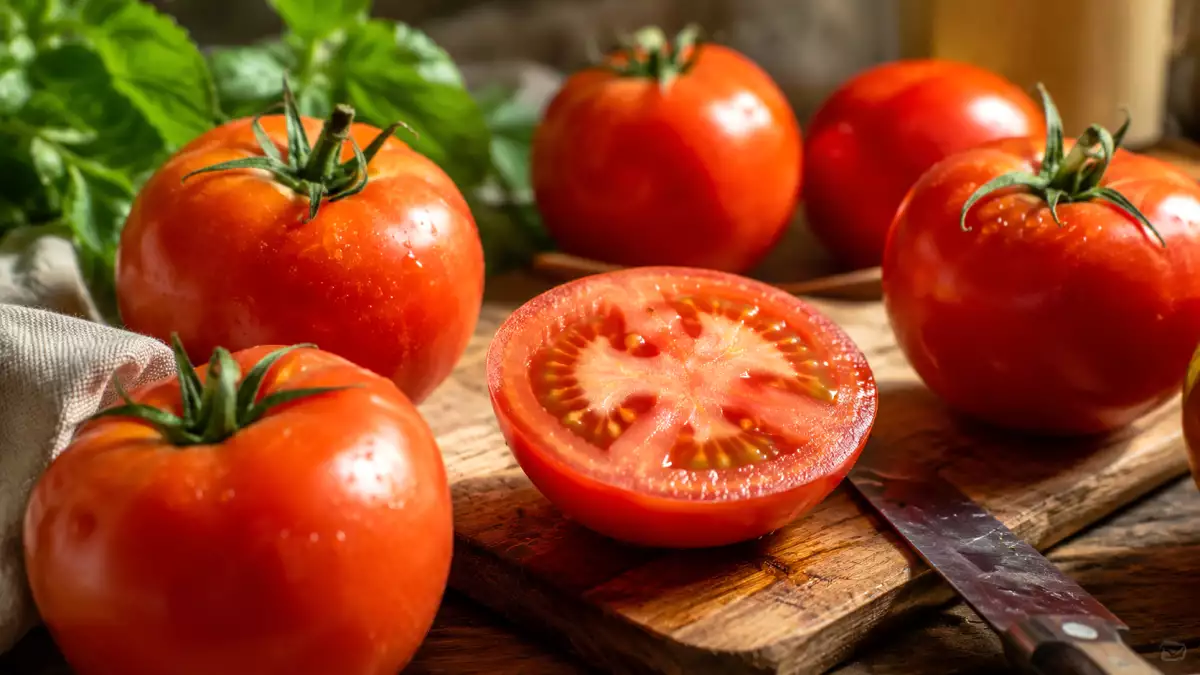
Red, juicy, and absolutely essential in our kitchens, the tomato takes center stage in salads, stir-fries, and gazpacho but it’s also at the heart of one of the most frequently asked culinary questions: Is the tomato a fruit or a vegetable? Some say the tomato is a fruit; others say it’s a vegetable. The question has been circulating for years in kitchens, markets, and after-dinner conversations. Some defend it as a fruit, while others would never take it out of the vegetable drawer.
The answer exists, but it depends on how we look at it: through the eyes of a botanist studying plants or from the perspective of someone preparing a salad. And, although it may seem like a contradiction, both classifications are correct. We’ll explain why science considers it a fruit, why we treat it as a vegetable in the kitchen, and what even the Supreme Court had to say about this delicious dilemma.
What science says: the tomato is a fruit
When it comes to plants, the tomato is a fruit because it grows from the tomato plant’s flower and has seeds inside.
That’s the basic rule: if it comes from a flower and has seeds, it’s a fruit. That’s why, even though it might sound strange to us, peppers, cucumbers, eggplants, and zucchini are also fruits.
Science isn’t concerned with whether tomatoes go well with oil and salt, or whether we put them in gazpacho. It simply looks at how they grow on the plant. And when you look at it that way, there’s no doubt about it: the tomato is a fruit.
What anyone who cooks knows: a tomato is a vegetable
That said, science is one thing, and everyday cooking is another.
At home, nobody usually puts tomatoes in the fruit bowl next to bananas, apples, or pears. The usual thing is to use them the way we use vegetables: in salads, in stir-fries, in sauces, in gazpacho, in salmorejo, in pisto, on bread with olive oil, or as a side dish with a savory meal.
Tomatoes are seasoned with salt, garlic, oil, vinegar, onion, or basil. They aren’t usually served for dessert. They aren’t eaten as a sweet fruit at the end of a meal, even though some good tomatoes are quite sweet. That’s why, in the kitchen, tomatoes are treated as a vegetable. And that’s perfectly fine, it’s just a practical way of speaking.
Tomato: fruit or vegetable? Who's right?
They're both right.
Those who say the tomato is a fruit are speaking from a botanical perspective. Those who say it’s a vegetable are speaking from a culinary perspective.
The confusion arises when we try to use a single word for all cases. And the tomato doesn’t work that way. On the plant, it’s one thing; on the plate, it’s another. It’s like when we say, “I’m going to the market to buy vegetables,” and we put tomatoes in the bag. No one is wrong. We’re just speaking the way people do in real life.
The day the tomato reached the Supreme Court
The debate even reached the courts. In the United States, in 1893, the Supreme Court had to decide whether the tomato should be considered a fruit or a vegetable. But the debate wasn’t just a matter of semantics: there was money at stake.
The Tariff Act of 1883 stipulated that imported vegetables were subject to tariffs, while fruits could enter the country duty-free. A group of New York merchants, led by John Nix, demanded a refund of the duties they had paid for importing tomatoes. Their argument seemed logical: if botany considers the tomato to be a fruit, it should receive the same treatment as other fruits.
During the proceedings, several dictionaries were even consulted to clarify the meanings of the words “fruit” and “vegetable.” However, the Supreme Court unanimously ruled that, for commercial purposes, the tomato should be classified as a vegetable. The justices acknowledged that botanically it was a fruit, but they took into account the way it was used in everyday life.
The reasoning was simple: tomatoes are grown in vegetable gardens and are typically served in savory dishes at lunch or dinner, not as dessert. Therefore, even though science said one thing, the common meaning of the word prevailed for the purposes of applying that law.
Thus, the tomato lost the legal battle and had to be taxed as a vegetable. The ruling did not change its botanical classification, but it demonstrated that the same word can have different meanings depending on whether we are talking about science, cooking, or commerce.
A tomato doesn't need so many labels
The tomato comes from the Americas and, over time, has become indispensable in many cuisines, including Spanish cuisine. Today, it’s hard to imagine a pantry without tomatoes.
They’re in gazpacho, salmorejo, sofrito, pisto, on toast, in salads, and in countless sauces. They’re one of those ingredients that seem simple but are the backbone of many dishes.
And perhaps that’s why we have a hard time calling it a fruit. Because to us, the tomato tastes more like savory cuisine than dessert. It tastes like olive oil, bread, summer, and home-cooked meals.
Fruit or vegetable: the final verdict on the tomato
Here's the bottom line:
A tomato is a fruit in science and a vegetable in cooking.
If you’re talking about botany, say it’s a fruit. If you’re grocery shopping, making a salad, or preparing a stir-fry, you can safely call it a vegetable.
There’s no need to argue about the tomato. It has two answers because it lives in two worlds: it grows as a fruit on the plant and behaves like a vegetable on the table.
 Patricia González
Comments