Make your barbecue healthier: practical tips for cooking over coals and reducing smoke exposure
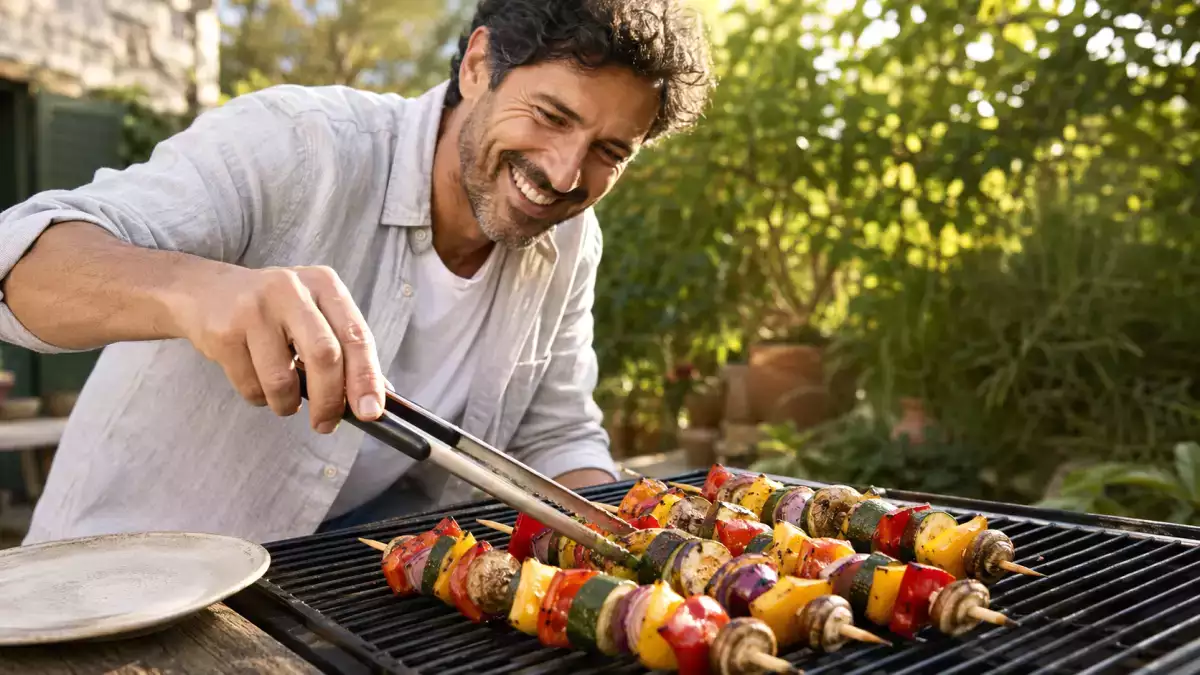
A barbecue brings together many of the things we love about summer: cooking outdoors, sharing a meal, and lingering at the table. But it also involves fire, smoke, raw food, and high ambient temperatures. There’s no reason to turn every barbecue into a health risk; it’s just a good idea to understand what happens on the grill and avoid a few easily corrected mistakes.
When we think about preparing a healthier barbecue, we tend to focus mainly on the menu: fewer sausages, leaner cuts of meat, and some vegetables. However, food selection is only part of the equation.The intensity of the fire, smoke, cooking time, and how raw ingredients are handled also influence the outcome. Cooking better doesn’t mean sacrificing flavor—it means learning to control these factors.
Brown without burning
The first distinction to keep in mind is the difference between browning and burning. When meat, poultry, or fish are cooked at very high temperatures, heterocyclic amines can form. Furthermore, if fat and juices drip onto the coals, they can cause flare-ups and produce smoke containing polycyclic aromatic hydrocarbons (PAHs), which then settle on the food.
The formation of these compounds depends on the food and the cooking method, but it increases with very high temperatures, direct exposure to the flame, and prolonged cooking times. In laboratory experiments, heterocyclic amines and PAHs have been shown to alter DNA; in animal studies, very high doses have caused cancer. In humans, however, population-based studies have not established a definitive link between exposure to these compounds from cooked meat and cancer.
Therefore, the message should not be alarmist. An occasional barbecue does not allow for the calculation of a specific individual risk. The sensible recommendation is to reduce unnecessary exposure, especially if you cook this way frequently. In culinary terms, the rule is simple: aim for a nice golden brown color without turning the surface into a black crust.
The first step to achieving this comes before placing the food on the grill.
First, the coals; then, the food
If you're using charcoal or firewood, wait until the flames die down and stable embers form, covered by a thin grayish layer. Place the grill rack at a sufficient distance so that the food is heated without catching fire. If fat causes flare-ups, move the piece to a cooler area. When the grill’s design allows it, a drip pan can prevent juices from falling onto the fuel.
With a gas grill, there are no coals, but the principle is the same: preheat the grill, adjust the temperature, and, if possible, create a gentler heat zone where you can move the food. Rather than declaring a winner between gas, charcoal, or wood, it’s more important to avoid uncontrolled heat and direct, prolonged exposure to the flame.
Turning the pieces frequently promotes more even cooking and can reduce the formation of heterocyclic amines compared to leaving them stationary over an intense heat source. Remove charred parts before serving, and do not use juices that have been severely burnt. A golden color adds flavor; blackening is not a culinary achievement.
If you use firewood, choose clean wood that is free of paint, varnish, or chemical treatments. The Spanish Agency for Food Safety and Nutrition also recommends using wood that is being used for the first time and, preferably, is not resinous.
Marinating adds flavor
A marinade can enhance juiciness and add layers of flavor without overusing salt. Olive oil, lemon or vinegar, garlic, herbs, and spices form a simple base. Some studies have found that certain marinades rich in herbs, spices, and other antioxidant ingredients reduce the formation of certain heterocyclic amines. The effect, however, varies depending on the recipe, the food, and the cooking method: marinating does not compensate for a grill that’s too hot or protect a piece of meat that ends up charred.
Drain off the excess before placing the food over the heat, because dripping liquid can fan the flames. If the mixture contains honey, sugar, or another sweet ingredient, cook over moderate heat or apply it toward the end: sugars burn quickly.
A marinade that has been in contact with raw meat, chicken, or fish should not be served directly as a sauce.
Barbecuing starts with the grocery shopping
A barbecue doesn't have to be just a succession of chorizo, pancetta, hamburgers, and sausages. Processed meats can be served occasionally, but they don’t have to be the centerpiece of the meal. Fish, chicken, lean cuts of meat, firm tofu, and vegetable skewers expand the menu and offer different textures and flavors.
Eggplant, zucchini, bell peppers, onions, corn on the cob, and mushrooms cook well over the grill if you control the distance from the heat. Larger pieces can be cooked first in an indirect heat zone and browned toward the end. For dessert, peaches, pineapple, apricots, or watermelon take on a whole new dimension with a quick pass over the grill. Variety not only improves the balance of the menu—it also makes it more interesting.
It’s worth noting that fish and chicken aren’t immune to intense cooking. Heterocyclic amines can also form in them when exposed to high temperatures. Their value on the grill lies in diversifying the meal and allowing red meat and processed meats to take a back seat. Similarly, a salad doesn’t magically make up for a platter of cold cuts: health depends on the overall diet and how often we repeat certain habits.
The most immediate danger may be far from the fire
While smoke and charred food tend to draw most of the attention, the most immediate risk associated with a barbecue is usually microbiological. Summer heat promotes the growth of bacteria, so perishable foods should be kept refrigerated until ready to cook. If you’re eating outdoors, use a cooler with ice packs, place it in the shade, and avoid opening it unnecessarily.
Always separate raw foods from cooked foods and from those that will be eaten as is. Do not return a cooked piece to the tray that contained raw meat or fish , and do not reuse the same tongs without washing them. Hands, knives, cutting boards, and other surfaces can also cause cross-contamination.
A well-seared surface does not guarantee that the center has reached a safe temperature, especially in chicken, hamburgers, and sausages. A food thermometer provides more reliable results than color or touch. As a guideline, poultry (including ground poultry and sausages) should reach 74 ºC in the center; other ground meats and sausages, 71 °C; and whole cuts of beef, pork, lamb, or veal, 63 °C, followed by a three-minute rest period. For fish, the target temperature is also 63 °C. Measure the temperature at the thickest part, without touching the bone.
The method, in six key points
- Cook over steady coals or a well-regulated heat source.
- Avoid direct flames and minimize fat drippings that produce heavy smoke.
- Turn the pieces frequently and remove any charred areas.
- Give vegetables, fish, and plant-based alternatives more space.
- Maintain the cold chain and keep raw and cooked food utensils separate.
- Use a thermometer to check that the center has reached a safe temperature.
Before lighting the fire, check that barbecuing is permitted at that location and on that day. Restrictions may vary by municipality, autonomous community, time of year, and fire risk level, so it’s best to consult the relevant local authorities.
Beyond that, a great barbecue comes down to three key points: less flame, less smoke, and more control. You don’t need charred food to achieve flavor; you need good coals, a variety of ingredients, and someone willing to keep an eye on them.
 Patricia González
Comments