Practical guide to buying codfish without fail: what to look for, what to order and what to take home according to the recipe
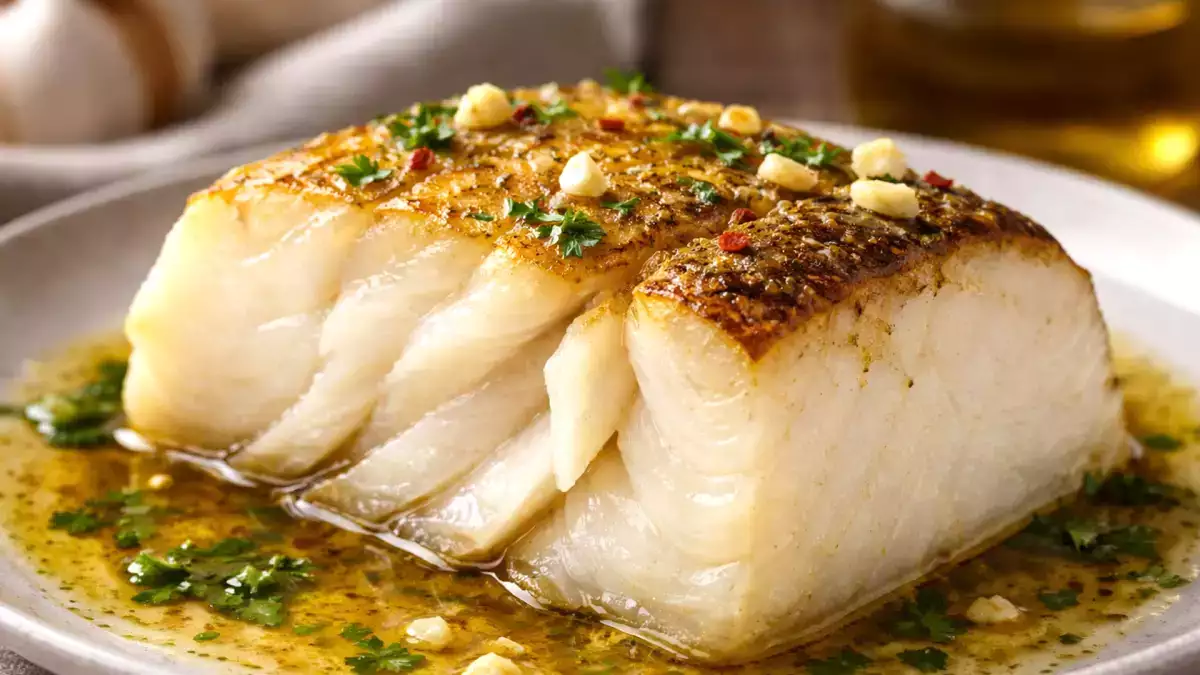
Formats, cuts, differences and common doubts to choose the cod that best fits each recipe and not overpay.
Buying cod for the first time can be much more demanding than buying hake or salmon. Not because it is an inaccessible product, but because it is sold in very different formats, with prices that change a lot from one piece to another and with names that do not always clarify the doubts. On the counter there are fresh loins, trays of desalted, crumbs, salted pieces and, sometimes, also signs with words like skrei or labels with the scientific name. For those who are not used to it, the question comes out by itself: what am I buying and how do I know if it is what I need.
The most useful way to solve it is not to learn everything at once, but to understand a few keys. The first, and probably the most important, is that cod is not bought thinking only about the fish, but about the dish you want to make. The most frequent mistake is not buying a bad product. It is to buy one that does not fit the recipe.
Before choosing the cod, it is advisable to have a clear idea of the recipe
It seems like a no-brainer, but it's not always done that way. Many purchases fail because they start with the counter and not with the idea of the dish. And with cod this is very noticeable.
You don't need the same type for a pil-pil as for a brandade. Nor for a stew, a baked cod, a batter or a scrambled eggs. There are traditional recipes that are designed for salted cod, because for centuries it was the usual way of consuming it in many areas. On the other hand, fresh cod works well in quicker preparations, with a shorter cooking time and a cleaner result.
Simply put: if you don't know what to buy, start by deciding what you want to cook. From there, almost everything is in order.
Fresh, salted, desalted or frozen: they are not the same thing.
One of the first things to be clear about is that "cod" does not describe a single product. In practice, the consumer encounters several formats, and each has a different use and different requirements.
Fresh cod
This is the easiest to identify for those who buy fish on a regular basis. Fresh cod is fish that has not undergone a salting process. It is sold as is, refrigerated, with its natural moisture and milder flavor. In cooking it behaves like any other fresh fish. It is presented in fillets or loins. It usually fits well in baked, grilled, battered or short cooking recipes. It is also a good option if you are looking for a less marked result than that of cured cod.
Salted cod
This is the classic format and is still the most linked to many traditional recipes. It has a particular texture, a more intense flavor and an obvious historical advantage: it allowed the fish to be preserved for a long time. Its disadvantage is well known: before cooking it, it must be well it is necessary to desalinate it well and this requires forethought.
Desalted cod
For many people, especially if they do not cook cod frequently, it is the most convenient purchase. It differs from fresh cod in that desalted cod was previously salted cod. It was first cured with salt to preserve it and then part of the salt was removed by soaking or by a previous process before selling it. Although it is now desalted and ready to cook, it is not "fresh" again: it is still a different product, because the salting has modified its texture, its flavor and even the way it responds to cooking.
In cooking, it is not exactly interchangeable with fresh, since desalted fish has a deeper flavor, a firmer skin and a texture linked to traditional dishes. The advantage is that it avoids the work of desalting at home and reduces the margin of error considerably.
Frozen cod
It is sometimes viewed with a certain degree of caution, especially because of the idea that frozen fish offers a worse texture or lower quality than fresh fish. However, it should not be dismissed out of hand. It can be a very practical option if it comes in portions, if you want to have it on hand for a specific occasion or if you do not often buy fish at home. The important thing, once again, is to know what format you are buying and what you are going to use it for.
Which piece to order according to the recipe

In addition to the format, the part of the fish is also important. And here it is worth adjusting the purchase well to avoid overpaying or taking a piece that you do not need.
Loins
They are the clearest option when you want to serve whole portions. They have good presence, are easy to handle and work well baked, in sauce, confit or grilled. If this is your first purchase for a main dish, they are usually a safe bet.
Tails or thinner parts
They can go well in stews or recipes where the fish does not need to reach the plate whole. They don't have the same shine as the loin, but they work well in preparations where it doesn't matter.
Crumbs or crumbled
This is usually the most practical option for many recipes of use or mixture, such as croquettes, fritters, omelette, brandade, scrambled eggs or stews. In these cases it does not make much sense to pay for a whole loin. It is cheaper and fulfills its function perfectly. It is convenient to pay attention, however, to how it is sold: it can come from salted cod and need to be desalted, or it can be marketed already desalted and ready to use.
The useful question is not which is the best piece in general, but which one makes sense for the recipe you are going to make.
Fresh or desalted: the most common doubt
This is the most frequently asked question when someone buys cod for the first time. And the answer depends on the use.
Fresh cod tends to fit better in quick preparations: oven, grilled, battered or recipes with a short cooking time. Desalted cod, or the one you buy salted to be desalted at home, works better in more traditional dishes, especially when there is a sauce or a slower cooking process.
It is not that one is superior to the other. They behave differently and that is why it is important to choose according to the dish. For a pil-pil, a vizcaína, an ajoarriero or a stew, it is normal to resort to the desalted one. For a quick baked or grilled recipe, fresh may be better. And if you are just starting out, desalting is usually the easiest way to go.
When it pays to buy salted fish
Buying salted cod and desalting it at home makes sense if you are looking for a very specific result, if you cook this fish frequently or if you prefer to control the process. But it is not an improvised purchase.
Desalting well requires time, cold, water changes and some attention to the thickness of the piece. Not all of them need the same. In domestic terms, that means something quite simple: if you buy today to cook tomorrow, you should have calculated the times well.
That is why, for a first purchase, cod already desalted is usually a prudent choice. It avoids one of the easiest steps to fail.
What to look for to make the right purchase
It doesn't take much experience to detect whether a part is convincing or not. It is enough to look at some basic signs.
Fresh cod should have firm flesh, a clean appearance and a mild odor. It should not look dull or give off an aggressive aroma. In desalting, it is important to check that the piece looks consistent and does not accumulate too much liquid in the tray. In salting, the general impression should be that of a compact, uniform and well-cured piece.
These are not absolute criteria, but they help to rule out doubtful purchases and, above all, to avoid being carried away by the most attractive piece without thinking about whether it is the right one.
The most common mistakes when buying codfish
There are several faults that are repeated quite often. One of the most common is to buy loins when in reality a few crumbs would suffice. Another is to take a salted piece without having thought about when it is going to be desalted. It also often happens that price is confused with convenience and it is taken for granted that fresh is always better.
And then there is the most discreet mistake: not reading the label or not asking. In a product with so many formats, this information is part of the purchase.
If you have never bought cod before, this makes it easier to get started.
For a first time, the most sensible thing to do is to choose a simple format. If you want to serve the fish in portions, a few loins of desalted cod usually give few surprises. If you are going to prepare croquettes, omelette, brandade or scrambled eggs, desalted cod crumbs are usually a more logical purchase.
With this choice you eliminate several complications at once: you do not have to desalinate at home, you reduce the doubt about the piece and you limit the margin of error. Later on there will be time to try salted cod, compare formats and fine-tune your purchase.
Buying cod does not require much knowledge, but enough to distinguish formats, choose the right piece and pay attention to the label. This is enough to stop seeing it as a complicated fish and start buying it with much more confidence.
And if you still have doubts
When it comes to buying fish, few things are as useful as knowing how to ask. And in the case of cod, even more so. Relying on the knowledge of your trusted fishmonger is not a sign of inexperience, but of pure common sense. On the contrary: in a product with so many different formats, nuances and uses, a well-timed question can make the difference between a successful purchase and one that is not.
Comments