What you do with eggshells could contaminate kitchen surfaces and spread bacteria, how to avoid it
Saving eggs seems like a banal gesture, repeated almost automatically. It's so integrated into the routine that rarely does anyone stop to think if they're doing it right. After all, you just put them in the fridge and that's it. But it's precisely in these simple habits, which are never questioned, that some of the most common kitchen mistakes can be hidden.
The problem is that an apparently harmless detail can end up creating an ideal environment for the proliferation of bacteria inside the fridge. And the most worrying thing is that this type of mistake doesn't usually show any clear signs. It doesn't change the smell, it doesn't alter the appearance of the eggs and it doesn't even raise an immediate alarm. It just happens, silently, day after day.
The most surprising thing is that this mistake is most often made by careful people who believe they are following good hygiene practices. Small gestures made without thinking, repeated over time, can make all the difference to food safety. And that's exactly where the risk lies that almost nobody notices.
The common habit that can put everything at risk
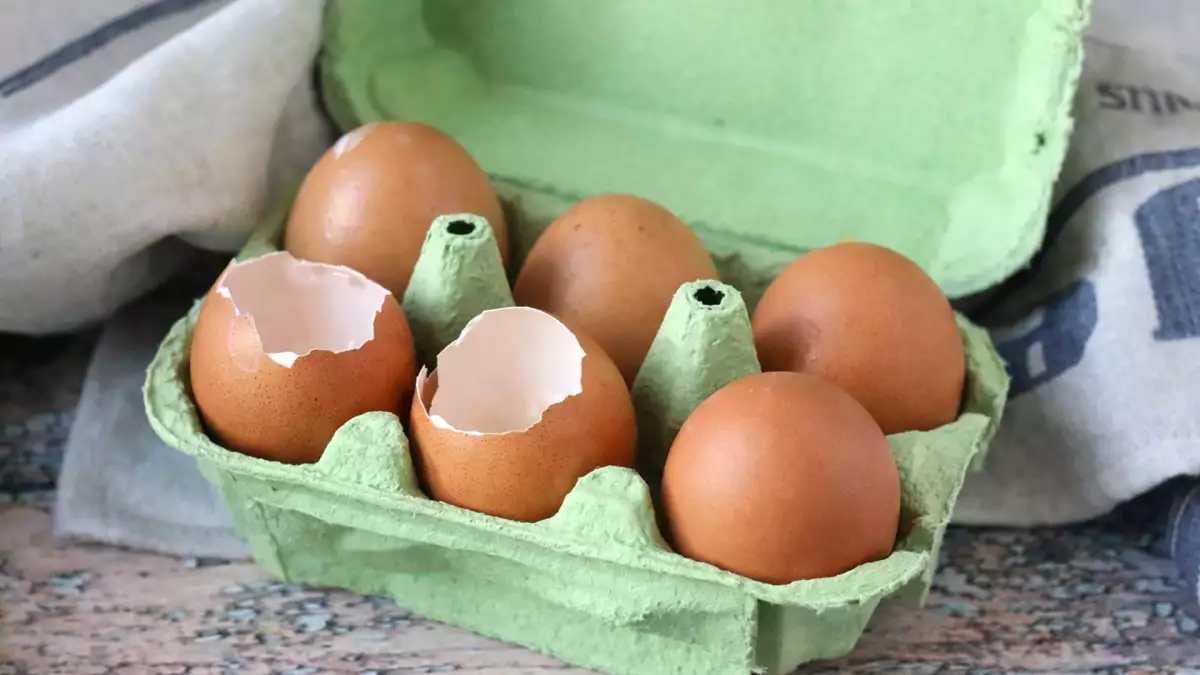
After cracking an egg, there is a very common reflex in the kitchen. Instead of immediately discarding the shell, many people put it back in its own cardboard box.
At first glance, this seems practical and even organized. After all, it prevents mess on the worktop and keeps everything in one place. But this simple gesture can have consequences that almost no one realizes.
A eggshell even when it looks clean, can carry micro-organisms such as salmonella. When it goes back into the carton, it comes into direct contact with the other eggs, creating a silent contamination that can spread quickly.
Why this mistake is more serious than it seems
The problem is not just the shell itself, but the environment that the cardboard box creates.
Unlike washable containers, cardboard absorbs moisture, waste and possible bacteria. This means that any contamination is trapped and remains in contact with the eggs for several days.
In practice, this means that a single gesture can compromise the entire box.
What's more, as eggs are usually stored for a long time, prolonged exposure increases the risk even more. What seemed like a harmless detail becomes a cumulative risk factor.
The cardboard box is a villain or an ally
This is the part that generates the most confusion.
Many people believe that the problem lies with the cardboard box and end up transferring the eggs to other containers. But this is not always the best choice.
The original carton has important functions. It protects the eggs from impacts, reduces the exchange of odors with other foods and helps maintain a more stable condition inside the fridge.
In other words, the carton is not the problem. The problem is using it incorrectly.
When clean and well used, it is an ally in preservation. When contaminated, it can become a point of risk.
Where many people also make mistakes without realizing it
Another common mistake is where eggs are stored.
The fridge door, although practical, suffers constant temperature variations due to frequent opening. This directly affects the preservation of the eggs.
Ideally, they should be stored inside the fridge, where the temperature remains more stable.
There is another little-known detail. Washing eggs before storing them may seem more hygienic, but it can remove the shell's natural protection, making it easier for micro-organisms to enter.
The safest way to store eggs in everyday life
A few simple changes can make a big difference to food safety.
The most important thing is never to put shells back in the carton after cracking the eggs. This is the main point of contamination.
Keeping eggs in their original packaging is also recommended, as long as it is clean and dry.
Storing them in an internal area of the fridge helps to preserve the quality better.
And, whenever possible, handling eggs with clean hands prevents the transfer of bacteria.
A small detail that changes everything
This type of error is dangerous precisely because it goes unnoticed. It has no smell, no visible signs and does not cause an immediate problem. But over time, it can increase the risk of food contamination in the home.
It's these small habits, repeated every day, that make the difference between a safe kitchen and one that can bring silent risks.
Understanding this doesn't mean complicating the routine, but rather adjusting details that hardly anyone questions.
 Mirella Mendonça
Comments