The 'table for one' shift: why dining alone is no longer shameful but a deliberate, cozy small luxury
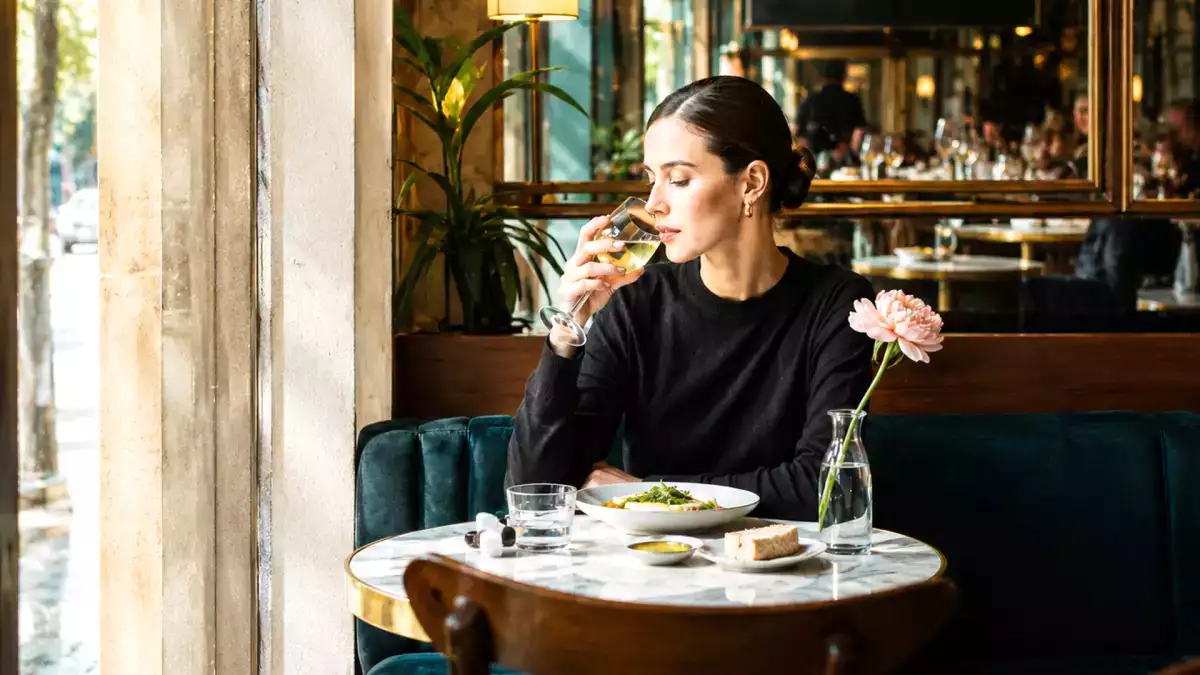
There's a scene that once seemed written for awkwardness: a woman (or man) walks into a restaurant, looks around, smiles at the waiter and utters those three words that for years sounded almost apologetic: "table for one". That person waits for no one, doesn't pretend to check his cell phone urgently, doesn't order something fast to disappear as soon as possible. He sits down, opens the letter and begins to read it like someone who opens a good novel that he can enjoy for the whole afternoon.
In fact, that's what the so-called solo table theory, one of those theories born in social networks that should be taken with some distance, but not necessarily with disdain. On Instagram and TikTok it appears as a small declaration of independence: learning to sit alone in a cafeteria, a nice bar or a restaurant without feeling that someone is missing. The table for one ceases to be a sad image and becomes something else: a gesture of autonomy, a form of pleasure without witnesses, a date with oneself without the need to justify absences or make excuses.
No one is missing
The issue is not new, of course. People have been eating alone forever: because of work, odd schedules, travel, fatigue or pure appetite. What is new is the narrative that has been built around it. For a long time, eating alone was read from the outside, almost always unfairly. If a woman was alone at a table, someone might imagine that she had been stood up, had no plan, was waiting for someone else, or was stalling. The solo table theory reverses the look: no one is missing. Whoever is there is there.
The pleasure of not negotiating the menu
And that's where it starts to get interesting for anyone who loves to eat. Because a solo table completely changes the dining experience. You don't have to agree on starters, or give up the last bite, or choose the place with the tastes of the whole group in mind. You can order oysters at four o'clock in the afternoon, a rare omelet for dinner, a pasta dish without sharing or a glass of white wine with French fries. To be able to read the menu without haste, to observe the details and the decoration of the room, to watch with curiosity how the counter works, to taste the bread, to listen to the noise of the cutlery, to let the plate take center stage; in short, to eat slowly and enjoy every element present.
Eating in company has its pleasures, of course. The conversation, the "try this" and then the long after-dinner conversation, toasting with them and that very concrete happiness of ordering too many things to nibble and trying different things. But eating alone offers another taste education. It sharpens the attention. You realize if the coffee is too hot, if the butter tastes like hazelnut, if that tomato that looked like a garnish was, in fact, the best thing on the plate. You just have to be there.
Being alone is not being lonely
Psychologists would probably turn down the volume on the trend a bit. They wouldn't say that eating alone automatically makes you a safe person, or that those who are always looking for company have a problem. But they would qualify something valuable: being alone is not the same as being lonely. Chosen solitude can be restorative; suffered solitude is not. Sitting down to eat without company can be a gesture of freedom if it is born of desire, not escape. Another thing is to isolate oneself out of fear, shame or inability to ask for presence when needed.
The fantasy that everyone is watching
Maybe that's why the image works so well in networks. Because it touches an intimate nerve. Many people are more uncomfortable being seen alone than being alone per se. They're not so much afraid of unaccompanied coffee as they are of the fantasy that others are thinking something about them. But most of the time no one is looking so much. Each table has its own movie: a couple discusses in hushed tones, two friends go over a lifetime between croquettes, someone answers e-mails without looking up. In the midst of all that, a person eating alone is not an anomaly. He is simply a diner.
A little luxury against the rush
The solo table theory also has something of a revenge against haste. Sit down, order, wait, eat, pay, leave. Without turning it into a self-help ritual or a performance of independence. Just a table, a menu and your own decision. Perhaps the real luxury is to do it naturally without feeling that you have to justify the scene. Ask for exactly what you feel like. Not looking at the clock or hiding behind your cell phone. Not asking for forgiveness for occupying an entire table with a single presence. Because sometimes the best company is not the one that fills the silence, but the one that allows you to listen to it.
The next time someone says "table for one", maybe they are not announcing an absence, but the opposite: presence.
 Patricia González
Comments