Storing a pre-cut melon: remove the seeds or leave them in, does it change how long it stays fresh?
Monday 10 August 2026 17:00 - Adèle Peyches
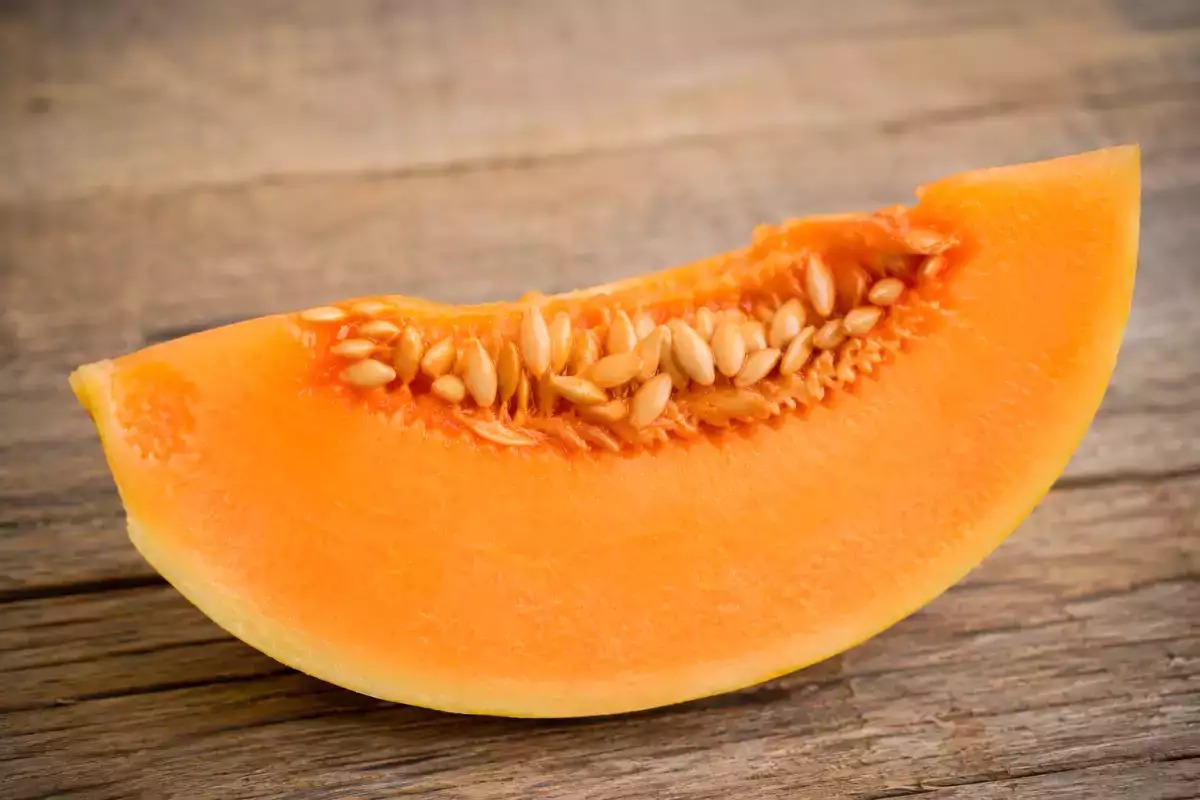
The problem is, we don’t always finish it all at once. We cut one half, save the other “for tomorrow,” and then comes the big question: should you leave the seeds in to help preserve a cut melon?
Seeds in a sliced melon: a clever trick or a bad idea?
The idea makes sense: the seeds are in the center of the melon, in the moistest part—the part we often remove before serving. Some people therefore believe that leaving them in would keep the fruit more “protected,” less exposed, or that it would ripen more slowly.
In reality, it’s best to err on the side of caution. To date, reliable recommendations for storing a cut melon emphasize very specific steps: refrigerate it, protect it from air, avoid handling it repeatedly, and eat it quickly.
In other words, leaving the seeds in may give the impression that the flesh is being handled less, but it is no substitute for proper refrigeration. And above all, it is no guarantee of food safety. A half-melon left out for too long—even with its seeds still in place—is still a half-melon that’s been cut open.
The right approach? Don’t rely solely on this trick. If you leave the seeds in because you plan to cut the melon again later, that’s fine. But the step that really makes a difference is putting it in the fridge quickly, well-protected.
In reality, it’s best to err on the side of caution. To date, reliable recommendations for storing a cut melon emphasize very specific steps: refrigerate it, protect it from air, avoid handling it repeatedly, and eat it quickly.
In other words, leaving the seeds in may give the impression that the flesh is being handled less, but it is no substitute for proper refrigeration. And above all, it is no guarantee of food safety. A half-melon left out for too long—even with its seeds still in place—is still a half-melon that’s been cut open.
The right approach? Don’t rely solely on this trick. If you leave the seeds in because you plan to cut the melon again later, that’s fine. But the step that really makes a difference is putting it in the fridge quickly, well-protected.
The real test: two half-melons, two methods
To see the difference, the easiest thing to do is to try a very simple experiment at home: take two identical melon halves, cut at the same time. Leave the seeds in the first half. Remove them from the second. In both cases, wrap them properly or place them in a container, then put them in the refrigerator.
What should you look for the next day? Not just “with or without seeds,” but above all: is the flesh still firm? Does it still smell fresh? Has the melon released a lot of juice? Is the surface dry, soft, or slimy? These are the real clues.
And that’s when you realize that the main factor isn’t the little cluster of seeds in the middle. Rather, it’s the temperature, the container, how cleanly it’s cut, and how long it’s been in the fridge.
A cut melon left exposed in the refrigerator will quickly absorb odors, dry out, or spoil. A melon cut with a clean knife, stored in an airtight container, and eaten quickly is much more likely to stay fresh. Seeds or no seeds, it’s this combination of cold and protection that does most of the work.
What should you look for the next day? Not just “with or without seeds,” but above all: is the flesh still firm? Does it still smell fresh? Has the melon released a lot of juice? Is the surface dry, soft, or slimy? These are the real clues.
And that’s when you realize that the main factor isn’t the little cluster of seeds in the middle. Rather, it’s the temperature, the container, how cleanly it’s cut, and how long it’s been in the fridge.
A cut melon left exposed in the refrigerator will quickly absorb odors, dry out, or spoil. A melon cut with a clean knife, stored in an airtight container, and eaten quickly is much more likely to stay fresh. Seeds or no seeds, it’s this combination of cold and protection that does most of the work.
How do you store a cut melon in the refrigerator?
The simplest method is also the most effective: cut the melon, store it in an airtight container, and then place it in the refrigerator. If you’re keeping a whole half, you might as well cover it, making sure not to leave the flesh exposed to the air.
Les Fruits et Légumes Frais, Interfel’s website, states that an already-cut melon can be diced or sliced and then placed in an airtight container, where it will keep for up to 3 days in the refrigerator. This is a good rule of thumb to remember at home.
But be careful: “up to 3 days” doesn’t mean “you automatically wait 3 days.” If the melon was already very ripe to begin with, if it sat out on the table for a long time, or if it was handled multiple times, it’s best to eat it sooner.
So the best approach is to do the following:
1. Cut the melon with a clean knife.
2. Remove only the amount you want to serve.
3. Put the rest back in the fridge right away.
4. Use an airtight container or a snug-fitting wrapper.
5. Write down the date if you tend to forget what’s in the fridge.
Handy tip: If you already know the melon will be used in several meals, cut it into cubes right away. It’ll be ready for a salad, a verrine, an appetizer, or a refreshing snack.
Les Fruits et Légumes Frais, Interfel’s website, states that an already-cut melon can be diced or sliced and then placed in an airtight container, where it will keep for up to 3 days in the refrigerator. This is a good rule of thumb to remember at home.
But be careful: “up to 3 days” doesn’t mean “you automatically wait 3 days.” If the melon was already very ripe to begin with, if it sat out on the table for a long time, or if it was handled multiple times, it’s best to eat it sooner.
So the best approach is to do the following:
1. Cut the melon with a clean knife.
2. Remove only the amount you want to serve.
3. Put the rest back in the fridge right away.
4. Use an airtight container or a snug-fitting wrapper.
5. Write down the date if you tend to forget what’s in the fridge.
Handy tip: If you already know the melon will be used in several meals, cut it into cubes right away. It’ll be ready for a salad, a verrine, an appetizer, or a refreshing snack.
Why the cold matters more than the glitches
Melon is a juicy, sweet, and very fragrant fruit. That’s what makes it so delicious… but also so delicate once cut. As long as it’s whole, its rind acts as a protective barrier. As soon as you cut it open, the flesh is exposed: it can dry out, absorb odors from the refrigerator, lose its texture, or spoil more quickly.
Cold temperatures help slow this process. They don’t make food last forever, but they do help preserve its quality for a short time. That’s exactly why a cut melon shouldn’t be left on the table for long, especially in the summer.
Ptitchef’s tip? Serve it, enjoy it, then put it away. No need to turn mealtime into a military operation, but simply avoid leaving half a melon sitting on the counter for two hours while everyone picks at it with a teaspoon ;)
And if you’re serving it as an appetizer, opt for a plate of ready-to-eat pieces rather than the whole melon cut open. The rest will wait patiently in the fridge, in its container.
Cold temperatures help slow this process. They don’t make food last forever, but they do help preserve its quality for a short time. That’s exactly why a cut melon shouldn’t be left on the table for long, especially in the summer.
Ptitchef’s tip? Serve it, enjoy it, then put it away. No need to turn mealtime into a military operation, but simply avoid leaving half a melon sitting on the counter for two hours while everyone picks at it with a teaspoon ;)
And if you’re serving it as an appetizer, opt for a plate of ready-to-eat pieces rather than the whole melon cut open. The rest will wait patiently in the fridge, in its container.
Signs that indicate you should throw away a partially eaten melon
Even if it’s been stored properly, a cut melon needs to be monitored. There’s no need to panic, but you should trust your senses… without taking any unnecessary risks.
Throw the melon away if you notice:
an alcoholic or fermented odor;
slimy or abnormally soft flesh;
a cloudy or unusual liquid at the bottom of the container;
suspicious spots;
a pungent taste or one that’s very different from usual.
And above all: don’t try to “save” a questionable melon by rinsing it or mixing it into a salad. When a cut piece of fruit no longer looks trustworthy, it’s best to throw it away. It’s frustrating, yes, but less so than a meal that ends badly.
To minimize waste, the most effective tip is to plan ahead: if your melon is very ripe, plan a quick recipe for the same day or the next.
Throw the melon away if you notice:
an alcoholic or fermented odor;
slimy or abnormally soft flesh;
a cloudy or unusual liquid at the bottom of the container;
suspicious spots;
a pungent taste or one that’s very different from usual.
And above all: don’t try to “save” a questionable melon by rinsing it or mixing it into a salad. When a cut piece of fruit no longer looks trustworthy, it’s best to throw it away. It’s frustrating, yes, but less so than a meal that ends badly.
To minimize waste, the most effective tip is to plan ahead: if your melon is very ripe, plan a quick recipe for the same day or the next.
What can you do with leftover melon?
Good news: leftover melon isn’t a problem—it’s practically an invitation to whip up a fresh little appetizer :)
Cut into cubes, it pairs perfectly in a salad with feta, cucumber, mint, or a few cherry tomatoes. Cut into small balls, it’s perfect for an appetizer with prosciutto, mozzarella, or basil. Blended while very cold, it turns into a quick soup, a granita, or a summer smoothie.
You can also prepare a simple sweet-and-savory plate with melon, ham, and tomato. It’s fresh, quick, and perfectly in line with the spirit of meals that don’t require turning on the oven.
For an appetizer, skewers are unbeatable: just skewer, serve, and everyone enjoys them—plus, the cut melon won’t sit in the fridge for three days.
And if you’d like to serve melon in a different way, try a salad served right in the melon’s shell. It’s simple, pretty, and perfect for hot weather.
Cut into cubes, it pairs perfectly in a salad with feta, cucumber, mint, or a few cherry tomatoes. Cut into small balls, it’s perfect for an appetizer with prosciutto, mozzarella, or basil. Blended while very cold, it turns into a quick soup, a granita, or a summer smoothie.
You can also prepare a simple sweet-and-savory plate with melon, ham, and tomato. It’s fresh, quick, and perfectly in line with the spirit of meals that don’t require turning on the oven.
Cantaloupe and prosciutto tartare
In the category of no-cook recipes, tartares stand out! The kind of fresh and quick recipe we all look for in summer :-) An appetizer made with prosciutto, cantaloupe, and tomato to change from traditional beef or fish tartares (salmon/tuna). A sweet...
For an appetizer, skewers are unbeatable: just skewer, serve, and everyone enjoys them—plus, the cut melon won’t sit in the fridge for three days.
Appetizer skewers with melon, ham, and rosemary
To accompany your aperitif, combine melon and ham in super easy skewers. Speaking of skewers, forget the wooden sticks! Instead, opt for... rosemary branches. This is a great opportunity to add even more colors, flavors, and greenery to this guaranteed...
And if you’d like to serve melon in a different way, try a salad served right in the melon’s shell. It’s simple, pretty, and perfect for hot weather.
Cantaloupe salad in a cantaloupe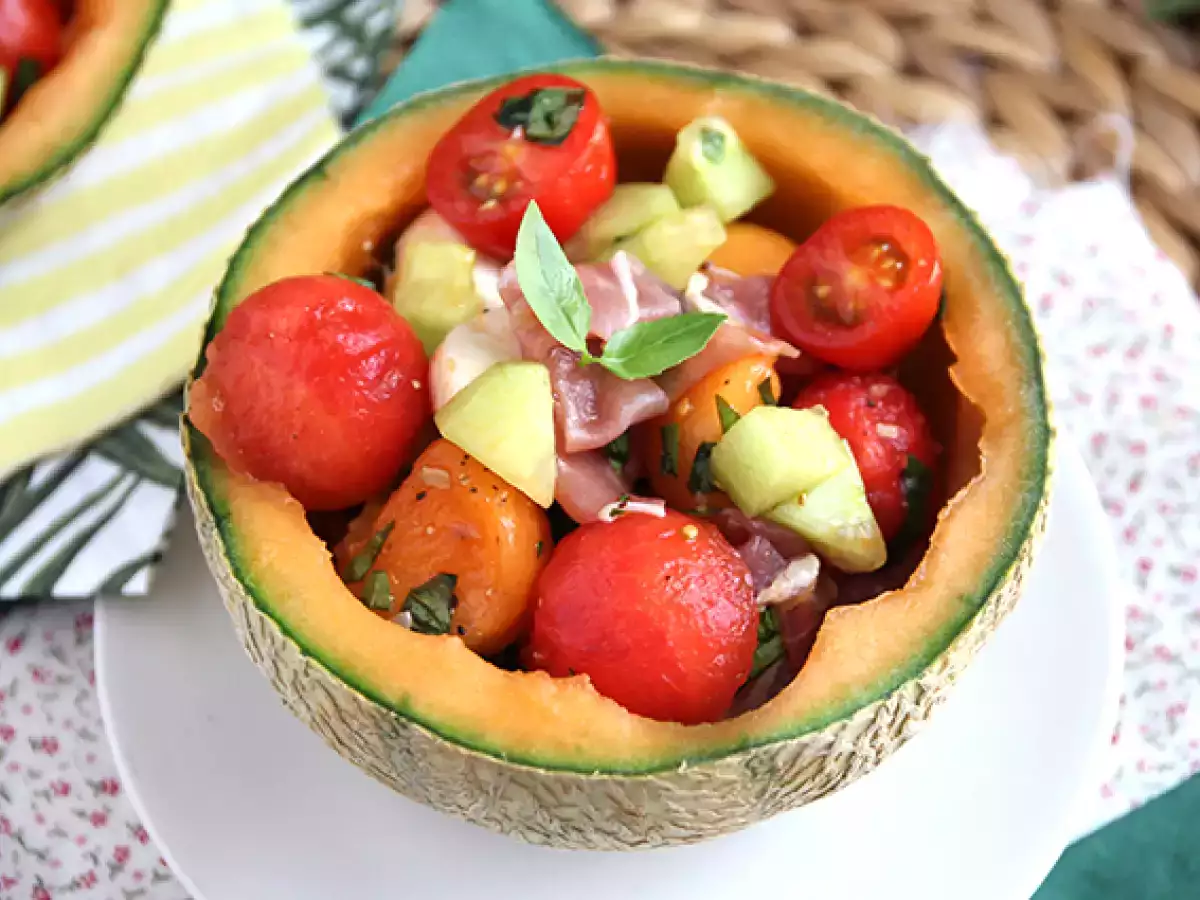
For hot days, a refreshing salad is perfect. This time, we spotlight the cantaloupe, but you can use any fruit you like. Serve it in the cantaloupe for a more original touch :)
The rule to remember
So, should you leave the seeds in when storing a cut melon? You can do that, but that’s not the real issue.
The most useful rule is much simpler: a cut melon should be covered, placed in the refrigerator, and eaten quickly. The seeds won’t make up for a melon left out, a container that’s not sealed properly, or storing it for too long.
In practice, remember this: if the melon is whole and not yet ripe, it’s best to leave it at room temperature, away from direct heat. Once ripe, it can be refrigerated. Once cut, it should be stored in an airtight container or covered, then eaten within a short time.
No need to overreact, and no need to take every tip literally either. With a good knife, a clean container, and a little common sense, your melon will retain its flavor much better… and you’ll avoid finding it sad, dry, or questionable at the back of the fridge.
The most useful rule is much simpler: a cut melon should be covered, placed in the refrigerator, and eaten quickly. The seeds won’t make up for a melon left out, a container that’s not sealed properly, or storing it for too long.
In practice, remember this: if the melon is whole and not yet ripe, it’s best to leave it at room temperature, away from direct heat. Once ripe, it can be refrigerated. Once cut, it should be stored in an airtight container or covered, then eaten within a short time.
No need to overreact, and no need to take every tip literally either. With a good knife, a clean container, and a little common sense, your melon will retain its flavor much better… and you’ll avoid finding it sad, dry, or questionable at the back of the fridge.
 Adèle Peyches
Editorial manager who just can't wait for winter to enjoy fondue! Passionate about gastronomy and always on the lookout for new culinary gems, I first studied law before returning to my first love: the taste of good products and the joy of sharing around the table :)
Comments