Cover the pot or not? This simple timing trick locks in flavor, texture and moisture in every meal
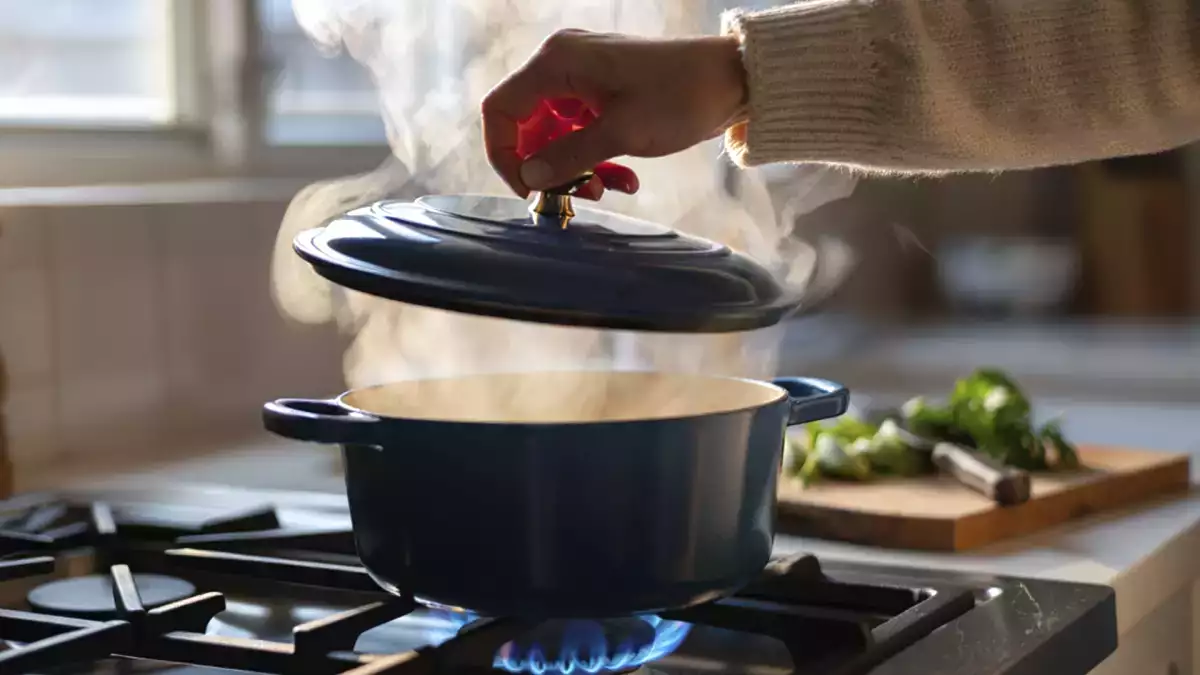
There are gestures in the kitchen that seem so small that we almost don't consider them decisions. To raise or lower the heat. To stir or not to stir. Adding a splash of water. Put the lid on the pot. Or remove it.
And yet, in that decision: covered, uncovered, ajar, a good part of the result of a dish is at stake.
The lid controls something essential: humidity. It decides how much water stays inside, how much evaporates and whether the dish will end up tender, dry, watery, concentrated or golden.
Simply put: cooking is also about learning to handle steam. And the lid is one of the main controls.
What happens when we cover the pot
When we put the lid on, the steam does not escape so easily. The water in the food and broth heats up, rises, touches the lid and falls back down in the form of small drops. Thus, the food loses less moisture and cooks more gently and steadily.
That is why a covered pot usually cooks faster and runs out of liquid more slowly. It comes well when we want that some vegetables become tender, that a broth does not reduce too much or that some potatoes cook without drying out in the bottom.
To cover the pot, in fact, is to say to the dish: "do not lose your water".
When to cook with the lid on
The lid is a good idea when we want to conserve liquid, soften ingredients or take advantage of the steam. That is, when we are looking for a moist cooking.
It works very well in soups, broths, stews, legumes and long stews. If we are making lentils, a chicken broth or a stew, we want the liquid not to disappear prematurely. The lid helps meats, vegetables and legumes to cook calmly.
It is also advisable to cover preparations such as simple rice dishes (such as basmati, jasmine or pilaf), quinoa, bulgur or hydrated couscous. In these cases, the food needs to absorb a fairly measured amount of water. If the steam escapes too early, the grain can become hard, dry or uneven.
And, of course, the lid is a must for steaming. steaming. Vegetables, delicate fish, small potatoes or eggs cooked with steam need that moist heat to be kept in. If we lift the lid every two minutes, just what is cooking escapes.
The rule is simple: if the dish needs moisture, steam, tenderness or time, the lid usually helps.
When it is best to cook without a lid
It is not always in our interest to conserve water. Sometimes we want just the opposite: that part of the liquid evaporates.
When we cook without a lid, the steam comes out. When we cook without a lid, the steam escapes. Thus, a sauce that is too liquid thickens or a fried tomato concentrates flavor. This is the same principle we use to thickening stews without adding extra ingredients: let the excess water evaporate. It is not a matter of "drying" without further ado, but of letting the excess water evaporate.
It is also advisable to uncover when we want to brown. If we lock up too much steam, the food does not brown: it cooks.
It happens with some mushrooms, some sautéed vegetables, a sofrito, some pieces of meat or some potatoes in frying pan. If we cover them from the beginning, the water they release stays inside. The food softens, yes, but it is not toasted. And without roasting, there is neither that golden color nor that deeper flavor we are looking for.
So, when we want to thicken, reduce, concentrate or mark, the lid is usually left over.
The half-open lid: the middle ground that saves many casseroles
Between covering completely and cooking uncovered there is a very useful option: leave the lid slightly tilted.
That way some of the steam escapes, but the pot doesn't lose all the moisture at once. It is perfect when a sauce needs to thicken without reducing too quickly, when a stew is almost ready but still has liquid left over, or when we want the ingredients to remain tender while the whole is gaining body.
It is a simple gesture: if it starts to dry out, cover it a little more; if it is still too liquid, open it more. There is no mystery, but it is important to pay attention.
Start covered and finish uncovered.
Many dishes need both. First, lid. Then, no lid.
This is the case with meat stews, stews, ragouts, vegetables with vegetables and long cooking sauces. At the beginning, it is important to preserve moisture so that the ingredients are tender. When they are tender, it is convenient to uncover them so that the excess liquid evaporates and the flavor concentrates.
This uncovered end is what often separates a good stew from a well finished one: a full-bodied sauce, not a shy broth around the ingredients.
A simple rule to avoid mistakes
The useful question is not, "Do I put a lid on it or not?"
The useful question is "what do I want to happen to the water?"
If you want to conserve liquid, soften or steam cook, cover.
If you want to evaporate, thicken, concentrate or brown, uncover.
If you need first one thing and then the other, start with a lid and finish without.
Common mistakes with the lid
The first mistake is to always cover: soft vegetables, watery mushrooms, meats that are not browned and sauces that do not take on body.
The second is to never cover: broths that run too low, vegetables that need more water, rice dishes that dry out before they are cooked properly or stews that lose moisture when they still need it.
The third is to lift the lid constantly, especially when we try to control the boiling or we are afraid that the pot will boil over. we are afraid that the pot will overflow. Every time we do this, steam escapes and the internal temperature drops. In a long stew it is not usually serious, but in a rice, a steaming or a cereal it can affect the result quite a lot.
The lid also cooks
The lid is not a simple accessory. It is a control tool. It decides whether water stays or goes, whether heat is retained or dispersed, whether a food softens in a humid environment or a sauce gains concentration.
Don't cover out of habit the next time you put a pot on the stove, or uncover out of impatience. Look and think about what you are cooking and what it needs: moisture, evaporation, tenderness, browning or reduction.
The lid, used well, does much more than cover. It also cooks.
 Patricia González
Comments