Sommeliers' practical guide: how to pick the perfect wine pairing for carbonara every time
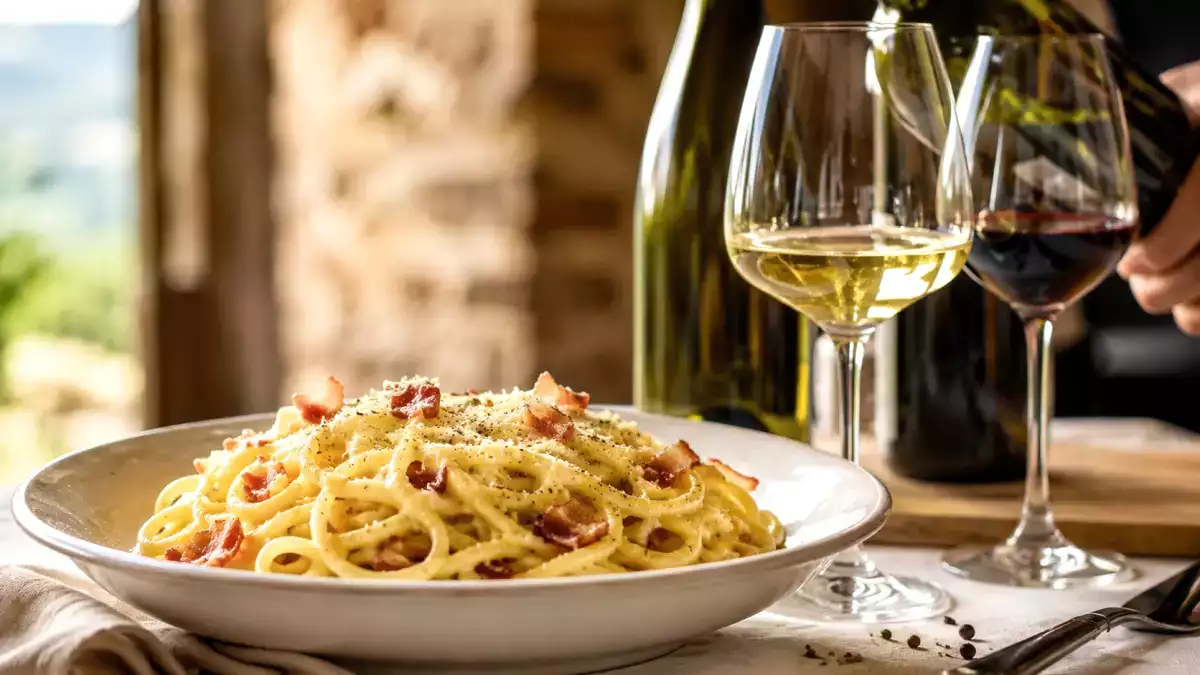
Pairing wine with carbonara doesn’t mean finding a “prestigious” bottle, but rather one that can hold its own against a rich, savory, and very straightforward dish.
Eggs, Pecorino Romano, guanciale, and black pepper create a creamy and intense combination: if the wine is too light, it gets lost; if it’s too tannic, it leaves the mouth feeling dry and bitter. To find your way, it’s best to start with the principles used by great sommeliers and apply them to everyday dining: balance, freshness, intensity, and the pleasure of the sip.
Why carbonara is hard to pair
The guanciale adds a crispy and unctuous note, while the pepper enhances the dish’s aromatic character.
Christy Canterbury, Master of Wine, in an analysis dedicated to spaghetti alla carbonara, highlights the dish’s dual nature: rich but not heavy, requiring a medium-bodied wine with a bit of roundness and, above all, acidic support to cleanse the palate.
There’s no need to get technical: acidity is that freshness that makes your mouth water and makes the next bite even more enjoyable.
What the great sommeliers would say: first the dish, then the wine
Pascaline Lepeltier, Master Sommelier and Meilleur Sommelier de France 2018, offers a useful principle for the general public: a sommelier’s job isn’t just to pair wine with food, but also to pair wine with the person. Translated to the dining table: if you love whites, stick with whites; if you want a red, choose a light one; if you’re looking for a festive touch, go for sparkling wine.
Also Paolo Basso, Best Sommelier of the World 2013, represents a style of service based on precision, balance, and the wine’s clarity. Applied to carbonara, this means avoiding bottles that are too high in alcohol, too fragrant, or overly oaky.
Best white wines to pair with carbonara
White wine remains the safest choice. Robert Kozinski, co-founder and sommelier at Grape Guru, suggests three very clear options for carbonara: Frascati Superiore, Verdicchio dei Castelli di Jesi, and Chardonnay with subtle oak aging.
These are three different ideas, but all make sense:
- Frascati Superiore is the most obvious regional pairing: it comes from Lazio, near the birthplace of carbonara, and has that savory freshness that pairs well with pecorino.
- Verdicchio is more taut and incisive: it works very well when the carbonara is very creamy or peppery, because it cuts through the richness without overpowering the dish.
- Chardonnay can be a good choice if it isn’t overly oaked: light aging can complement the creaminess of the egg, but vanilla and pronounced oak notes risk becoming overwhelming.
Soave is also a smart choice: it combines freshness, salinity, and a subtle mineral note—that dry, savory sensation that helps balance the pecorino.
Sparkling Wines: Franciacorta, Trento DOC, Champagne, and Cava
In Italy, Franciacorta and Trento DOC work very well, especially if they aren’t too soft. Carbonara calls for acidity, intensity, and length; that’s why classic-method sparkling wines are often an elegant and practical solution.
Among French wines, a Brut Champagne or a Blanc de Blancs can add elegance without being too heavy. For a more affordable Spanish option, a good Cava Brut is an interesting alternative, especially for a casual dinner with friends.
Rosé and light red wines: yes, but with caution
If you want a red, opt for fresh, low-tannin wines: young Barbera, Bardolino, Frappato, light Nerello Mascalese, or Pinot Noir. Serve them slightly chilled, around 14–15°C, not at summer room temperature.
Gastronomic rosés are also excellent, such as Cerasuolo d’Abruzzo, Chiaretto del Garda, or rosés made from Negroamaro. They have more body than many simple whites but retain their freshness and drinkability.
How to choose the right bottle at a wine shop or supermarket
- lively acidity, to cut through the richness of the eggs and guanciale;
- good savory depth, to complement the pecorino;
- medium body, because a wine that’s too light will get lost;
- low tannins, if you choose a red;
- distinct aromas, not too sweet or overpowering;
- proper serving temperature, with whites and sparkling wines chilled but not ice-cold.
Mistakes to avoid
- Pairing a full-bodied red (high in tannins and alcohol) just because carbonara is a hearty dish. Barolo, a young Brunello, or a powerful Cabernet are almost always too harsh for the eggs and pecorino.
- Choosing a sweet sparkling wine or an aromatic white that’s too soft. Carbonara already has a natural sweetness from the pasta and eggs: adding more sweetness to the glass makes the overall balance less precise.
- Serving the wine too warm. Even a good Verdicchio or a fresh Barbera can seem heavy if they’re poured at the wrong temperature.
Our favorite pairing
For a classic, creamy, and well-peppered carbonara, the most balanced pairing is a Frascati Superiore if you want to stick with wines from Lazio, or a Verdicchio Classico Superiore if you’re looking for something with more body.
For a special dinner, choose a Trento DOC Extra Brut: the bubbles act as a “reset” between bites and bring out the best in the crispy guanciale.
Try our carbonara and choose a wine
Now that you know which wine to serve, you can try our creamy carbonara, explained step by step: just a few ingredients, no cream, and a lot of attention to the stirring process and the right balance between egg, pecorino, and guanciale.
It’s the perfect recipe for experimenting with wine pairings: Frascati for the more traditional Roman-style version, Verdicchio for a richer carbonara, and sparkling wine for a more elegant touch.
 Daniele Mainieri
Comments