Has your sauce reduced too much? Here's the right way to fix it without making it bland
Monday 9 November 2026 10:00 - Adèle Peyches
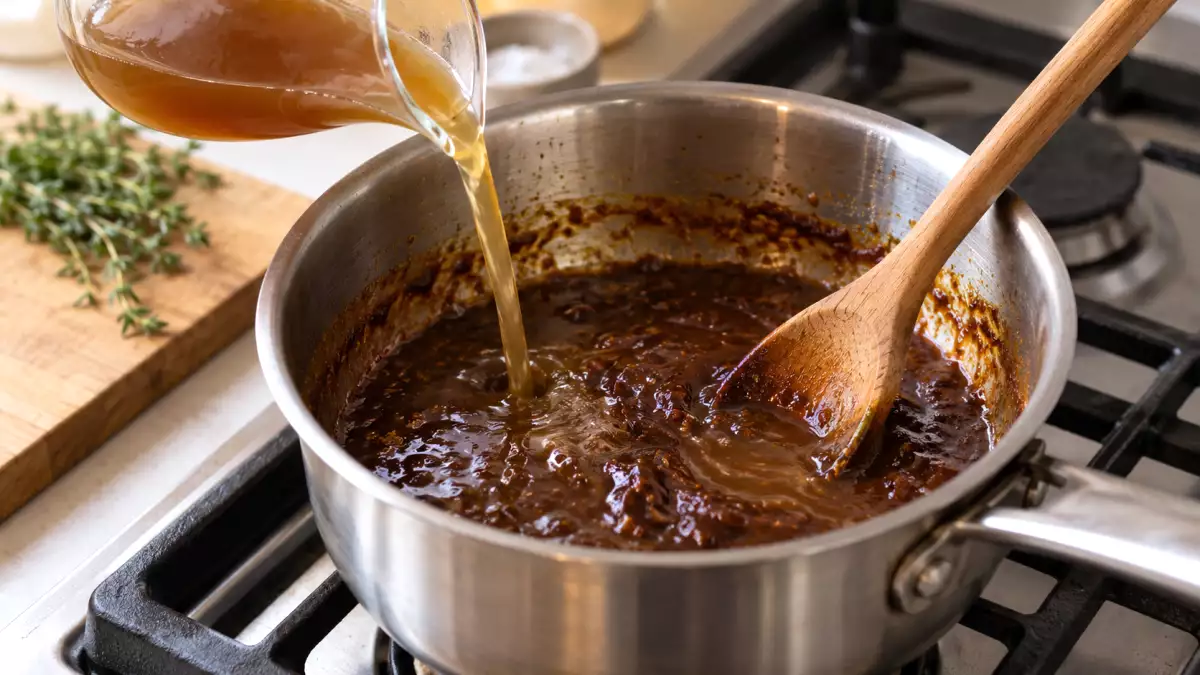
You’re making a delicious sauce to go with your Christmas dinner. It’s simmering gently, and the wonderful aroma is filling the kitchen… then the phone rings. A few minutes later, surprise: there’s almost no sauce left at the bottom of the pot!
Don’t panic ;-) A sauce that’s reduced too much isn’t necessarily a failed sauce. But be careful not to just add anything to it, or you risk losing all the flavors you took the time to develop.
We’ll show you how to restore its nice texture with a few simple steps. That’s all it takes to save dinner without having to start over from scratch!
Why does a sauce get too thick?
When a sauce is heated, some of its water evaporates. This is called reduction.
This technique is very useful: it concentrates the flavors and can create a thicker, more coating-like texture. But if you leave the pan on the heat for too long, you may end up with a result that’s more than you intended.
The sauce then becomes very thick, sometimes sticky, and its flavor may seem too strong or too salty.
It also depends entirely on the ingredients. A cream-based sauce, meat juices, and a tomato-based sauce don’t react exactly the same way. That’s why it’s best to choose the liquid to adjust the sauce based on the recipe.
First step: Remove the pan from the heat before trying to correct the texture.
To make meat juice, add a little broth
Have you made gravy or brown sauce? The easiest solution is often to add a little unsalted or lightly salted broth.
Pour in a small amount, stir gently, and check the consistency. If the sauce is still too thick, add more gradually.
Why avoid pouring it all in at once? Because it’s much easier to add liquid than to have to reduce a sauce that’s become too thin!
The right broth can help preserve the dish’s character. But be careful with bouillon cubes, which are already very salty: if the sauce is concentrated, they may make the problem worse.
Our tip: taste after each addition. That way, you can adjust without losing the right balance.
When making a cream sauce, take it slow
Has a mushroom or cream sauce thickened too much? You can add a little milk, cream, or broth, depending on the recipe.
Start with a few spoonfuls, then stir over low heat until it regains a pleasant texture.
Avoid bringing a creamy sauce—which is already delicate—to a rolling boil. Some sauces can separate or become grainy when exposed to excessive heat.
If your sauce contains cheese, extra caution is needed: the texture depends on the temperature and how the fats are incorporated.
A helpful tip? Remove the saucepan from the heat while making initial adjustments, then gently reheat if necessary. This will give you more control.
What if the sauce has become too salty?
This is a common problem when water evaporates: the salt remains in the pot, while the volume of the sauce decreases.
The most logical solution is to gradually dilute it with a suitable unsalted liquid. But this only works if the flavor hasn’t become extremely concentrated.
Adding a little cream or another mild ingredient can also alter the perception of salt, depending on the sauce. On the other hand, tips claiming that a potato will magically absorb all the excess salt are not a reliable solution.
The best way to avoid this problem? Add salt toward the end of the reduction and taste before serving.
What should you do if the sauce has stuck to the bottom?
Here, it’s important to distinguish between a sauce that’s simply thick and one that’s actually burned.
If part of it has stuck to the bottom, don’t scrape the blackened bottom to mix everything together! You risk giving the whole dish a bitter taste.
Carefully pour the undamaged sauce into another saucepan, leaving the burnt bits behind. Taste it to make sure the flavor is still pleasant.
But if the entire mixture smells strongly of burning, there’s no point in trying to mask the problem with sugar or spices . Sometimes it’s better to start over with a simpler sauce.
To prevent this from happening again, use a suitable saucepan and stir when the recipe calls for it.
How can you avoid making the same mistake again?
When preparing a festive sauce, keep it over low or medium heat and check its consistency regularly.
You can do the spoon test: dip a spoon into the sauce and see if a thin layer forms on the back of the spoon. Depending on the recipe, this is often a good way to tell if the sauce has the right consistency.
Also have a small container of suitable broth nearby so you can easily adjust the sauce if needed.
And if the sauce has to sit before serving, keep in mind that it may thicken further as it cools. So reheat it gently while checking its texture.
With these tips, a sauce that’s been reduced too much won’t necessarily be a disaster. A little liquid, some gentle stirring, and a few taste tests are often all it takes to get a great result.
And you—what sauce do you like to make to go with a roast? Tell us all about it in the comments ;-)
 Adèle Peyches
Editorial manager who just can't wait for winter to enjoy fondue! Passionate about gastronomy and always on the lookout for new culinary gems, I first studied law before returning to my first love: the taste of good products and the joy of sharing around the table :)
Comments