Stop making these common baking-potato mistakes and use easy fixes to make them come out just right
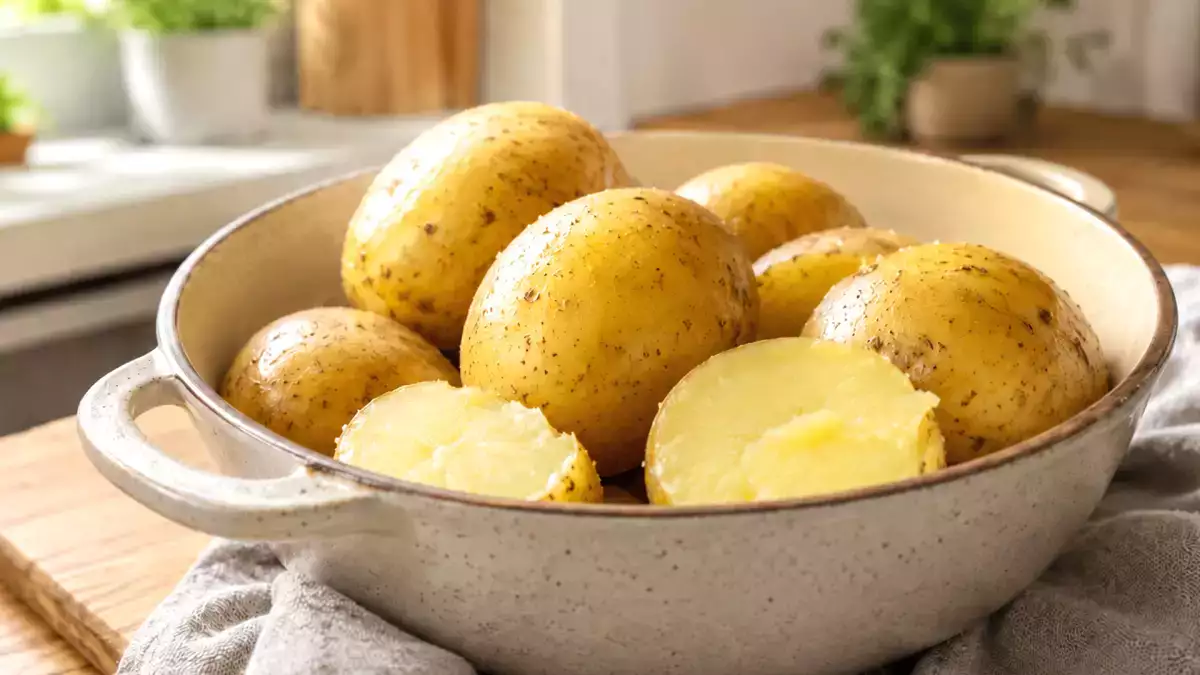
Boiling potatoes seems like one of those things that doesn’t need explaining. You put them in a pot, cover them with water, wait a while, and that’s it. But one mushy potato salad, one watery side dish, or one potato that’s still hard in the middle is enough to remind you that even the simplest cooking tasks have their technique.
A good boiled potato doesn’t depend on some great secret. It mostly comes down to avoiding a few very common mistakes.
1. Using just any potato
The first mistake happens before you even turn on the stove: grabbing whatever potatoes you have on hand.
Not all potatoes behave the same when boiled. Some are very starchy and fall apart easily; others hold their shape better and become tender without breaking down.
In the U.S., the difference often comes down to waxy versus starchy potatoes.
For boiling whole potatoes, potato salad, or side dishes, waxy or all-purpose varieties usually work best, such as:
- Yukon Gold
- red potatoes
- new potatoes
- fingerlings
They hold their shape better and stay pleasantly tender. Russet potatoes, on the other hand, are starchier. They’re great for mashed potatoes, baked potatoes, or fries, but they can fall apart more easily when boiled.
So before cooking, it helps to ask: do I want potatoes that stay whole, or potatoes that break down into something soft and fluffy?
2. Mixing different sizes
If you boil one huge potato, two medium ones, and several small ones all together, the result will be uneven.
By the time the small ones are done, the large one may still be firm inside. And if you wait for the big one, the small ones can turn mushy.
The best option is to choose potatoes of similar size. If you cut them, try to keep the pieces roughly even. They don’t need to be perfect, but very different sizes will almost always cook unevenly.
3. Always peeling them before cooking
Peeling potatoes before boiling isn’t always the best idea. For potato salad, side dishes, or even mashed potatoes, it often helps to cook them with the skin on. The skin protects the flesh, helps preserve flavor, and prevents the potatoes from absorbing too much water.
The result is usually less watery and more flavorful. Of course, wash them well first. Scrub away any dirt under running water, then cook them whole with the skin on. Once they’re cooked and slightly cooled, the peel usually comes off very easily.
4. Starting with boiling water
For whole potatoes, it’s usually better to start with cold water. Place the potatoes in the pot, cover them with water by about an inch, then bring everything up to temperature together.
If you drop whole potatoes straight into boiling water, the outside cooks much faster than the center. That can leave you with potatoes that are too soft on the outside and still firm inside. Starting cold gives the heat time to move evenly through the potato.
5. Boiling them too aggressively
A violent boil does not cook potatoes better. It just makes them bump around the pot, crack, split, or break apart.
The ideal method is to bring the water to a boil, then lower the heat to maintain a gentle, steady simmer. Also, avoid stirring too much. Once potatoes begin to soften, they become more delicate than they look.
6. Trusting only the clock
Cooking times are useful, but they’re not law.
As a rough guide:
- small potatoes may take 12–15 minutes
- medium potatoes may take 20–25 minutes
- large whole potatoes may take around 30 minutes or more
But it all depends on size, variety, and heat level.
The most reliable test is still the simplest: pierce the potato with a thin knife, skewer, or fork.
If it slides in and out easily, the potato is done. If there’s resistance, it needs a few more minutes.
7. Not thinking about how you’ll use them
Not every boiled potato needs the same texture.
- For mashed potatoes, you can cook them until they’re very soft.
- For potato salad or a side dish, they should be tender but still hold their shape.
- For soups or stews, you may even want them to release some starch and thicken the broth slightly.
So the real question isn’t just “how long do potatoes take to boil?”
It’s also: what are you planning to do with them afterward?
8. Forgetting the final rest
Once the potatoes are cooked, don’t leave them sitting in hot water.
Drain them right away.
For an even better result, return them to the warm empty pot for a couple of minutes with the heat off. This helps excess moisture evaporate. That small step makes them less watery and improves the texture, especially if you’re serving them as a side dish or mixing them with dressing.
So, how do you boil yours?
Every home has its own potato method. Some people always start with cold water. Some never peel them. Some add a splash of vinegar to help them hold together. Others have been judging the perfect doneness by eye for years.
What’s your trick? A favorite variety? A family method that never fails? Because something as simple as a boiled potato can be surprisingly personal and when it’s done right, it’s anything but boring.
 Patricia González
Comments