The dessert is the same. The sensation is not: did you know that the topping can change the way it tastes?
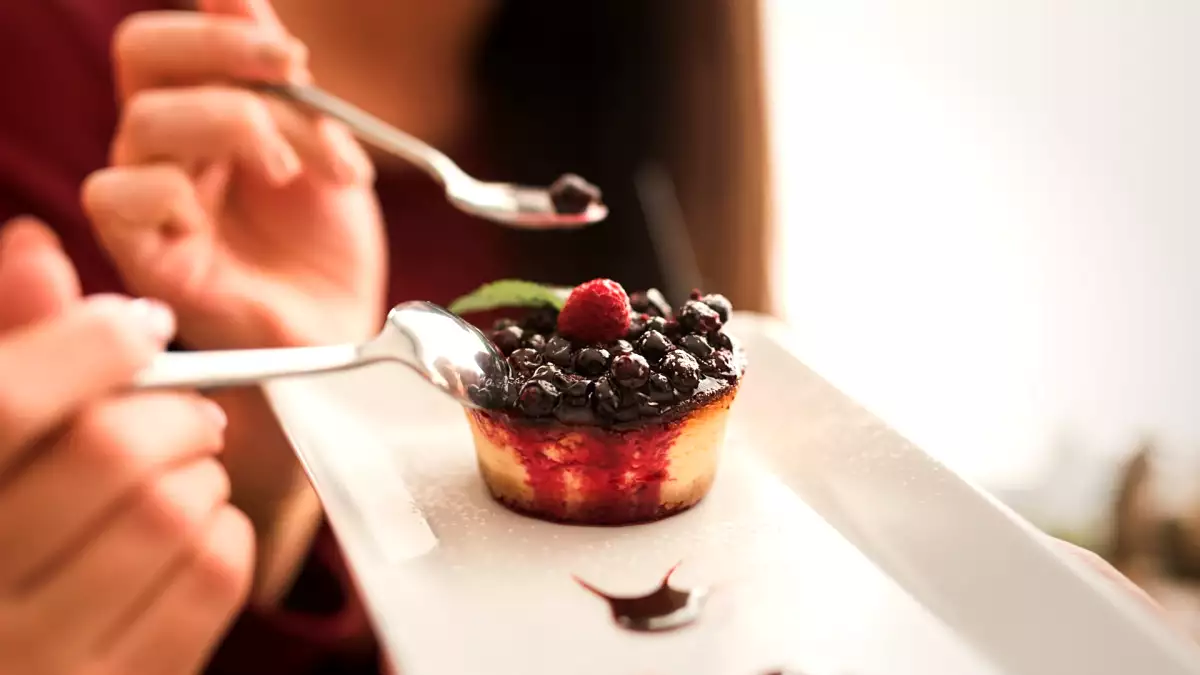
When we savor a cake, we tend to focus on the recipe, the ingredients and the technique. But a burgeoning field, gastrophysics, the study of how our senses shape taste, suggests something surprising: the topping we use influences how sweet or savory we find that dessert.
Science has been saying it for years, although we have hardly wanted to hear it: the cutlery can alter the perception of flavor, and more specifically, of sweetness. It doesn't change the recipe or the sugar, it changes how the mind interprets what reaches the palate.
The brain, before the tongue
In 2013, psychologist Vanessa Harrar and neuroscientist Charles Spence published a peculiar study in the journal Flavour. They asked several volunteers to eat yogurt with identical spoons, but of different weights and colors. The yogurt was always the same, but the result was not: when the spoon was lighter, the participants described it as sweeter and creamier. If the spoon was heavier, the sweetness seemed to be diluted.
The phenomenon was repeated with other foods, and the researchers concluded that the brain forms sensory expectations even before the first bite. If something seems small and delicate like a thin spoon or a light fork, we anticipate a light experience. When the actual taste exceeds that expectation, the perception of sweetness is amplified.
Conversely, a large or heavy fork suggests density and fullness. In that context, the same cake may seem less sweet, less lively, as if the sugar has been diluted.
The psychophysics of taste
This type of experiment belongs to an emerging field called gastrophysics, where psychologists, physicists and chefs study how the senses - sight, touch, hearing, smell - dialogue to construct what we call "taste". In the words of Spence, professor at Oxford University, "our brain decides how something tastes before the tongue confirms it".
In another paper published in Food Quality & Preference, the same authors showed that the weight of the container also influences how we judge a food: a dessert served in a heavy bowl seems denser, more expensive, even more satiating than one served in a light bowl or cup.
None of this changes the chemical composition of the food; it changes the interpretation. What your hand holds (the metal, the texture, the pressure, the color contrast) sends signals that your brain translates into flavor nuances.
A question of expectations
So, sweetness is not just about sugar, but also about context. A cake eaten with a light fork may seem sweeter and more intense because your mind perceives it as a surprise: something small that contains more flavor than seemed possible.
And yet a sturdy fork, the one you would use to cut meat or serve lasagna, can detract from the delicacy of the same cake. Weight takes over. Your brain unwittingly compensates: "this must be denser, therefore less sweet". As we see, expectations seep into every bite. The mechanism is not new, even if it now has a name.
What this means for your dessert
So, if you're looking to enhance the sweetness of a dessert without adding sugar, science suggests starting simple: choose your cutlery wisely.
Use small forks or light, light and finely proportioned teaspoons. Leave large, heavy cutlery for savory or hearty dishes. Of course, the effects are subtle. They won't make a mediocre cake taste like glory, nor will they make a sugar-free flan turn into pure caramel. But they can enhance the experience.
The mind, the dessert and the invisible theater
In the end, the table is a small sensory theater. Everything that happens around the plate (the sound of the cutlery, its weight, the temperature of the metal, etc.) is affecting our experience and perception. And, even if we don't notice it, the brain is in the front row taking notes.
So the next time you serve a piece of cake, remember: the sweetness isn't just in the sugar. It's also in the way you serve it. The recipe doesn't change. What changes is how we feel it.
If you want to know more, you can consult:
Harrar, V. & Spence, C. (2013). The taste of cutlery. Flavour
Spence, C. (2015). Multisensory Flavor Perception.
Piqueras-Fiszman, B. & Spence, C. (2012).The weight of the container influences perceived taste. Food.
 Patricia González
Comments