What happens when you make bread with apple juice instead of water?
Wednesday 18 November 2026 15:30 - Juliette Hess
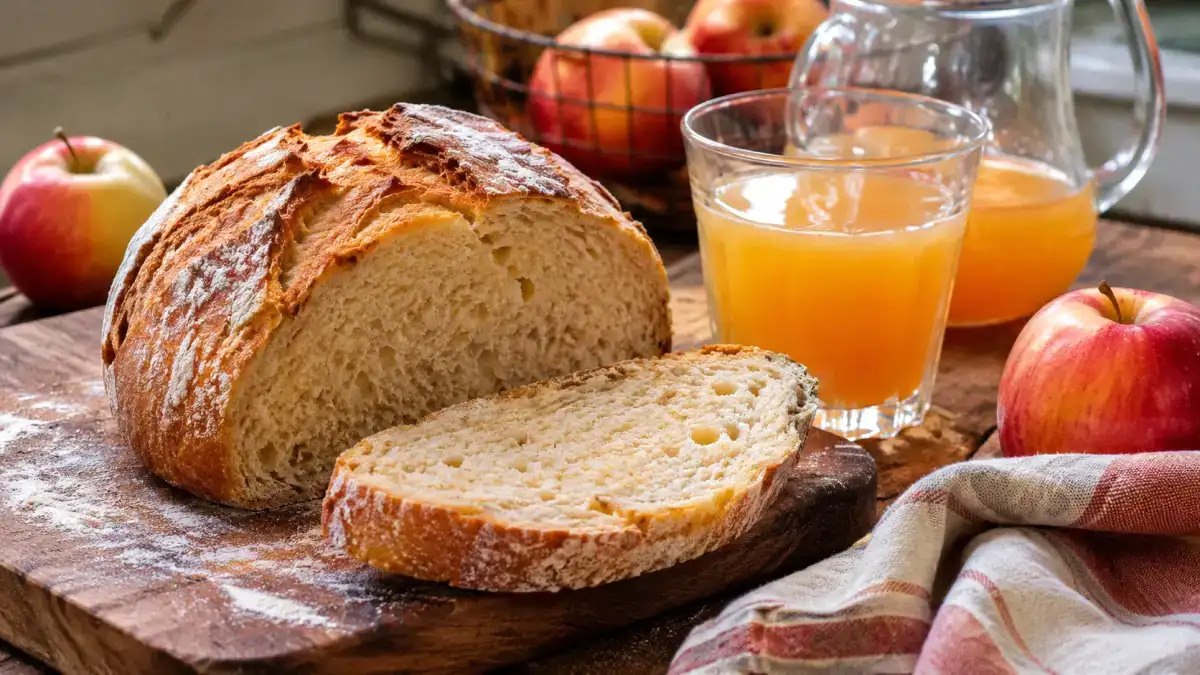
Don't expect a loaf that tastes like apple pie. Think subtle sweetness, a hint of fruit and potentially a deeper-colored crust. Here's what actually changes in the dough, how to try the swap and the little traps worth avoiding.
What changes when water becomes apple juice?
Water helps hydrate flour and develop the gluten structure that traps the gas produced by yeast. Apple juice contains plenty of water too, so it can fulfill that basic job. But it also brings natural sugars, fruit acids and flavor compounds to the mixing bowl.
That means the swap isn't completely neutral. A plain white loaf may taste slightly sweeter, with a gentle apple note. Exactly how noticeable it is depends on the juice, flour and fermentation time. Whole-wheat flour or strong spices can easily overpower it.
For a familiar sandwich loaf, the change is more like a background flavor than a dessert transformation. No need to start preparing cinnamon frosting ;-)
Does the extra sugar make bread rise faster?
Here's where things get interesting. Yeast produces carbon dioxide as it ferments available sugars, and that gas helps dough rise. So adding juice might sound like giving the yeast a turbo boost.
In practice, more sugar doesn't always mean a faster rise. Flour already provides fermentable sugars, and higher sugar concentrations can actually slow yeast by drawing water away from its cells. Apple juice also changes the acidity of the dough, which may affect fermentation.
With a simple loaf, you may see a perfectly normal rise, but don't promise yourself a quicker one. Follow the dough, not just the clock: wait until it has expanded as your recipe describes and feels airy. That is a much more reliable guide than an exact number of minutes.
Expect a little more color in the oven
One of the easiest differences to spot may be the crust. Apple juice supplies sugars that can contribute to browning as the bread bakes, so your loaf may turn golden sooner than the water-based version.
This doesn't mean the center is baked. If the top looks dark before the loaf is done, tent it loosely with foil and continue baking according to your recipe. A thermometer can help with a large loaf, though a recipe's doneness cues still matter.
The crumb can remain soft and bread-like. Juice alone doesn't guarantee a fluffy texture: flour strength, hydration, kneading and proofing still do most of that work.
How to try the swap without ruining your dough
For your first experiment, choose a straightforward yeast-bread recipe and replace the water with an equal volume of 100% apple juice. If it asks for 1 cup water, start with 1 cup juice. Unsweetened juice without added sugar is an easy choice; check the label, since “no added sugar” still contains the fruit's natural sugars.
Use the juice at the temperature your recipe recommends for its liquid, rather than straight from the refrigerator if the method calls for warm liquid. Avoid overheating it, which can harm yeast. Mix and knead as usual, then check the dough's feel. If it is too sticky or firm, adjust carefully with a little flour or liquid instead of making large changes immediately.
For an even gentler introduction, try half apple juice and half water. You can compare the flavor before committing to a full replacement next time.
Which breads are best for this little experiment?
A basic white sandwich loaf is an excellent starting point because the apple note has room to shine. It can also be delightful in soft breakfast rolls, a simple braided loaf or bread destined for toast.
Think about what you'll serve with it. Butter, peanut butter, mild cheese and an apple-and-cheddar sandwich all make sense. For a savory garlic-and-herb loaf, the sweetness may feel less welcome, although that is ultimately a matter of taste.
One important distinction: we're talking about regular apple juice, not apple cider vinegar. Vinegar is far more acidic and isn't a one-for-one replacement for water. Hard cider is different again because it contains alcohol.
A simple side-by-side test is the best answer
Want to find out what happens in your own kitchen? Make two small batches from the same recipe: one with water and one with apple juice. Keep the flour, yeast, salt, mixing method and baking conditions the same.
Notice how each dough feels, how long it takes to proof and whether one loaf colors earlier. After cooling, compare the smell, crumb and flavor. You might prefer the apple version for breakfast and the water version for everyday sandwiches.
This isn't a controlled laboratory experiment, of course. But it's a genuinely useful way to learn how one ingredient swap affects a recipe you already love.
So, is apple juice bread worth making?
Absolutely worth trying if you enjoy a slightly sweet, fruity twist on homemade bread. The substitution can work without turning the loaf into cake, but it may affect browning and fermentation, so stay attentive as you bake.
Start with a reliable recipe, use plain apple juice, and judge the dough by how it behaves. Worst case, you've learned something about bread. Best case, you've found a new favorite for toast the next morning. Now, who's bringing the butter?
Start with a reliable recipe, use plain apple juice, and judge the dough by how it behaves. Worst case, you've learned something about bread. Best case, you've found a new favorite for toast the next morning. Now, who's bringing the butter?

Growing up in her family’s restaurant inspired Juliette’s love of cooking. Since 2017, she has developed, photographed and filmed recipes for Petitchef. Trained in visual imagery and lighting, she loves exploring world cuisines, particularly Asian food.
Comments