Why boil spaghetti separately? This crispy tomato pasta cooks straight in the pan
Monday 16 November 2026 15:30 - Juliette Hess
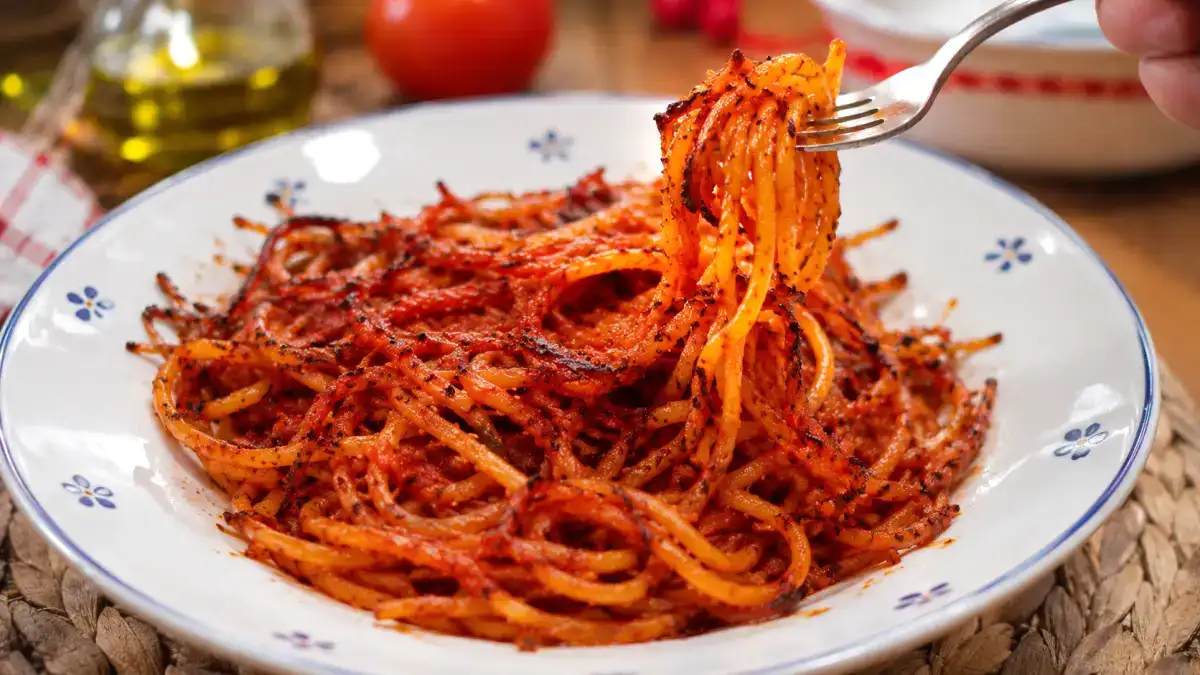
What makes spaghetti all’assassina different?
Most spaghetti is boiled first and tossed with sauce afterward. With spaghetti all’assassina, dry pasta cooks directly in a wide skillet, absorbing tomato liquid little by little. As the liquid evaporates, some strands toast against the pan. The result combines tender, chewy spaghetti with crisp, intensely tomatoey edges.
Its dramatic name is often translated as “killer spaghetti,” but you don't need fierce heat or a cloud of smoke to make it. The goal is controlled toasting, not actual burning. And unlike a regular one-pot pasta, you won't keep everything submerged: a little contact with the skillet is what makes this dish special.
Its dramatic name is often translated as “killer spaghetti,” but you don't need fierce heat or a cloud of smoke to make it. The goal is controlled toasting, not actual burning. And unlike a regular one-pot pasta, you won't keep everything submerged: a little contact with the skillet is what makes this dish special.
What ingredients do you need for two servings?
Gather 7 ounces (about 200 g) dry spaghetti, 1 cup tomato passata or smooth tomato puree, 2 tablespoons tomato paste, 2 garlic cloves, 3 tablespoons olive oil, red pepper flakes and salt. Have about 2 to 3 cups of hot water ready, though you may not need it all.
Choose a large, heavy skillet wide enough for the dry spaghetti to lie mostly flat. A well-seasoned cast-iron or sturdy stainless-steel skillet can work; follow your pan's care instructions. You'll also need a small saucepan for hot tomato broth and a spatula. Nothing fancy, but a crowded pan makes this recipe harder.
Choose a large, heavy skillet wide enough for the dry spaghetti to lie mostly flat. A well-seasoned cast-iron or sturdy stainless-steel skillet can work; follow your pan's care instructions. You'll also need a small saucepan for hot tomato broth and a spatula. Nothing fancy, but a crowded pan makes this recipe harder.
Start in the skillet, not in boiling water
Stir the tomato paste into the hot water with a little salt. Keep this thin tomato broth warm beside the stove. Meanwhile, heat the olive oil in the skillet over medium heat and briefly cook the garlic and chili flakes. Don't let the garlic turn black and bitter.
Add the passata and simmer for a moment, then lay the uncooked spaghetti directly in the tomato sauce. As the ends soften, gently arrange the strands across the skillet. Add a small ladle of tomato broth when needed. Let the pasta absorb it before adding more, turning the spaghetti occasionally so it cooks through while developing toasted patches.
Add the passata and simmer for a moment, then lay the uncooked spaghetti directly in the tomato sauce. As the ends soften, gently arrange the strands across the skillet. Add a small ladle of tomato broth when needed. Let the pasta absorb it before adding more, turning the spaghetti occasionally so it cooks through while developing toasted patches.
How do you get the crispy finish without scorching it?
Unlike a risotto, this pasta doesn't need constant stirring. Give the strands time to contact the pan as the sauce reduces. Listen for a gentle sizzle, then check underneath. Deep red-brown spots are desirable; black, acrid patches aren't. If you smell burning, lower the heat and add a splash of hot broth.
Expect roughly 12 to 20 minutes of cooking, depending on pasta thickness and the skillet. Taste a strand before serving. If the center is still hard, add more broth and continue cooking. If the pan looks soupy, let the liquid evaporate. You want the pasta coated, not swimming.
Expect roughly 12 to 20 minutes of cooking, depending on pasta thickness and the skillet. Taste a strand before serving. If the center is still hard, add more broth and continue cooking. If the pan looks soupy, let the liquid evaporate. You want the pasta coated, not swimming.
Seven little tricks that make all the difference
- First, use a wide, heavy skillet so the spaghetti has room to toast.
- Second, keep the tomato broth hot; cold liquid repeatedly cools the pan.
- Third, add that broth a little at a time rather than flooding the pasta.
- Fourth, resist stirring every few seconds: the strands need contact with the surface to become crisp.
- Fifth, adjust the heat gradually instead of turning the burner to maximum.
- Sixth, taste before declaring the pasta ready; if it's too firm, another splash of liquid is better than forcing a dark crust.
- Seventh, serve it immediately, because the crispy edges soften as the spaghetti sits.
One more practical detail: tomato sauce can splatter when added to a hot pan, so pour carefully and keep your face away from the steam. A little patience is delicious; a dramatic kitchen accident isn't!
What should you serve with this crispy tomato pasta?
The classic flavor combination is bold but simple: tomato, garlic, olive oil and chili. Start with a modest amount of pepper flakes, especially if you're cooking for people who prefer gentle heat. The crust and concentrated tomato flavor should remain the stars of the plate.
A green salad works beautifully alongside it. You can finish with cheese if you like, although creamy toppings may soften those crunchy strands. Leftovers should be refrigerated promptly, but don't expect the same crispness when reheated. This is one of those dishes that really shines straight from the skillet.
A green salad works beautifully alongside it. You can finish with cheese if you like, although creamy toppings may soften those crunchy strands. Leftovers should be refrigerated promptly, but don't expect the same crispness when reheated. This is one of those dishes that really shines straight from the skillet.
Is it really easier than boiling pasta?
You save a separate pot and colander, but this isn't a hands-off shortcut. You'll stay near the skillet, adjusting moisture and watching the color. Try a small batch first, especially if your stove runs hot, and give yourself a chance to learn what toasted tomato smells like before it becomes bitter.
Once you get the rhythm, it's surprisingly satisfying. Who knew that letting spaghetti catch slightly on the pan could be exactly the right move? The next time you're tempted to boil a huge pot of water, you may find yourself reaching for the skillet instead.
Once you get the rhythm, it's surprisingly satisfying. Who knew that letting spaghetti catch slightly on the pan could be exactly the right move? The next time you're tempted to boil a huge pot of water, you may find yourself reaching for the skillet instead.
 Juliette Hess
I have been creating culinary content for Petitchef since 2017.
I love travelling and discovering new dishes, trying out new food trends and exploring new restaurants.
I’m a huge fan of pasta and noodles in all their forms ❤ from udon noodles to tagliatelle, I love cooking them and even making them from scratch!
I’m currently preparing, filming and photographing your next recipe, and I hope you’ll enjoy it!
Comments