Why British farmers are struggling to produce food and what shoppers may notice next
Monday 12 October 2026 17:00 - Juliette Hess
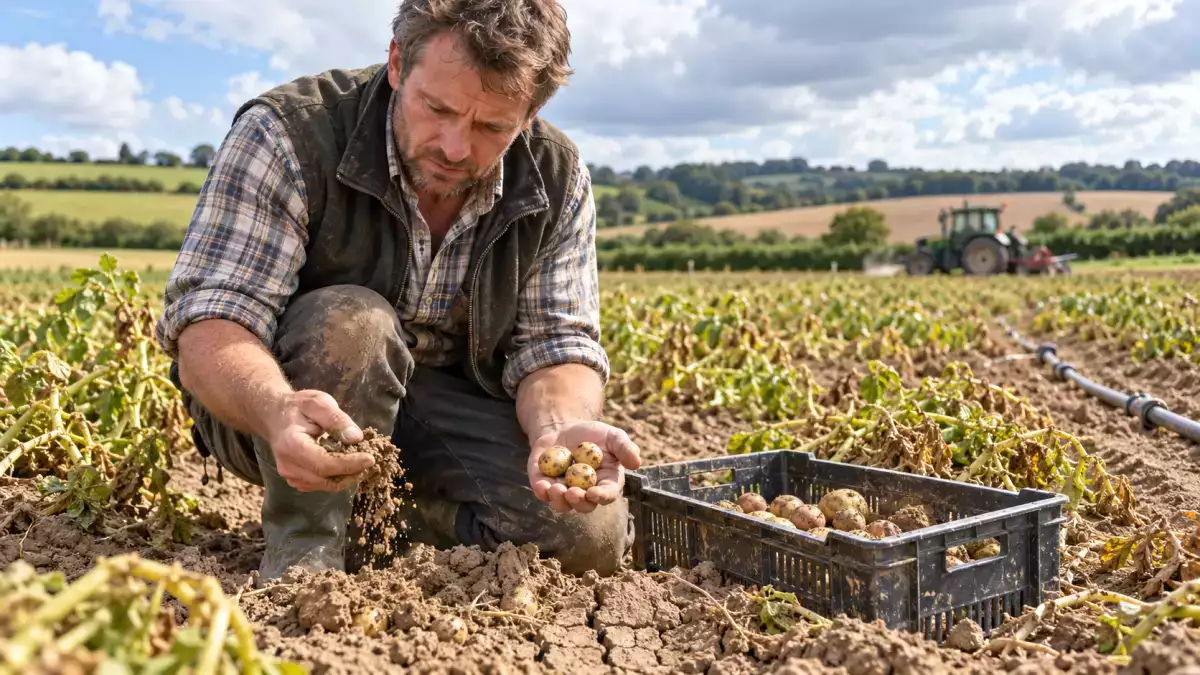
The issue matters because farming is the first link in the food chain. When growers and livestock farmers are squeezed, the effects can move slowly through the system: smaller harvests, higher costs for processors, tighter supply, less choice and eventually pressure on shoppers. That does not mean empty shelves are inevitable, but it does mean food security is becoming a much more everyday conversation.
Weather is making farming less predictable
One of the biggest pressures is extreme weather. Farming has always depended on the seasons, but hotter, drier and more unpredictable conditions make planning much harder. A crop can be planted at the right time and managed carefully, then still suffer if rain does not arrive when it is needed or heat hits at the wrong stage.
Drought is especially difficult because it affects both crops and livestock. Fruit and vegetable growers may struggle to irrigate. Grass growth can slow, leaving livestock farmers short of feed. Even when irrigation is available, it may only keep crops alive rather than help them reach their usual size, yield or quality.
Drought is especially difficult because it affects both crops and livestock. Fruit and vegetable growers may struggle to irrigate. Grass growth can slow, leaving livestock farmers short of feed. Even when irrigation is available, it may only keep crops alive rather than help them reach their usual size, yield or quality.
Higher input costs are squeezing farm businesses
Farmers are also dealing with higher costs for the things they need to produce food: fuel, fertiliser, animal feed, energy, machinery, transport and labour. When those costs rise faster than farmgate prices, the business becomes harder to sustain.
This matters because a farmer cannot always pass those costs on directly. Supermarket contracts, global commodity markets and competition all affect what producers are paid. If the balance does not work, some farms may reduce production, delay investment or leave the sector entirely. That is why rising costs are not just a farmer problem; they are a food system problem.
This matters because a farmer cannot always pass those costs on directly. Supermarket contracts, global commodity markets and competition all affect what producers are paid. If the balance does not work, some farms may reduce production, delay investment or leave the sector entirely. That is why rising costs are not just a farmer problem; they are a food system problem.
Water has become a food-security issue
Water is no longer only an environmental question; it is also a food-production issue. Crops, animals and food-processing sites all depend on reliable water supplies. When drought becomes more frequent, the need for reservoirs, irrigation planning and long-term water infrastructure becomes more urgent.
For shoppers, this can sound distant, but it affects familiar foods. Potatoes, vegetables, soft fruit, salad crops and animal feed are all vulnerable when water is limited. If farmers cannot rely on water at key moments, yields can fall and the food available later in the year may become more expensive or less consistent.
For shoppers, this can sound distant, but it affects familiar foods. Potatoes, vegetables, soft fruit, salad crops and animal feed are all vulnerable when water is limited. If farmers cannot rely on water at key moments, yields can fall and the food available later in the year may become more expensive or less consistent.
Supply chains can absorb shocks, but not endlessly
The UK food system is good at moving large quantities of food quickly, but it is also highly connected. A shock at farm level can affect processors, wholesalers, retailers and shoppers. If crops are smaller, factories may pay more for ingredients. If feed is expensive, meat and dairy production costs rise. If imported food is also affected by heat, water scarcity or transport disruption, there may be fewer easy alternatives.
This is why resilience matters. A resilient food system is not only about having food today; it is about making sure farmers, manufacturers and retailers can keep producing and supplying food through repeated shocks.
This is why resilience matters. A resilient food system is not only about having food today; it is about making sure farmers, manufacturers and retailers can keep producing and supplying food through repeated shocks.
What shoppers may notice at the supermarket
The most visible effect for shoppers is usually price pressure. Food prices do not always rise immediately after a difficult farming season, because contracts, storage and supply chains create delays. But if costs stay high or harvests are poor, pressure can build over time.
Shoppers may also notice changes in size, quality, seasonality or availability. Potatoes may be smaller after a hot, dry summer. Some fruits and vegetables may have shorter seasons or more variable prices. Retailers may lean more on imports, but imported produce can face the same climate and cost pressures in other countries.
Shoppers may also notice changes in size, quality, seasonality or availability. Potatoes may be smaller after a hot, dry summer. Some fruits and vegetables may have shorter seasons or more variable prices. Retailers may lean more on imports, but imported produce can face the same climate and cost pressures in other countries.
How shoppers can respond without panic
This is not a reason to panic-buy. A more useful response is to become a flexible shopper. Choose seasonal produce when it is good value, be open to different sizes and shapes, and use frozen or canned vegetables when fresh options are expensive. Buying British when it fits your budget can also support domestic producers, especially for foods that are in season.
Reducing waste is another practical step. When food has taken more energy, water and money to produce, throwing it away hurts twice. Planning meals, freezing leftovers and using imperfect produce can help households save money while respecting the effort behind each ingredient.
Reducing waste is another practical step. When food has taken more energy, water and money to produce, throwing it away hurts twice. Planning meals, freezing leftovers and using imperfect produce can help households save money while respecting the effort behind each ingredient.
The bigger question: who carries the risk?
The deeper issue is not whether one crop has a bad year. It is whether the food system asks farmers to carry too much risk alone. Extreme weather, volatile costs, disease outbreaks and global disruption are bigger than any one farm business.
If the UK wants reliable food production, farmers need the confidence to keep investing in soil health, water storage, equipment, workers and animal welfare. Shoppers may not see those investments directly, but they shape what appears in stores. In the end, a stronger farming sector means a more dependable food supply for everyone.
If the UK wants reliable food production, farmers need the confidence to keep investing in soil health, water storage, equipment, workers and animal welfare. Shoppers may not see those investments directly, but they shape what appears in stores. In the end, a stronger farming sector means a more dependable food supply for everyone.
 Juliette Hess
I have been creating culinary content for Petitchef since 2017.
I love travelling and discovering new dishes, trying out new food trends and exploring new restaurants.
I’m a huge fan of pasta and noodles in all their forms ❤ from udon noodles to tagliatelle, I love cooking them and even making them from scratch!
I’m currently preparing, filming and photographing your next recipe, and I hope you’ll enjoy it!
I love travelling and discovering new dishes, trying out new food trends and exploring new restaurants.
I’m a huge fan of pasta and noodles in all their forms ❤ from udon noodles to tagliatelle, I love cooking them and even making them from scratch!
I’m currently preparing, filming and photographing your next recipe, and I hope you’ll enjoy it!
Comments