Why champagne growers are harvesting grapes early and what it means for the wine in your glass
Saturday 12 September 2026 21:00 - Daniele Mainieri
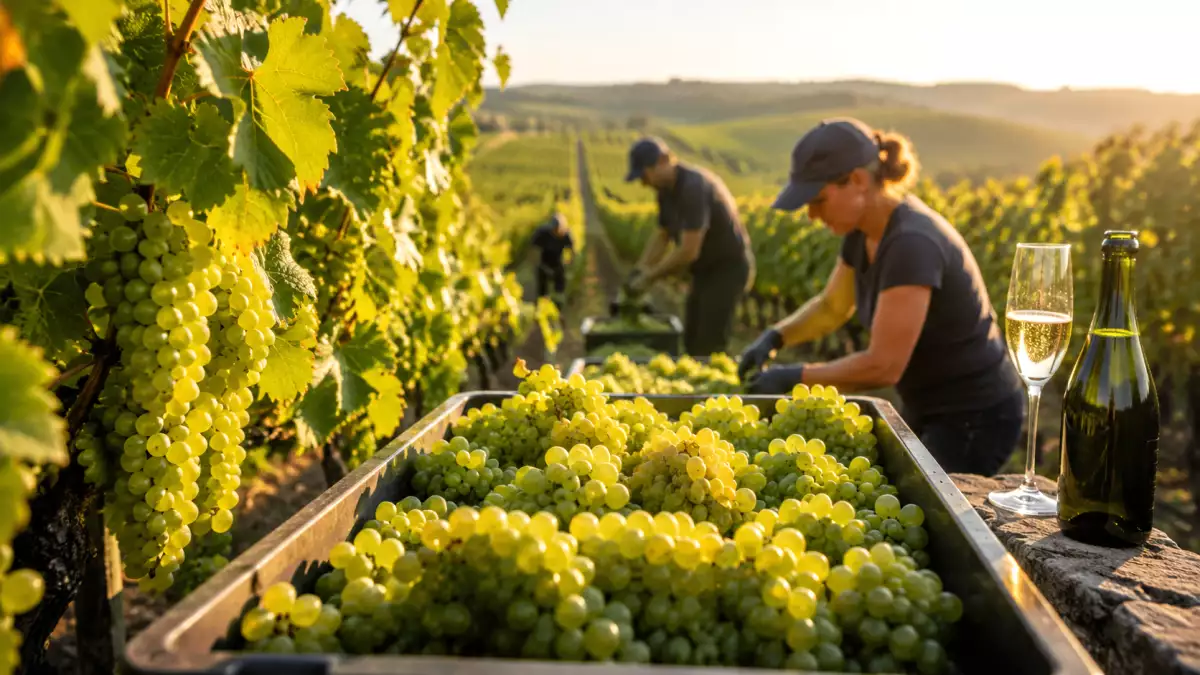
The problem is simple to understand and very difficult to manage: as grapes ripen faster in hot conditions, their sugar levels rise while their acidity can fall. More sugar can mean more potential alcohol, while lower acidity can make sparkling wine taste heavier and less bright. Champagne producers therefore have to choose the harvest moment carefully: too early, and the fruit may lack aroma; too late, and the wine may lose the crisp tension that makes Champagne feel so refreshing.
So why are Champagne growers harvesting grapes earlier, and what does it mean for the bottle on your table? The answer involves climate change, heatwaves, drought, smaller berries, faster decisions, and a future in which Champagne may still sparkle beautifully — but the work behind it is becoming much more urgent.
Why Champagne harvest dates matter so much
Harvest timing matters for every wine, but it is especially important for Champagne. The region’s classic style depends on grapes that are ripe enough to bring flavour, but still fresh enough to provide high acidity. That acidity is one of the reasons Champagne tastes lively, precise and mouthwatering rather than flat or heavy.
For sparkling wine, acidity is not just a technical detail. It gives the wine its lift, balances the richness that can come from ageing on lees, and helps keep the finish crisp. If grapes get too ripe too quickly, the producer may gain sugar but lose some of that refreshing snap.
That is why growers watch the vineyards so closely. A few hot days can change the decision dramatically. The harvest window can shrink from “soon” to “now, please, immediately”.
For sparkling wine, acidity is not just a technical detail. It gives the wine its lift, balances the richness that can come from ageing on lees, and helps keep the finish crisp. If grapes get too ripe too quickly, the producer may gain sugar but lose some of that refreshing snap.
That is why growers watch the vineyards so closely. A few hot days can change the decision dramatically. The harvest window can shrink from “soon” to “now, please, immediately”.
The 2026 harvest started exceptionally early
In 2026, the Champagne harvest began at record-early timing in some areas. Reports from the region described workers picking Chardonnay in Montgueux at dawn in mid-August, with the official start brought forward after the Champagne Committee monitored grape maturity.
The reason was not simply that summer felt warm. Growers were reacting to grapes that were ripening quickly under record heat and drought. One producer was reported to have received special permission to harvest as early as August 6 after tests showed acidity dropping sharply.
That tells you how tight the decision can become. Champagne is no longer always waiting for the traditional cool autumn rhythm. Increasingly, the harvest can arrive while the rest of France is still firmly in summer mode.
The reason was not simply that summer felt warm. Growers were reacting to grapes that were ripening quickly under record heat and drought. One producer was reported to have received special permission to harvest as early as August 6 after tests showed acidity dropping sharply.
That tells you how tight the decision can become. Champagne is no longer always waiting for the traditional cool autumn rhythm. Increasingly, the harvest can arrive while the rest of France is still firmly in summer mode.
Heat pushes sugar up and acidity down
The basic chemistry is important. As grapes ripen, sugar accumulates. In winemaking, that sugar becomes potential alcohol. At the same time, acids can decline, especially during hot conditions. For still wines, riper fruit can sometimes create a plush, generous style. For Champagne, the balance is more delicate.
If grapes become too sweet and not acidic enough, the base wines may feel broader, warmer or heavier. They may have less of the sharp, elegant freshness that many Champagne drinkers expect. Producers can still make excellent wines, but the margin for error becomes smaller.
This is why early harvesting is not about impatience. It is about protecting the wine’s backbone. In Champagne, freshness is flavour insurance.
If grapes become too sweet and not acidic enough, the base wines may feel broader, warmer or heavier. They may have less of the sharp, elegant freshness that many Champagne drinkers expect. Producers can still make excellent wines, but the margin for error becomes smaller.
This is why early harvesting is not about impatience. It is about protecting the wine’s backbone. In Champagne, freshness is flavour insurance.
Drought can reduce yields and concentrate grapes
Heat is only part of the story. Drought can also stress vines and reduce the amount of juice in the grapes. Berries may be smaller, less juicy and more concentrated. That can be good for flavour intensity in some cases, but it can also mean lower yields and more financial pressure for growers.
Reports from France in 2026 described concerns about smaller harvests, heat-damaged grapes and pressure on production volumes. In Champagne, where grapes must be hand-picked and quality rules are strict, that adds another layer of difficulty.
For the drinker, this does not automatically mean bad wine. It may mean a vintage with concentration, but also one shaped by careful sorting, fast picking and tough decisions in the vineyard.
Reports from France in 2026 described concerns about smaller harvests, heat-damaged grapes and pressure on production volumes. In Champagne, where grapes must be hand-picked and quality rules are strict, that adds another layer of difficulty.
For the drinker, this does not automatically mean bad wine. It may mean a vintage with concentration, but also one shaped by careful sorting, fast picking and tough decisions in the vineyard.
Why hand-picking makes the rush harder
Champagne grapes are harvested by hand. This protects the fruit and allows whole bunches to be pressed gently, which is important for high-quality sparkling wine production. But hand-picking also means the region needs a huge number of seasonal workers at exactly the right time.
When harvest dates move earlier, labour planning becomes harder. Pickers who expected late August or September work may not be available. Growers may have to organise teams faster, pick at cooler times of day, and move quickly before heat damages fruit quality.
That human side matters. Behind every elegant flute is a logistics operation involving weather forecasts, maturity checks, picking teams, transport, pressing schedules and a lot of early mornings.
When harvest dates move earlier, labour planning becomes harder. Pickers who expected late August or September work may not be available. Growers may have to organise teams faster, pick at cooler times of day, and move quickly before heat damages fruit quality.
That human side matters. Behind every elegant flute is a logistics operation involving weather forecasts, maturity checks, picking teams, transport, pressing schedules and a lot of early mornings.
What early harvest can mean for flavour
Early harvest does not automatically mean underripe wine. In a hot year, grapes can reach sugar ripeness quickly. The challenge is whether they also have enough aromatic development. Winemakers are looking for balance between sugar ripeness, acid freshness and flavour maturity.
If producers pick at the right moment, the resulting Champagne may taste bright, energetic and precise, with concentrated fruit and good freshness. If the heat has pushed ripeness too far, wines may feel rounder, softer or more powerful than usual.
So the style may vary. Some bottles could show richer fruit, while others may rely on blending skills to keep the classic Champagne tension.
If producers pick at the right moment, the resulting Champagne may taste bright, energetic and precise, with concentrated fruit and good freshness. If the heat has pushed ripeness too far, wines may feel rounder, softer or more powerful than usual.
So the style may vary. Some bottles could show richer fruit, while others may rely on blending skills to keep the classic Champagne tension.
Blending becomes even more important
Champagne has a major advantage: blending. Many non-vintage Champagnes are made from wines from different vineyards, grape varieties and sometimes reserve wines from previous years. This gives producers tools to maintain a consistent house style even when one vintage is extreme.
In a hot, early year, reserve wines can help bring freshness, complexity or balance. Different grape varieties may also respond differently. Chardonnay, Pinot Noir and Meunier each ripen in their own way, and each village or plot can tell a different story.
This is where the cellar master earns the quiet applause. The vineyard gives the ingredients; blending turns them into Champagne.
In a hot, early year, reserve wines can help bring freshness, complexity or balance. Different grape varieties may also respond differently. Chardonnay, Pinot Noir and Meunier each ripen in their own way, and each village or plot can tell a different story.
This is where the cellar master earns the quiet applause. The vineyard gives the ingredients; blending turns them into Champagne.
Will Champagne taste different in your glass?
Possibly, but not always in an obvious way. A well-made Champagne from an early, warm harvest may still taste elegant and refreshing. Producers work very hard to preserve acidity, sort fruit and balance the final wine.
However, climate pressure can subtly shift style over time. Some Champagnes may show riper fruit, slightly broader texture or warmer profiles. Others may remain razor-fresh because producers harvested early, used careful blending or selected cooler sites.
The simplest way to notice the change is to compare bottles. A warm-year Champagne may feel more generous and fruit-forward, while a cooler-year style may feel more citrusy, linear and bracing.
However, climate pressure can subtly shift style over time. Some Champagnes may show riper fruit, slightly broader texture or warmer profiles. Others may remain razor-fresh because producers harvested early, used careful blending or selected cooler sites.
The simplest way to notice the change is to compare bottles. A warm-year Champagne may feel more generous and fruit-forward, while a cooler-year style may feel more citrusy, linear and bracing.
What about bubbles?
The bubbles themselves come from the second fermentation in the bottle, not directly from the harvest date. But the base wine matters. Acidity, alcohol, phenolic balance and overall structure can influence how fresh and lively the Champagne feels.
A Champagne with good acidity often seems more vibrant, which can make the bubbles feel sharper and more refreshing. A softer, riper base wine may make the mousse feel rounder or more generous. Neither is automatically bad, but they are different sensations.
So when growers race to preserve acidity, they are not only protecting flavour. They are protecting the whole experience of the glass: the lift, the freshness and the sparkle’s sense of energy.
A Champagne with good acidity often seems more vibrant, which can make the bubbles feel sharper and more refreshing. A softer, riper base wine may make the mousse feel rounder or more generous. Neither is automatically bad, but they are different sensations.
So when growers race to preserve acidity, they are not only protecting flavour. They are protecting the whole experience of the glass: the lift, the freshness and the sparkle’s sense of energy.
Could early harvest affect price?
Early harvesting itself does not automatically raise prices, but the conditions behind it can matter. If drought, frost or heat reduce yields, there may be less wine to sell. If labour is harder to organise, costs can rise. If growers must sort more fruit or work faster, the production challenge increases.
Champagne is already a high-cost region because of its labour-intensive methods, strict rules and long ageing requirements. Climate pressure adds another variable to an already complex business.
For consumers, the effect may be gradual rather than immediate. But over time, repeated small harvests and higher production costs can influence availability and price, especially for smaller producers.
Champagne is already a high-cost region because of its labour-intensive methods, strict rules and long ageing requirements. Climate pressure adds another variable to an already complex business.
For consumers, the effect may be gradual rather than immediate. But over time, repeated small harvests and higher production costs can influence availability and price, especially for smaller producers.
How growers are adapting
Champagne producers are not simply watching the climate change and shrugging. Adaptation is already part of the conversation. Growers are monitoring maturity more closely, protecting soils, reconsidering vineyard management and looking at ways to preserve water and freshness.
Some approaches include maintaining ground cover, improving canopy management to shade grapes, selecting plots carefully and exploring more resilient grape material within appellation rules. The challenge is to adapt without losing the identity that makes Champagne Champagne.
That is the delicate balance: change the methods enough to preserve the style.
Some approaches include maintaining ground cover, improving canopy management to shade grapes, selecting plots carefully and exploring more resilient grape material within appellation rules. The challenge is to adapt without losing the identity that makes Champagne Champagne.
That is the delicate balance: change the methods enough to preserve the style.
What to look for when you buy Champagne
You do not need to become a climate scientist to choose a good bottle. But it can help to read vintage notes, producer information and tasting descriptions. Words like fresh, tense, mineral, citrusy, bright and precise suggest a crisp style. Words like ripe, generous, rounded, orchard fruit or tropical may suggest a fuller profile.
If you enjoy lean, energetic Champagne, ask for producers or cuvées known for freshness. If you like richer styles, warmer vintages may suit you beautifully. There is no single correct preference.
The best glass is the one that tastes balanced to you.
If you enjoy lean, energetic Champagne, ask for producers or cuvées known for freshness. If you like richer styles, warmer vintages may suit you beautifully. There is no single correct preference.
The best glass is the one that tastes balanced to you.
The takeaway
Champagne growers are harvesting earlier because hotter, drier seasons are accelerating ripening. Grapes can gain sugar quickly while losing acidity, and that creates a narrow window for producers who want to preserve freshness, elegance and balance.
For the wine in your glass, this may mean subtle changes: riper fruit, more concentration, softer acidity in some cases, or even more careful blending to maintain the classic Champagne profile. It may also mean more pressure on yields, labour and long-term pricing.
But early harvest does not mean Champagne is doomed. It means the people making it are working faster, watching more closely and adapting to protect what drinkers love: that bright, celebratory combination of fruit, acidity, bubbles and finesse. The glass may still sparkle; but the story behind it is getting hotter, earlier and more complicated.
For the wine in your glass, this may mean subtle changes: riper fruit, more concentration, softer acidity in some cases, or even more careful blending to maintain the classic Champagne profile. It may also mean more pressure on yields, labour and long-term pricing.
But early harvest does not mean Champagne is doomed. It means the people making it are working faster, watching more closely and adapting to protect what drinkers love: that bright, celebratory combination of fruit, acidity, bubbles and finesse. The glass may still sparkle; but the story behind it is getting hotter, earlier and more complicated.
 Daniele Mainieri
Every day, I dive into the world of food and wine with curiosity, always looking for new flavours, recipes and inspiring discoveries to share. From traditional family dishes to the latest food trends, including pairings that make all the difference. I’ve been working in food & wine communication for over 10 years and I’m currently the Editorial Manager for the Italian edition of Petitchef.
Comments