Why has my chocolate gone white... and how can I avoid this?
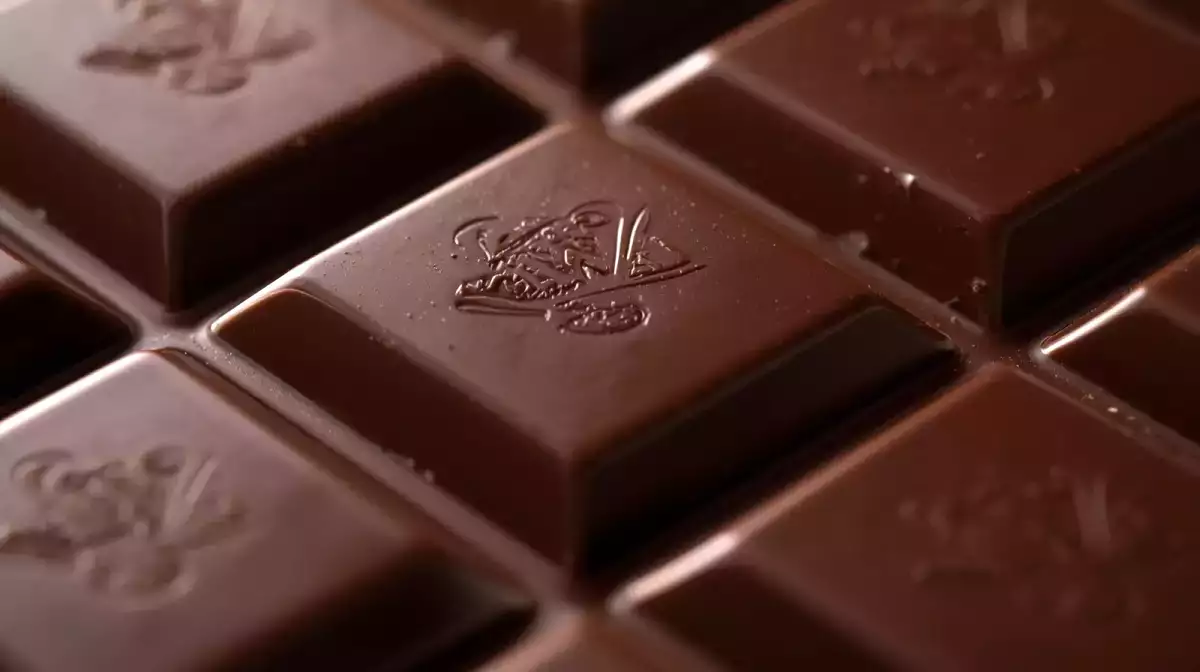
You open a bar of chocolate that you've been saving preciously. And there's a nasty surprise: a white film, sometimes powdery, sometimes a little greasy, has settled on the surface.
First instinct: think it's out of date. The good news is that whitened chocolate is not dangerous and remains edible.
But why does chocolate turn white? And above all, how can we prevent it from happening again?
Chocolate, a sensitive product (much more so than you might think)
To understand whitening, we first need to look at what chocolate is made of.
Dark chocolate mainly contains :
- cocoa butter (the fatty part),
- defatted dry cocoa,
- sugar
- an emulsifier (often lecithin).
In milk chocolate, milk is added.
White chocolate contains no dry cocoa, but always cocoa butter.
➡️Le key point: chocolate is a mixture of sugar and fat, both of which are highly sensitive to temperature and humidity.
Why does chocolate turn white?
Bleaching is not mold. It is a physical imbalance in the chocolate, caused by its environment.
When chocolate undergoes :
- temperature variations,
- excessive humidity
- or stored for too long,
- its internal structure changes. The result: white traces appear on the surface.
But beware: there are two types of whitening, which do not have the same origin.
Fatty or dry bleaching: how to recognize them?
Fatty bleaching (most frequent)
- Appearance: white or grayish film
- Touch: smooth and slightly greasy
- The trace disappears when you run your finger over it
Cause : cocoa butter migrates to the surface due to temperature variations. It melts slightly, rises, then resolidifies poorly.
Good news: it's reversible.
Simply re-melt and temper the chocolate to restore its original appearance.
Dry blanching (or sugar blanching)
- Appearance: matt white
- Touch: rough, almost sandy
Cause : sugar.
In a too-humid environment, condensation forms on the surface of the chocolate. The sugar dissolves, then recrystallizes irregularly as it dries.
This is the type of whitening often encountered after a spell in the fridge.
Chocolate's three great enemies
According to chocolate experts, three factors promote bleaching:
- Humidity, which causes sugar whitening
- Temperature variations, responsible for fatty whitening
- Time, because the older a chocolate gets, the more it undergoes these imbalances
How to prevent chocolate from turning white?
1. Don't wait too long to eat it
The longer a chocolate is stored, the more likely it is to whiten.
Even if it can be eaten long after its expiry date, especially dark chocolate, its visual and taste qualities can deteriorate.
2. Store at the right temperature
The ideal temperature is between 57 and 64°F 14 and 18°C.
Not too hot, not too cold.
3. Keep it dry
A dry place, with humidity around 50-55%, is ideal.
Once opened, close the package tightly or place the chocolate in an airtight box, preferably made of metal.
4. Avoid the fridge (really)
Contrary to popular belief, the fridge is the enemy of chocolate:
- temperature too low (around 39°F/4°C),
- high humidity,
- condensation on exit.
The result: almost guaranteed whitening.
5. Where to store it when it's hot?
If you have one, the wine cellar is perfect: stable temperature and low humidity.
Can you eat chocolate that has gone white?
Yes, without any health risk.
Bleaching is not a health hazard, but an aesthetic and sometimes gustatory one.
On the other hand, the texture may become :
- more granular,
- less melting,
- slightly bland.
What to do with blanched chocolate
- Re-melting and tempering if using baking chocolate
- Use in cakes, brownies, mousses and sauces.
- Grate or melt: once incorporated into a recipe, the whitening process disappears completely.
If your chocolate turns white, it's neither a manufacturing defect nor a hazard.
It's simply a sign that it's been subjected to too much cold, too much heat or too much humidity.
Proper storage, a stable temperature and a dry place are all it takes to preserve its shine, texture and flavor!
 Adèle Peyches
Comments