You've never heard of it... but this diet is impressing nutritionists
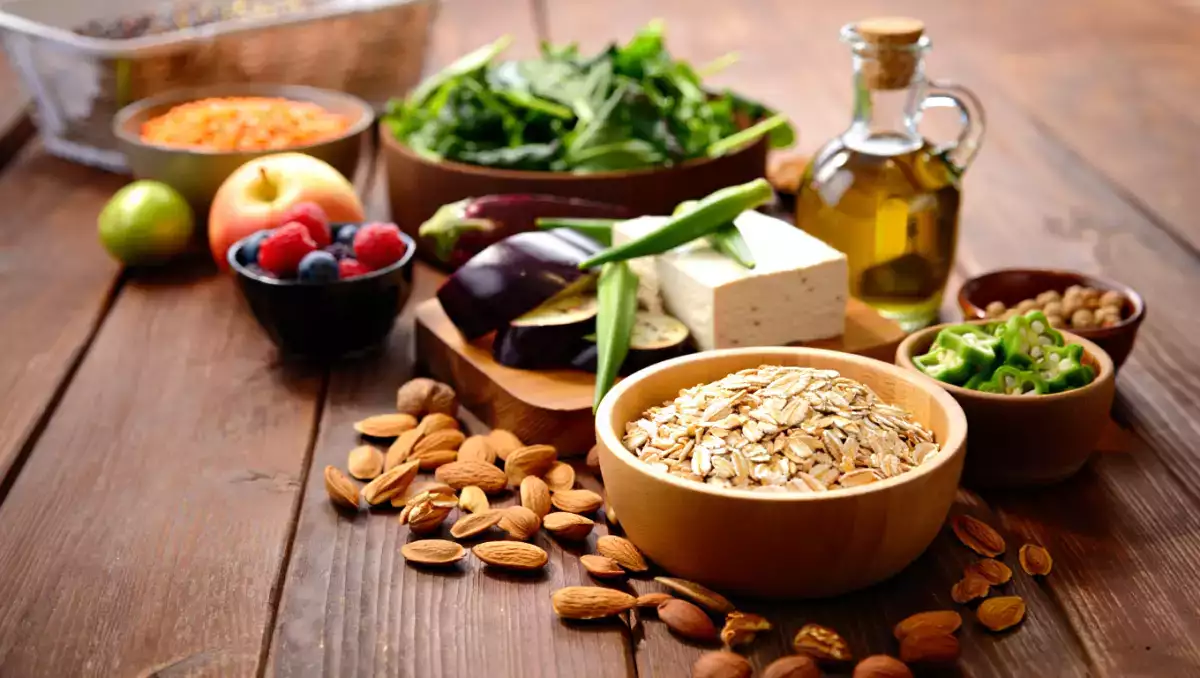
We all know someone who's taken to the "miracle diet" seen on Instagram... then lasted two weeks. The "portfolio" diet, on the other hand, makes much less noise. And yet, it's a regular feature in serious papers, because it ticks a rare box: it doesn't promise the moon, it stacks small levers that, put together, have a real effect.
That's exactly the idea summed up in this article reported by Slate: the portfolio works like... an investor's portfolio. You don't rely on a single "magic" food, you combine several food families known to help your lipid profile!
The (simple) principle: the cumulative effect rather than the "all or nothing" approach
The portfolio was developed in the early 2000s by Prof. David Jenkins (University of Toronto). Its rationale is to bring together in a single day several food "bricks", each with a documented effect on LDL cholesterol, and to see what happens when they act together.
In the most widely described versions, these include :
- soluble fibers (oats, barley, legumes, certain fruits),
- vegetable proteins (soy, tofu, soymilk, legumes),
- oilseeds (walnuts, almonds, etc.),
- plant sterols (often via fortified foods, to be incorporated in a supervised manner).
What's interesting, and what Slate emphasizes, is that the diet is organized more as "what I add" than "what I forbid".
The results: what the research says
Two levels of evidence stand out.
1) On cholesterol: marked reductions under controlled conditions
In highly controlled settings, the portfolio has shown significant reductions in LDL. A reference summary (HEART UK) speaks of an LDL reduction of up to 35% under controlled metabolic conditions.
Other scientific publications often report reductions of around 20-30%, depending on modalities and adherence.
Remember: "bad" cholesterol (LDL) is the portfolio's historical target, and its most robust field.
2) On cardiovascular health and mortality: more solid recent data
Where Slate's article makes its mark is in citing a cohort study published in BMC Medicine in 2025: out of 14,835 adults followed over a long period, those most adherent to the portfolio had a 16% reduced risk of cardiovascular mortality and a 14% reduced risk of all-cause mortality.
Even if we're talking about an association here (and not a trial where the diet is "forced"), this type of result, based on large numbers and a long duration, weighs in the balance.
Why it works: the "combo" of 4 complementary levers
There's nothing mysterious about this diet: it ticks a number of fairly logical boxes.
- Soluble fibers help reduce cholesterol absorption and improve lipid profile.
- Vegetable proteins (especially soy/legumes) often replace proteins richer in saturated fats.
- Oilseeds provide unsaturated fats and a satiating effect.
- Plant sterols can help lower LDL by limiting intestinal absorption of cholesterol.
And this is precisely the "portfolio" idea: each element brings a gain, and the cumulative effect becomes more interesting than the sum of isolated efforts.
Is it "miraculous"? No. Is it effective? Often, yes.
The word "spectacular" appeals, but there are two nuances to be borne in mind:
- In real life, the effect depends enormously on adherence. HEART UK, for example, notes more modest reductions in LDL levels, of around -17%, among free-living people.
- The portfolio does not replace medical follow-up in cases of significant hypercholesterolemia, past history, diabetes or ongoing treatment. It can be added to (and sometimes help improve) the situation, but it should not make you "forget" the rest.
Typical goals (and how to achieve them without worrying)
The article relayed by Slate mentions fairly specific daily targets (vegetable proteins, nuts/seeds, oils, fiber, sterols).
The trap is to want everything to be perfect by Monday.
The realistic version is :
- add a "portfolio" base to one meal a day,
- then gradually expand.
Two very concrete pieces of advice often given: increase fibre little by little (otherwise, hello bloating) and make life easier with simple swaps (e.g. barley instead of rice, hummus + wholemeal bread instead of something ultra-processed).
A portfolio day without a punitive vibe
Here's a small example that's easy to visualize (without being to the gram):
Morning: oat porridge + apples/berries + a handful of nuts.
Lunch: lentil or chickpea salad + vegetables + olive oil + wholemeal bread.
Snack: vegetable/soy yoghurt or fruit + almonds.
Evening: sautéed tofu (or beans) + vegetables + wholegrain cereal.
The idea is not to become perfect, but to bring in the key bricks regularly.
The right message to keep
If you had to remember 3 things :
The portfolio is a "cumulative" strategy: several food families, a cumulative effect.
The data on LDL are solid, and a recent study associates strong adherence with lower cardiovascular mortality.
It's not a "punishment" diet: rather, it's a framework for adding the right foods, without prohibiting any joie de vivre!
 Adèle Peyches
Comments