Your popcorn doesn't need more salt: it needs this to make the seasoning really stick
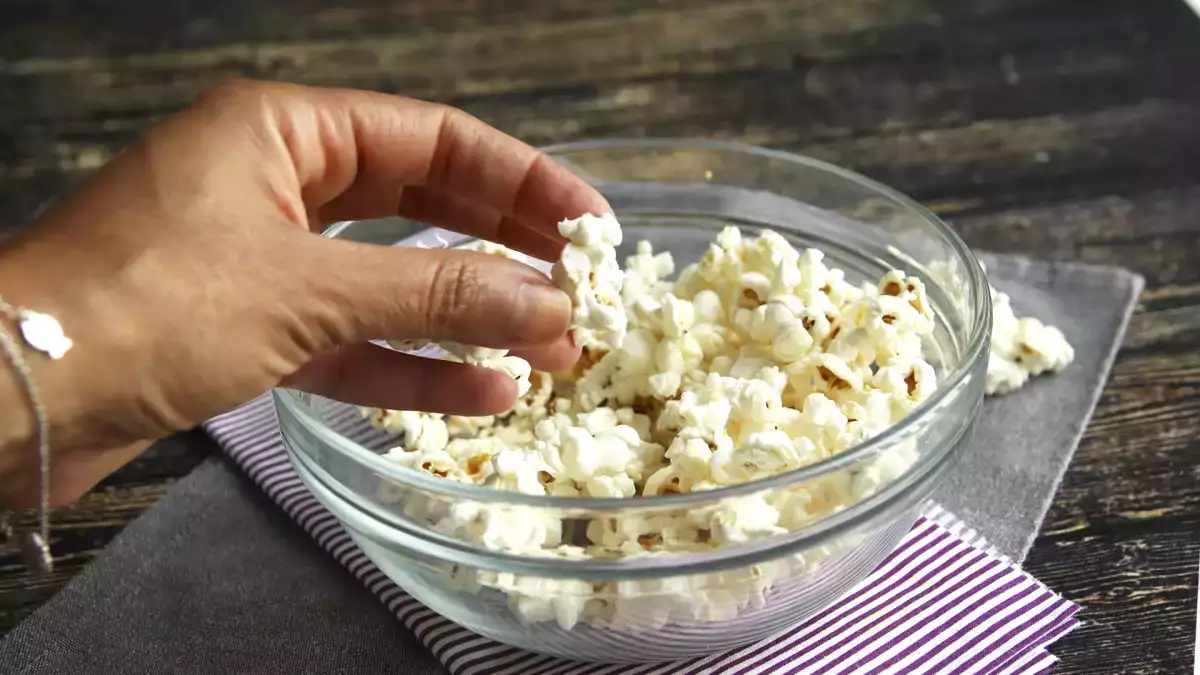
There are rituals that we all do, that need no introduction. An Oscar gala that goes on until the wee hours of the morning, a Sunday afternoon with three back-to-back episodes of a series you swore you'd watch at leisure or a couch-and-blanket session where the only thing that really can't fail is the bowl of popcorn. And yet, it fails. Not the corn, which usually pops without too many problems, but the important thing: the time to flavor it.
Because making popcorn at home is easy. The hard part is that they taste the way you expect them to. That the salt does not stay at the bottom of the bowl. That the cheese powder does not disappear at the first shake. That the paprika or the spice mixture doesn't end up as a loose residue that barely grazes the surface. As soon as you try to make homemade popcorn really pop, the same obstacle appears: the seasoning doesn't quite stay where it should.
And then the wrong solution usually comes along. More butter. More oil. More salt. More of everything. But the problem is not fixed by accumulation. In fact, it often gets worse.
The mistake is not in the quantity, but in how they are seasoned.
Popcorn has a texture that works in favor of crunchiness, but against seasoning. They are light, dry and airy, which is precisely why salt and spices tend to slip or fall to the bottom of the bowl if added plain.
That's why so much homemade popcorn disappoints. Not because they are poorly made, but because they are poorly finished. It's not just a domestic impression: Serious Eats analyzed this very problem and found that, in popcorn, the big stumbling block is not making the popcorn, but getting the seasoning to really stick.
Here it is convenient to separate two moments. One is popping the corn. Another, very different, is the final finish, which is where it is decided whether the bowl is going to have real flavor or remain a half-promise. And here it is not the one who uses the most seasoning that wins, but the one who applies it best.
What they need is not more grease, but a little grip.
The key is to create a barely adherent surface, just enough for the seasoning to set without spoiling the texture. That nuance matters a lot. Popcorn doesn't need to be dipped in butter or come out oily; it needs minimal help so that the salt or spices don't come off at the first movement.
That's why a light touch of oil at the end works better than a generous shower of melted butter. Oil, used sparingly, leaves a very thin film that helps to set the seasoning. Butter can add flavor, yes, but it also adds moisture, and that moisture is the enemy of crispiness.
You can tell the difference right away. When popcorn gets too fatty, it becomes heavy. When it gets wet, it loses its lightness. But when they receive only a minimal coating, the seasoning starts to behave differently.
Coarse salt or fine salt - does it matter?
Fine salt or very very fine seasonings help more than it seems. The other important detail is the size of the seasoning. Very coarse salt or coarse seasonings spread worse and have a greater tendency to fall off. On the other hand, a fine salt, almost powdered, covers the surface better and stays on more easily.
The same applies to other ingredients. A fine powdered cheese, some finely ground spices or a little nutritional yeast work better than any coarser or more irregular mixture. In popcorn, lighter, finer seasonings always play to your advantage.
There is no need to make this a technical obsession: just remember that the finer the seasoning, the better it usually works.
How to get popcorn that tastes like real popcorn
The good sequence is quite simple. First, pop the popcorn as usual, ideally with a little oil so that it is well opened and light. Then, once off the heat, add a minimum amount of oil, just a few well distributed drops or a light spray. The aim is not to make them shine, but to remove the completely dry touch.
At this point, with the popcorn still hot, add the fine salt or seasoning of choice and mix well. The heat helps, the oil sets and the small kernel does the rest.
It seems a minor detail, but that is the difference between popcorn where the flavor stays at the bottom of the bowl and others where it is noticeable in every handful.
What to avoid if you don't want to spoil them
There are three common mistakes. The first is to trust everything to butter. It may be very appetizing at first, but it tends to soften faster than it compensates. The second is to use too much fat, thinking that this way the dressing will stick better: in reality, the only thing that is often achieved is to make them more sticky. And the third is to use coarse salt or too coarse seasonings, which inevitably end up in the bottom.
If you are looking for a more balanced result, it is best to think of the finish almost like an invisible batter: a minimal film and a fine seasoning.
The detail that enhances the evening on the sofa
It is not necessary to turn homemade popcorn into an exact replica of the movie theater popcorn to make it much better. It is enough to correct that last gesture that is almost always done in a hurry and without thinking too much. Because the secret is not to pop more, but to pop it better.
So, if you have a long night ahead of you in front of the awards, a Netflix marathon or simply one of those domestic plans in which the bowl of popcorn counts almost as much as what's on screen, it's worth keeping in mind: a little oil at the end, fine salt and no excesses.
Sometimes, taste doesn't depend on a great gimmick, but on not doing the usual.
Shall we put it to the test?
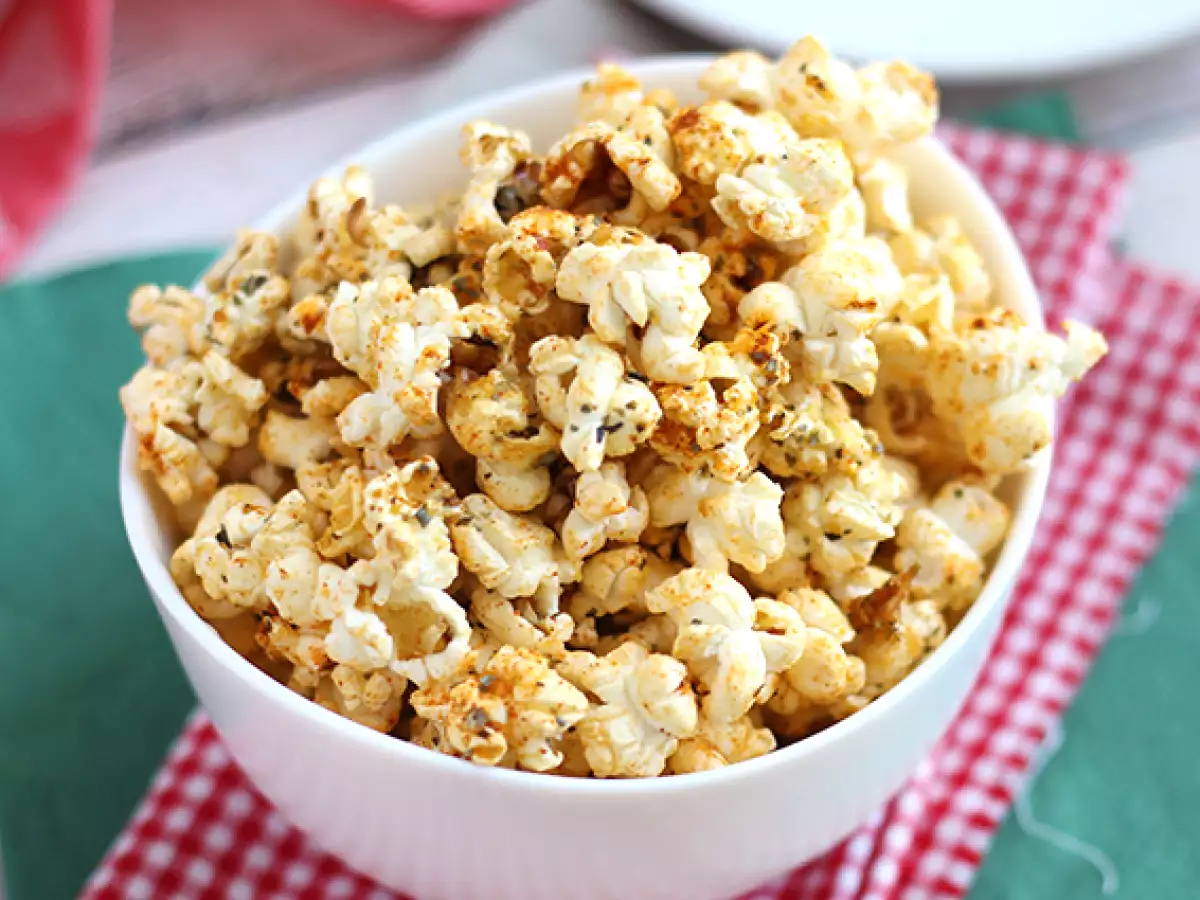
Take your movie night to the next level with these popcorns! If you already love popcorn for snacking or enjoying a Saturday night movie, we add a very easy and quick flavor twist. Add a bit of butter to help the spices stick better and make them...
 Patricia González
Comments