5-minute wine tasting: simple sommelier tips to taste confidently without looking ridiculous
Sunday 4 October 2026 10:00 - Daniele Mainieri
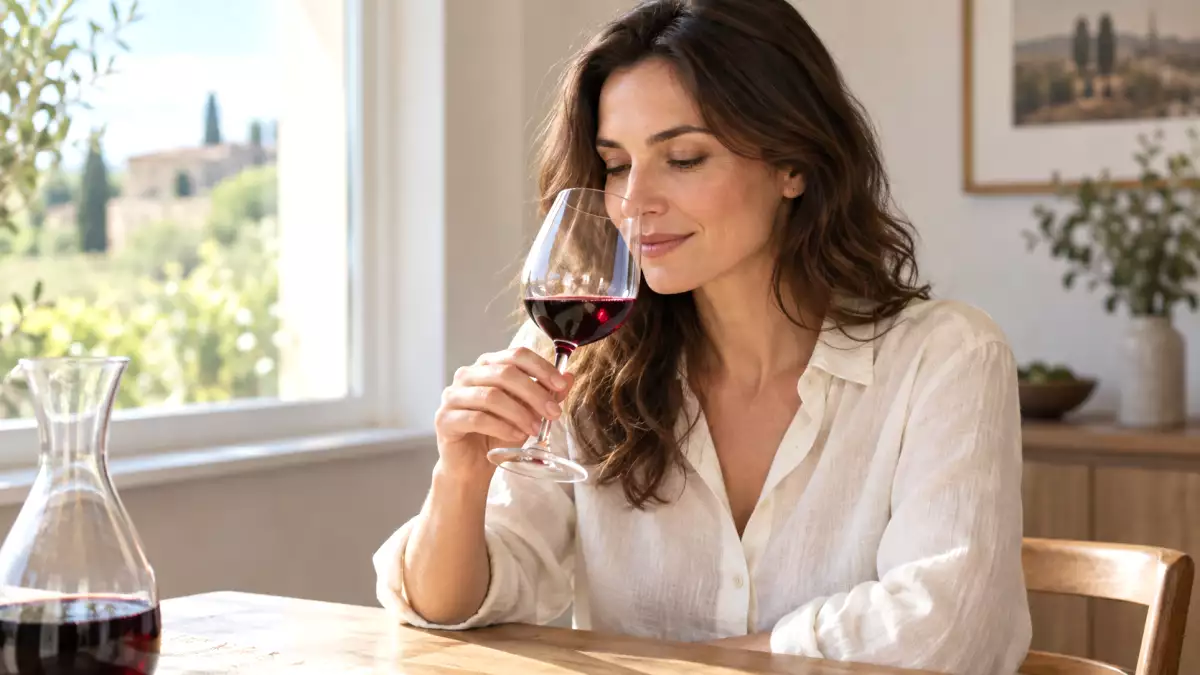
This guide is for anyone who loves to cook, travel, share a meal, and choose a bottle without feeling out of place. You don’t need to be a sommelier, you don’t need to know every grape variety in the world, and you don’t need to pretend to recognize impossible aromas. In five minutes, you can learn a simple sequence that’s useful anywhere: at home, at a restaurant, at a wine shop, during a dinner with friends, or when faced with a wine you’ve never tried before.
Rule #1: You don't have to guess everything
The first mistake is to think that wine tasting means identifying the name, vintage, and grape variety on the first sip. That’s a technical exercise used in certifications and professional exams. For the average person, however, the goal is more practical: to understand what the wine is like, whether it’s balanced, how intense it is, whether it pairs well with the dish, and whether it’s worth remembering.
Authoritative organizations such as the Wine & Spirit Education Trust teach how to evaluate wine through a structured process: appearance, aromas, taste, and personal conclusion. The Court of Master Sommeliers uses a tasting grid based on sight, nose, and palate. The at-home version is much simpler: look, smell, taste, then say something truthful. Even just saying, “It’s fresh, it smells like fruit, and it seems light to me,” is already a meaningful comment.
Authoritative organizations such as the Wine & Spirit Education Trust teach how to evaluate wine through a structured process: appearance, aromas, taste, and personal conclusion. The Court of Master Sommeliers uses a tasting grid based on sight, nose, and palate. The at-home version is much simpler: look, smell, taste, then say something truthful. Even just saying, “It’s fresh, it smells like fruit, and it seems light to me,” is already a meaningful comment.
The glass: hold it firmly, but don't make a big show of it
Let’s start with the most obvious gesture. Hold the glass by the stem or the base, not by the bowl. This isn’t a snobbish gesture: it prevents you from warming the wine with your hand and leaves no fingerprints right where you need to observe the color.
You don’t need to raise your glass to the chandelier to look like an expert. Tilt it slightly in front of a light-colored surface—even a white napkin will do. Look at the color and clarity. A white wine can range from straw yellow to golden; a red wine can be ruby, garnet, or purplish. You don’t have to turn everything into a lecture: just note whether the wine appears bright, clear, young, mature, light, or concentrated.
A useful and natural thing to say? “It has a very bright color” or “it looks like a fairly young red.” That’s it. No one will feel judged, and you won’t come across as a wine snob.
You don’t need to raise your glass to the chandelier to look like an expert. Tilt it slightly in front of a light-colored surface—even a white napkin will do. Look at the color and clarity. A white wine can range from straw yellow to golden; a red wine can be ruby, garnet, or purplish. You don’t have to turn everything into a lecture: just note whether the wine appears bright, clear, young, mature, light, or concentrated.
A useful and natural thing to say? “It has a very bright color” or “it looks like a fairly young red.” That’s it. No one will feel judged, and you won’t come across as a wine snob.
Turning the glass: When it's really necessary
Swirling the wine in the glass makes sense: it helps release the aromas and makes it easier to detect them. But the movement should be small and controlled. If you’re worried about spilling it, rest the glass on the table and trace small circles with the base. It’s the safest and least dramatic method.
Don’t sniff right away as if you were looking for a clue in a detective movie. First, take a brief sniff with the glass still, then swirl it and smell again. If the aromas intensify, you’ll understand why this step is necessary. If you don’t detect much, don’t make things up. Some wines are delicate; others need a few minutes in the glass.
Don’t sniff right away as if you were looking for a clue in a detective movie. First, take a brief sniff with the glass still, then swirl it and smell again. If the aromas intensify, you’ll understand why this step is necessary. If you don’t detect much, don’t make things up. Some wines are delicate; others need a few minutes in the glass.
What to say when you smell wine
This is where many people get stuck because they’re afraid of saying something trite. In reality, the best words are often the simplest. Start with the major aroma families: fruit, flowers, herbs, spices, toasty notes, earth, mineral, citrus, and dried fruit. Then, if something comes to mind naturally, you can be more specific: apple, peach, cherry, lemon, pepper, vanilla, almond, or cut grass.
You don’t necessarily have to identify spectacular aromas. It’s better to say “it reminds me of red fruit” than to force a description like “wild cherry picked at dawn.” A credible tasting is one that remains clear, personal, and measured.
You don’t necessarily have to identify spectacular aromas. It’s better to say “it reminds me of red fruit” than to force a description like “wild cherry picked at dawn.” A credible tasting is one that remains clear, personal, and measured.
- If you detect fresh fruit, the wine may seem young, lively, and immediate.
- If you detect spices or vanilla, the wine may have spent time in oak.
- If you detect notes of honey, dried fruit, or forest floor, the wine may have undergone some aging.
- If you detect unpleasant odors of wet cardboard, vinegar, or mold, there may be a defect.
The sip: Don't make any strange noises; listen to your palate
When tasting, take a small sip and let it sit in your mouth for a few seconds. There’s no need to slurp noisily, especially at the table. Focus on four simple elements: sweetness, acidity, tannins, and body.
Acidity is that fresh sensation that makes your mouth water, like when you taste a citrus fruit. It’s essential in white wines, sparkling wines, and many food-friendly reds. Tannins are primarily found in reds: they’re that dry sensation on the gums, similar to strongly brewed black tea. Body refers to the wine’s weight in the mouth: light as aromatic water, medium, or full-bodied and enveloping. Sweetness should not be confused with fruit: a wine can smell like peaches and still be completely dry.
A practical description: “It’s fresh, has soft tannins, medium body, and a fairly long finish.” It’s not a complicated phrase, but it conveys a lot.
Acidity is that fresh sensation that makes your mouth water, like when you taste a citrus fruit. It’s essential in white wines, sparkling wines, and many food-friendly reds. Tannins are primarily found in reds: they’re that dry sensation on the gums, similar to strongly brewed black tea. Body refers to the wine’s weight in the mouth: light as aromatic water, medium, or full-bodied and enveloping. Sweetness should not be confused with fruit: a wine can smell like peaches and still be completely dry.
A practical description: “It’s fresh, has soft tannins, medium body, and a fairly long finish.” It’s not a complicated phrase, but it conveys a lot.
The ending: the detail that makes everything seem clearer
After swallowing, notice what remains. A wine may disappear immediately or leave a pleasant trail of fruit, spices, freshness, or savory notes. This is called the finish or persistence. There’s no need to time it: just ask yourself if the flavor lingers pleasantly.
The finish is also useful when pairing with food. A wine with a fresh finish can cleanse the palate after a rich dish; a smooth, fruity red can pair well with white meats, mushrooms, or spicy dishes; an aromatic white can work well with fragrant cuisines—not just Mediterranean ones. The idea isn’t to find an absolute rule, but to understand how wine and food interact.
The finish is also useful when pairing with food. A wine with a fresh finish can cleanse the palate after a rich dish; a smooth, fruity red can pair well with white meats, mushrooms, or spicy dishes; an aromatic white can work well with fragrant cuisines—not just Mediterranean ones. The idea isn’t to find an absolute rule, but to understand how wine and food interact.
Phrases that always work
If you want to sound natural, avoid making definitive statements. Wine is also about context: temperature, glass, food, mood, and company. It’s better to use open-ended, concrete phrases.
These comments work because they aren’t showy, they don’t belittle the person who chose the bottle, and they don’t turn the dinner table into an exam. They’re the words of a curious person, not a judge.
- “It seems very fresh to me; I think it would pair well with something rich or fried.”
- “It has clean, fruity aromas; it’s not heavy.”
- “You can taste the tannins, but they’re not aggressive.”
- “The finish is longer than I expected.”
- “It’s not my style, but I understand why someone might like it.”
These comments work because they aren’t showy, they don’t belittle the person who chose the bottle, and they don’t turn the dinner table into an exam. They’re the words of a curious person, not a judge.
Mistakes to avoid so you don't look ridiculous
The risk isn’t knowing too little, it’s pretending to know too much. Avoid correcting others, searching for improbable aromas at all costs, dismissing a bottle after half a sip, or talking more about the wine than about the people at the table.
Pay attention to the temperature, too. A white wine that’s too cold has less aroma; a red wine that’s too warm can seem heavy and alcoholic. If the wine doesn’t win you over right away, give it a few minutes. Many wines change in the glass, especially if they’ve just been opened.
Finally, remember that spitting out wine makes sense in professional tastings, where you sample many different wines. At dinner, it’s not necessary, unless you’re participating in a formal tasting. In any case, drinking in moderation is part of good manners: the World Health Organization notes that alcohol consumption carries health risks and that the risk increases with the amount and frequency of consumption.
Pay attention to the temperature, too. A white wine that’s too cold has less aroma; a red wine that’s too warm can seem heavy and alcoholic. If the wine doesn’t win you over right away, give it a few minutes. Many wines change in the glass, especially if they’ve just been opened.
Finally, remember that spitting out wine makes sense in professional tastings, where you sample many different wines. At dinner, it’s not necessary, unless you’re participating in a formal tasting. In any case, drinking in moderation is part of good manners: the World Health Organization notes that alcohol consumption carries health risks and that the risk increases with the amount and frequency of consumption.
The most useful tip: compare two wines
If you really want to learn, you don’t need endless manuals. Buy two different wines and taste them side by side: a light white and a more aromatic one, a young red and a more full-bodied one, a dry sparkling wine and a still wine. The comparison makes everything clearer: you’ll better understand acidity, body, aromas, tannins, and finish because your palate has an immediate point of reference.
You can do this with friends, without any competition. Cover the labels, taste the wines, write down three words each, and then reveal the bottles. The winner isn’t the one who guesses correctly, it’s the one who best describes what they taste.
You can do this with friends, without any competition. Cover the labels, taste the wines, write down three words each, and then reveal the bottles. The winner isn’t the one who guesses correctly, it’s the one who best describes what they taste.
Five minutes is all it takes if you keep it simple
Being a “sommelier for five minutes” doesn’t mean imitating a professional. It means using a simple method to enjoy wine more fully: look at the color, smell it without rushing, taste it carefully, describe it in simple words, and listen to your own palate.
The next time someone opens a bottle, don’t search for the perfect phrase. Hold the glass by the stem, observe, swirl it gently, smell, and taste. Then say something genuine. In wine, as in cooking, the most enjoyable authority is the kind that doesn’t need to raise its voice.
The next time someone opens a bottle, don’t search for the perfect phrase. Hold the glass by the stem, observe, swirl it gently, smell, and taste. Then say something genuine. In wine, as in cooking, the most enjoyable authority is the kind that doesn’t need to raise its voice.
 Daniele Mainieri
Every day, I dive into the world of food and wine with curiosity, always looking for new flavours, recipes and inspiring discoveries to share. From traditional family dishes to the latest food trends, including pairings that make all the difference. I’ve been working in food & wine communication for over 10 years and I’m currently the Editorial Manager for the Italian edition of Petitchef.
Comments