Batch-cooked meals for Monday-Friday: which ones you shouldn't leave in the fridge for five days
Sunday 30 August 2026 15:30 - Adèle Peyches
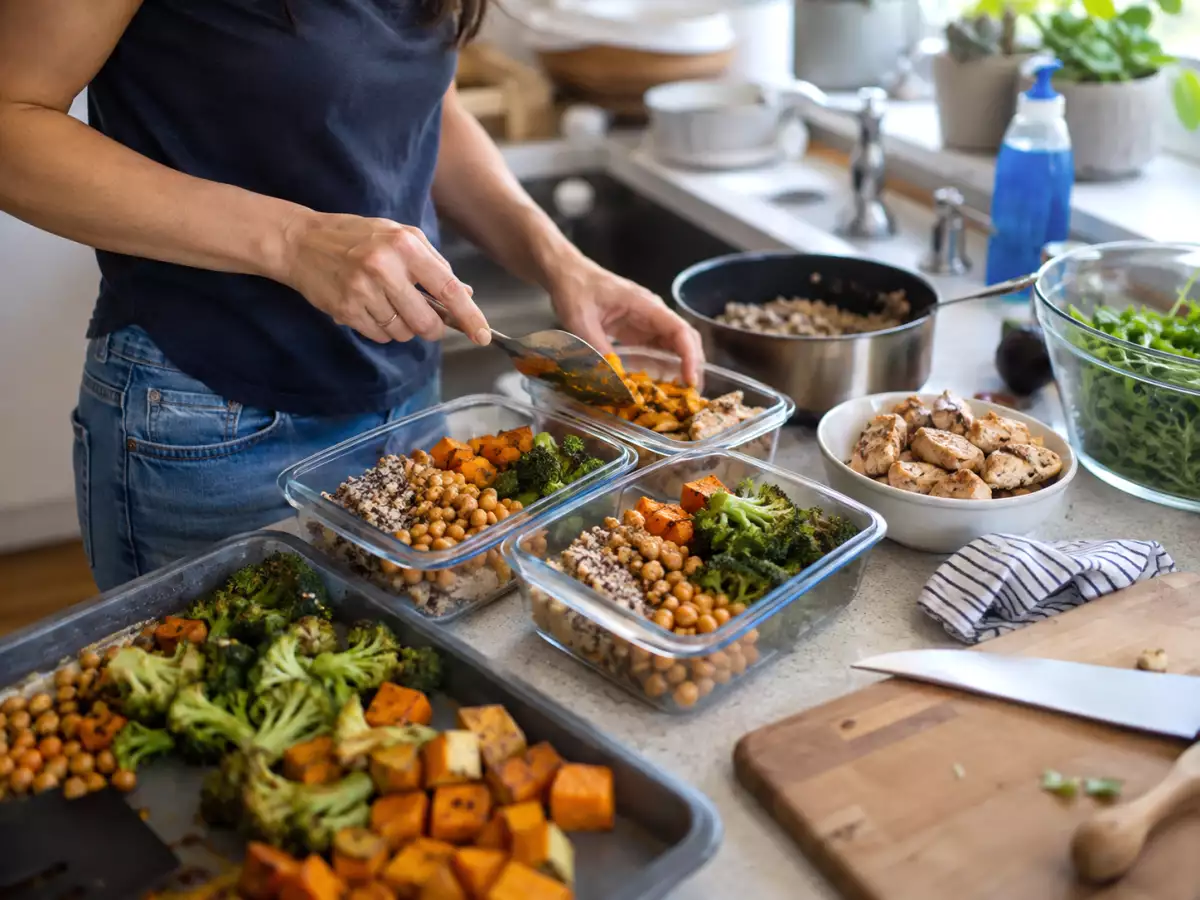
But there’s one thing we sometimes forget: preparing meals on Monday doesn’t mean you’re set for the rest of the week. Not all dishes age the same way in the fridge. A vegetable stir-fry, soup, or tomato sauce isn’t as delicate as a cooked salmon dish, an egg-based dish, a cream sauce, or a recipe with ricotta.
So the real question isn’t “Can I prepare everything in an hour?”, but rather: What do I keep in the fridge, what do I freeze, and what do I assemble at the last minute? Because successful batch cooking isn’t just a matter of organization. It’s also a matter of storage, cooling, and common sense.
Why five days in the fridge isn't a given
When a dish has just been cooked, it may seem “safe” to eat for the entire week. However, once it has cooled and been stored, it continues to change. Microorganisms can grow if the food cools too slowly, if the refrigerator isn’t cold enough, if the dish sits at room temperature for too long, or if the container is opened multiple times.
Official guidelines specifically advise against leaving food at room temperature for more than 2 hours before refrigerating it. They also indicate that a shelf life of less than 3 days is frequently recommended for prepared meals, deli items, cream-based pastries, or highly perishable, non-prepackaged foods without a best-by date.
In other words: a meal prepared on Monday may be perfectly fine for Tuesday or Wednesday, but not necessarily for Friday—especially if it contains fish, eggs, cream, fresh cheese, or a filling that is already delicate.
Official guidelines specifically advise against leaving food at room temperature for more than 2 hours before refrigerating it. They also indicate that a shelf life of less than 3 days is frequently recommended for prepared meals, deli items, cream-based pastries, or highly perishable, non-prepackaged foods without a best-by date.
In other words: a meal prepared on Monday may be perfectly fine for Tuesday or Wednesday, but not necessarily for Friday—especially if it contains fish, eggs, cream, fresh cheese, or a filling that is already delicate.
What really affects shelf life
There’s no one-size-fits-all “magic” shelf life for all dishes. The shelf life of batch-cooked meals depends on several factors: the ingredients, the cooking method, the amount of time spent out of the fridge, the portion sizes, the cleanliness of the containers, and the actual temperature of the refrigerator.
A dish that’s placed in a container while still hot and sealed immediately will cause condensation. A large, deep dish will take longer to cool than a portion spread out in a shallow container. A dish made with cream or ricotta will be more susceptible to condensation than a well-cooked tomato sauce. A salmon or chicken dish will require more care than a vegetable stir-fry intended to be reheated the next day.
The best approach is to divide the dishes into thin portions, let them cool quickly—without leaving them out of the refrigerator for more than two hours—and then store them in the coldest part of the refrigerator. And for anything that needs to wait until Thursday or Friday, freezing is often the safest option.
A dish that’s placed in a container while still hot and sealed immediately will cause condensation. A large, deep dish will take longer to cool than a portion spread out in a shallow container. A dish made with cream or ricotta will be more susceptible to condensation than a well-cooked tomato sauce. A salmon or chicken dish will require more care than a vegetable stir-fry intended to be reheated the next day.
The best approach is to divide the dishes into thin portions, let them cool quickly—without leaving them out of the refrigerator for more than two hours—and then store them in the coldest part of the refrigerator. And for anything that needs to wait until Thursday or Friday, freezing is often the safest option.
The chart for planning your monday batch cooking
To avoid treating all dishes the same way, here’s a more sensible approach. It doesn’t replace the product label or common sense, but it helps you decide what to eat right away, what to freeze, and what to keep on hand for quick meals.
CategoryExamplesWhy?Best PracticeRefrigerate until WednesdayHighlyperishable prepared dishes, frittata, cream-based gratin, cooked salmon dish, quiche, dishes made with ricottaThese dishes contain perishable ingredients and shouldn’t be left out all week without proper care.Cool quickly, portion out, keep refrigerated, and eat early in the week.Freeze on Monday: Lasagna, curry, Bolognese sauce, gratin, soup, stews, portions intended for Thursday or Friday. If the dish needs to be stored longer, freezing minimizes the risk and avoids the “it should be fine” mentality.Freeze in portions as soon as they’ve cooled, then thaw in the refrigerator or reheat properly.Assemble on the same day: Saladswith dressing, wraps, bowls with raw vegetables, avocado, fresh herbs, sliced eggs, fresh cheese, crispy toppings. The texture deteriorates quickly, and some ingredients release water or become less appealing.Prepare the base ingredients on Monday, but add the dressing, delicate raw vegetables, and toppings on the day of the meal.
This chart has one advantage: it keeps batch cooking practical, without giving the impression that everything can stay in the refrigerator for five days under the same conditions.
CategoryExamplesWhy?Best PracticeRefrigerate until WednesdayHighlyperishable prepared dishes, frittata, cream-based gratin, cooked salmon dish, quiche, dishes made with ricottaThese dishes contain perishable ingredients and shouldn’t be left out all week without proper care.Cool quickly, portion out, keep refrigerated, and eat early in the week.Freeze on Monday: Lasagna, curry, Bolognese sauce, gratin, soup, stews, portions intended for Thursday or Friday. If the dish needs to be stored longer, freezing minimizes the risk and avoids the “it should be fine” mentality.Freeze in portions as soon as they’ve cooled, then thaw in the refrigerator or reheat properly.Assemble on the same day: Saladswith dressing, wraps, bowls with raw vegetables, avocado, fresh herbs, sliced eggs, fresh cheese, crispy toppings. The texture deteriorates quickly, and some ingredients release water or become less appealing.Prepare the base ingredients on Monday, but add the dressing, delicate raw vegetables, and toppings on the day of the meal.
This chart has one advantage: it keeps batch cooking practical, without giving the impression that everything can stay in the refrigerator for five days under the same conditions.
Salmon, eggs, cream, ricotta: dishes you shouldn't let sit around
Dishes containing cooked salmon, eggs, cream, fresh cheese, or ricotta deserve special attention. They’re perfectly fine for batch cooking, but they’re best saved for the first few meals of the week.
A frittata made on Monday? Perfect for Tuesday, or possibly Wednesday if it was cooled quickly and kept refrigerated. A creamy gratin? Same logic: avoid saving it for Friday. A fish dish? Eat it quickly or freeze it if you already know it won’t be eaten in the coming days.
The problem isn’t cooking these dishes in advance. The problem is expecting them to last all week in the refrigerator, especially if the fridge temperature isn’t perfectly controlled.
A frittata made on Monday? Perfect for Tuesday, or possibly Wednesday if it was cooled quickly and kept refrigerated. A creamy gratin? Same logic: avoid saving it for Friday. A fish dish? Eat it quickly or freeze it if you already know it won’t be eaten in the coming days.
The problem isn’t cooking these dishes in advance. The problem is expecting them to last all week in the refrigerator, especially if the fridge temperature isn’t perfectly controlled.
The safe menu: cook on monday, eat with peace of mind
A safer approach to batch cooking might look like this: On Monday, prepare two meals for the start of the week, two portions to freeze, and several base ingredients to assemble. For example, a frittata or a fish dish for Tuesday, a gratin or a hearty stir-fry for Wednesday, and then a curry or a frozen sauce for Thursday or Friday.
Alongside these, you can cook rice, pasta, lentils, or roasted vegetables, but keep sauces, fresh herbs, raw vegetables, and delicate ingredients separate. On the day itself, you can put together a salad, a wrap, or a bowl in just a few minutes. This way, you still get the benefits of batch cooking without turning your fridge into a holding area for perishable dishes.
And if a dish has a strange smell, an unusual texture, a swollen container, or if you have serious doubts about whether it’s been out of the fridge, don’t try to be a hero. Even if it’s a shame, don’t eat it.
Alongside these, you can cook rice, pasta, lentils, or roasted vegetables, but keep sauces, fresh herbs, raw vegetables, and delicate ingredients separate. On the day itself, you can put together a salad, a wrap, or a bowl in just a few minutes. This way, you still get the benefits of batch cooking without turning your fridge into a holding area for perishable dishes.
And if a dish has a strange smell, an unusual texture, a swollen container, or if you have serious doubts about whether it’s been out of the fridge, don’t try to be a hero. Even if it’s a shame, don’t eat it.
Freezing doesn't mean losing everything
Many people are hesitant to freeze food because they feel it makes planning more complicated. In reality, when it comes to batch cooking from Monday through Friday, that’s often what makes the week easier. You prepare, portion out, and freeze what’s planned for the weekend, and you avoid wondering on Friday night whether the dish you made on Monday is still a good idea.
Dishes with sauce, soups, curries, stews, certain lasagnas, and gratins freeze well. It’s best to freeze them in flat or shallow portions, with a label indicating the contents and the date. Ideally, thaw them in the refrigerator, or reheat them directly if the recipe allows.
On the other hand, pre-dressed salads, raw vegetables, fresh herbs, sliced hard-boiled eggs, or very watery dishes don’t handle this process as well. For these items, it’s better to prepare the base ingredients and assemble the dish later.
Dishes with sauce, soups, curries, stews, certain lasagnas, and gratins freeze well. It’s best to freeze them in flat or shallow portions, with a label indicating the contents and the date. Ideally, thaw them in the refrigerator, or reheat them directly if the recipe allows.
On the other hand, pre-dressed salads, raw vegetables, fresh herbs, sliced hard-boiled eggs, or very watery dishes don’t handle this process as well. For these items, it’s better to prepare the base ingredients and assemble the dish later.
The best way to plan for Sunday or Monday
The smartest approach to batch cooking isn’t the one that promises five fully prepared, identical dinners sitting in the fridge. It’s the one that distinguishes between dishes that can be stored, those that can be frozen, and those that need to be kept in separate parts until the last minute.
The next time you’re cooking for the week, ask yourself three questions: Does this dish contain any highly perishable ingredients? Will it be eaten by Wednesday? Can it be frozen as early as Monday? These three answers are often enough to help you avoid bad decisions.
Preparing in advance, yes. Leaving a perishable dish in the fridge for five days, not so much. The real time-saver is having an organized week… without gambling with food safety.
The next time you’re cooking for the week, ask yourself three questions: Does this dish contain any highly perishable ingredients? Will it be eaten by Wednesday? Can it be frozen as early as Monday? These three answers are often enough to help you avoid bad decisions.
Preparing in advance, yes. Leaving a perishable dish in the fridge for five days, not so much. The real time-saver is having an organized week… without gambling with food safety.
 Adèle Peyches
Editorial manager who just can't wait for winter to enjoy fondue! Passionate about gastronomy and always on the lookout for new culinary gems, I first studied law before returning to my first love: the taste of good products and the joy of sharing around the table :)
Comments