Your fridge might be organized all wrong: here's where everything should actually go
Friday 20 November 2026 10:00 - Juliette Hess
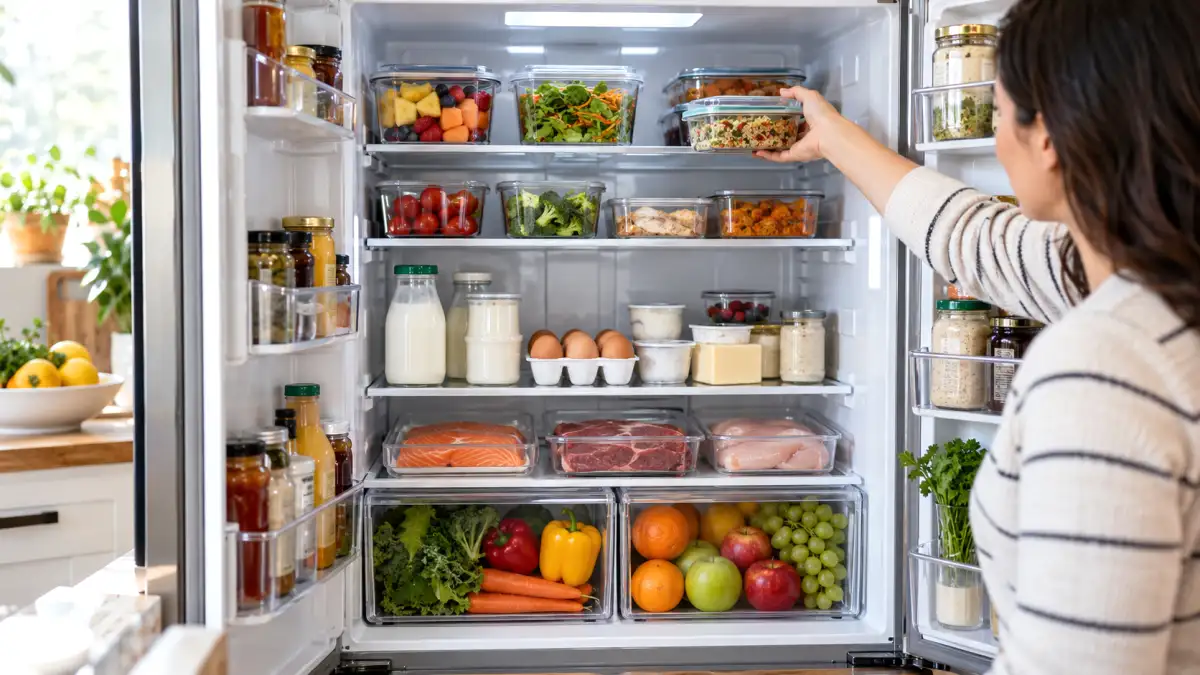
Not every part of your refrigerator has exactly the same conditions. The door experiences frequent temperature changes, crisper drawers control humidity, and poorly stored raw meat can contaminate other foods.
The good news? A few simple changes can make your fridge safer, easier to use and less wasteful. Here's how to organize it properly, shelf by shelf.
First, check your refrigerator's temperature
Before moving anything around, make sure your fridge is cold enough. The recommended temperature is 4°C (40°F) or below, while your freezer should be at −18°C (0°F).
Place an appliance thermometer on a middle shelf to check the actual temperature. Don't rely entirely on the thermostat setting.
Avoid packing the fridge too tightly: cold air needs room to circulate.
Place an appliance thermometer on a middle shelf to check the actual temperature. Don't rely entirely on the thermostat setting.
Avoid packing the fridge too tightly: cold air needs room to circulate.
Upper shelves: ready-to-eat foods
The upper shelves are convenient for foods that don't require further cooking, including yogurts, desserts, prepared salads, and properly covered cooked dishes.
Keep these foods in sealed, food-safe containers to protect them from spills and unwanted odors.
The most important rule is to keep ready-to-eat foods separate from raw meat, poultry and seafood.
Keep these foods in sealed, food-safe containers to protect them from spills and unwanted odors.
The most important rule is to keep ready-to-eat foods separate from raw meat, poultry and seafood.
Middle shelves: dairy products and everyday essentials
Milk, cheese, cream, and other frequently used refrigerated products can be stored on the main shelves.
Although the fridge door may have a designated milk compartment, an interior shelf is generally a better choice for temperature-sensitive dairy products, because the door warms more frequently when opened.
Keep cheeses wrapped appropriately and follow storage instructions once packaging has been opened.
Bottom shelf: raw meat, fish and poultry
Raw animal products deserve special attention because their juices can contaminate other foods.
Store raw meat, poultry and seafood on the lowest suitable shelf, inside leakproof containers or securely wrapped packaging.
This placement helps prevent accidental dripping onto foods below. Avoid storing uncovered raw meat beside cooked dishes or fresh produce.
Store raw meat, poultry and seafood on the lowest suitable shelf, inside leakproof containers or securely wrapped packaging.
This placement helps prevent accidental dripping onto foods below. Avoid storing uncovered raw meat beside cooked dishes or fresh produce.
Crisper drawers: fruit and vegetables
Crisper drawers help manage moisture and maintain the quality of fresh produce.
If your fridge has adjustable humidity settings, use higher humidity for leafy vegetables such as spinach, lettuce and fresh herbs, and lower humidity for many fruits, particularly those sensitive to excess moisture.
Keep delicate berries dry until you're ready to use them. Remove damaged produce promptly to prevent deterioration from spreading.
Refrigerator door: condiments, not your most delicate foods
The refrigerator door is exposed to repeated temperature fluctuations.
It's usually best for condiments, pickles, sauces and other products that tolerate these fluctuations, provided their labels allow refrigerated storage there.
Avoid using the door as your first choice for milk, raw meat or other highly perishable foods.
In countries where eggs are sold refrigerated, store them in their original carton on an interior shelf.
Store leftovers properly to avoid food waste
Leftover pasta, cooked vegetables, soups and prepared meals can make the next day's lunch much easier — but only if they're stored correctly.
Transfer leftovers into shallow, covered containers so they cool quickly, and refrigerate perishable food within two hours of cooking, or one hour in very hot conditions.
As a general safety guideline, eat refrigerated cooked leftovers within three to four days, or freeze them for longer storage.
Label containers with the date and place older dishes toward the front.
Five common fridge organization mistakes
Even a tidy refrigerator can be poorly organized. These habits are worth changing:
1. Overloading the shelves: prevents proper air circulation.
2. Leaving food uncovered: increases the risk of spills, contamination and odor transfer.
3. Keeping raw meat above ready-to-eat foods: increases the risk of cross-contamination.
4. Forgetting items at the back: leads to unnecessary food waste.
5. Putting every fruit and vegetable in the fridge: some produce, such as whole bananas and uncut potatoes, is better stored elsewhere.
A simple weekly routine to keep your fridge organized
You don't need an elaborate storage system to maintain a well-organized refrigerator.
Once a week, check dates, plan meals around ingredients that need using first, and wipe up spills. Group similar products together and keep frequently used items easy to reach.
Remember that food safety matters more than a perfectly arranged fridge. The objective isn't to make every shelf look identical, but to keep food at a safe temperature and make it easier to use before it spoils.
Frequently asked questions
What is the best temperature for a refrigerator?
Keep it at 4°C (40°F) or below. Use an appliance thermometer to verify the actual temperature.
Where should raw chicken go in the fridge?
On the lowest appropriate shelf, securely wrapped or in a leakproof container, away from ready-to-eat foods.
Should milk be stored in the refrigerator door?
An interior shelf is preferable because it usually experiences fewer temperature fluctuations.
How long can cooked leftovers stay in the fridge?
Generally, three to four days when refrigerated promptly and kept at a safe temperature.
Should you wash vegetables before storing them?
It depends on the produce. Many delicate vegetables and berries keep better when stored dry and washed immediately before use.
The bottom line: make every shelf count
A properly organized fridge is about more than saving space. By separating raw and cooked foods, using crisper drawers correctly, monitoring the temperature and keeping track of leftovers, you can reduce food waste while making everyday cooking easier.
The next time you unpack your groceries, remember: where you store your food can be just as important as how you prepare it.
The next time you unpack your groceries, remember: where you store your food can be just as important as how you prepare it.

Growing up in her family’s restaurant inspired Juliette’s love of cooking. Since 2017, she has developed, photographed and filmed recipes for Petitchef. Trained in visual imagery and lighting, she loves exploring world cuisines, particularly Asian food.
Comments