Stop picking mangoes wrong: most people choose the wrong ones at markets and only notice at home
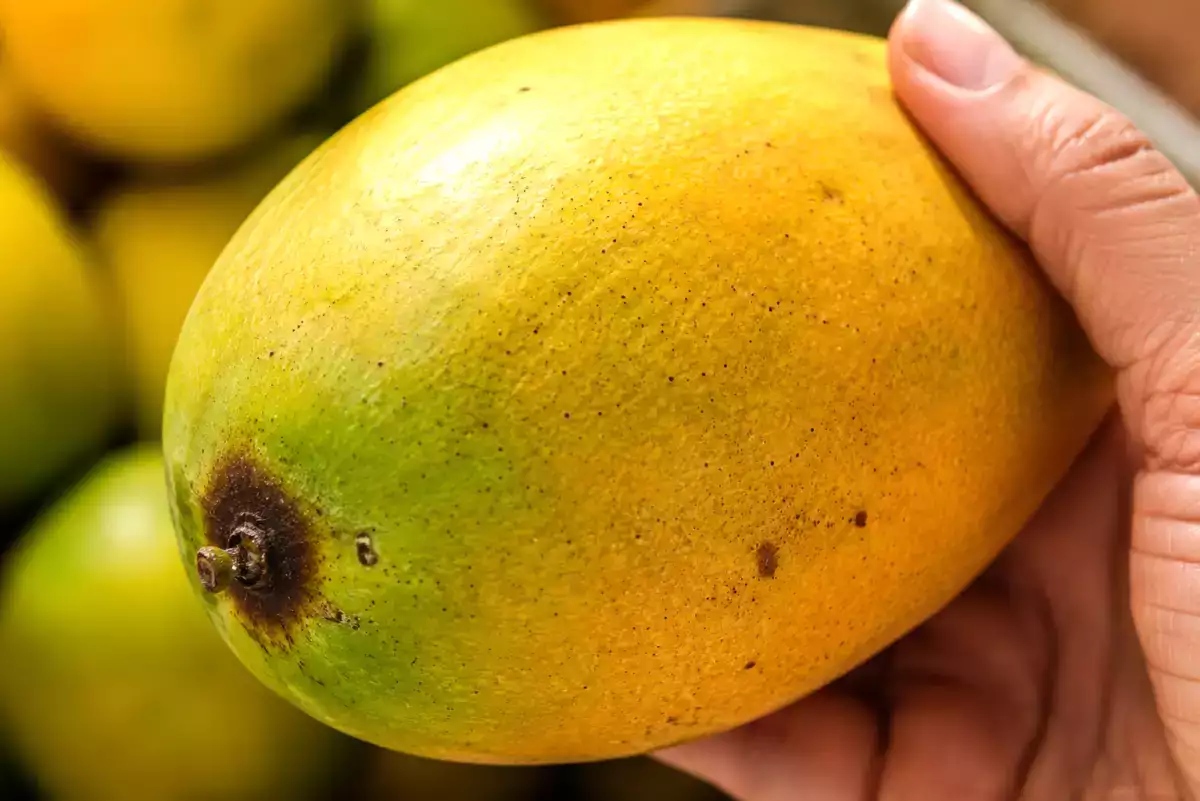
Nothing is more frustrating than coming home, cutting open a mango that looked perfect, and discovering a fruit that’s hard, tasteless, or full of fibers. The good news is that a few simple signs can help you identify a ripe, sweet, and juicy mango before you even put it in your cart.
The first step is to forget the idea of choosing based solely on color. Although many people believe that a completely red or yellow mango is the best option, the reality is that the shade varies depending on the variety of the fruit and doesn’t always indicate the ideal stage of ripeness.
Color doesn't always tell the whole story
Some mangoes remain greenish even when ripe, while others develop reddish hues even before reaching the perfect point for eating.
Therefore, relying solely on appearance as a criterion greatly increases the chances of making the wrong choice.
Gently squeeze the fruit
Just like with avocados and peaches, the feel is one of the best indicators.
The ideal mango should give slightly when gently pressed with your fingers, without being too soft. If it’s completely hard, it probably still needs a few days to ripen. If it gives in easily, it may be overripe.
Smell reveals a lot
One of the most reliable ways to tell is by the aroma.
Bring the fruit close to your nose, especially near the stem. A ripe mango gives off a sweet, pleasant, and distinctive scent. If there’s no smell at all, it’s probably still unripe. A fermented odor, on the other hand, indicates overripeness.
Look at the peel
Small, superficial dark spots aren't always a problem. In many varieties, they appear precisely when the fruit is at its sweetest.
What warrants attention are deep cuts, cracks, heavily bruised areas, or signs of mold, which can accelerate spoilage.
Weight makes a difference
When comparing mangoes of the same size, choose the heavier one.
This usually means it contains more water and flesh, resulting in a juicier fruit.
Each variety has different characteristics
Not all mangoes ripen the same way.
- Palmer: usually remains partially green even when ripe and has few fibers.
- Tommy Atkins: has a reddish-hued skin, is resistant to shipping, and is quite common in supermarkets.
- Kent: known for its extremely sweet flesh and almost no fibers.
- Keitt: remains greener and is usually an excellent choice for those who prefer larger fruits.
Understanding these differences helps you avoid making choices based solely on appearance.
How to Ripen Mangoes Faster
If the fruit is still firm, just leave it at room temperature for a few days.
To speed up the process, place it in a paper bag along with a banana or an apple. These fruits release ethylene, a natural gas that stimulates ripening.
Avoid storing unripe mangoes in the refrigerator, as the cold can slow down this process and compromise the development of flavor.
Once it's ripe, the refrigerator helps
Once it reaches its peak ripeness, the mango can be refrigerated for a few days to preserve its texture and flavor.
If it has already been cut, keep it in a sealed container to prevent moisture loss and the absorption of odors.
It's worth paying attention to these details
Choosing a good mango isn't a matter of luck. Evaluating its texture, aroma, weight, and the condition of its skin is much more effective than relying solely on its color.
The next time you go to the market or farmers’ market, these small clues can make all the difference between bringing home a bland fruit or a sweet, tender, and flavorful mango.
 Mirella Mendonça
Comments