Is your polenta full of lumps? Here's why that happens and how to fix it without starting over
Wednesday 4 November 2026 15:30 - Francesco Rosso
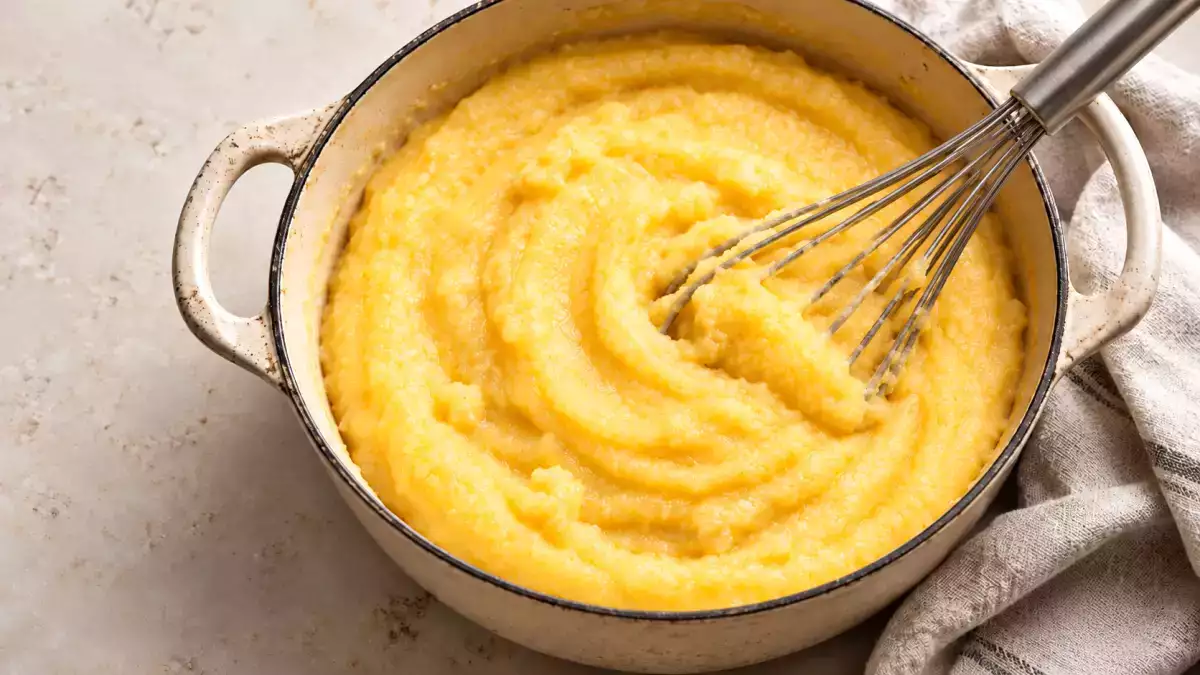
It smells just right, the sauce is ready, and then (just as you’re stirring) those annoying little lumps appear in the pot. The Polenta with lumps is a minor kitchen mishap that can happen even to those who’ve been making it for years.
Before you even think about throwing it all away, though, take a good look at the texture: often all it takes is a whisk, a little hot water, and a few minutes to fix it. The key is knowing when to step in and what not to do.
Why do lumps form in polenta?
The reason is simpler than it seems: when the cornmeal all falls in the same spot, the outer layer gets wet and thickens before the water reaches the center. This creates small clumps that can hide cornmeal that’s still dry.
This happens especially when you pour the flour too quickly, don’t stir right away, or the liquid is already so turbulent that it’s hard to control the pot. Starting with too little water can also complicate things: the polenta thickens quickly, and the lumps become harder to break up. It’s not, therefore, a matter of arm strength, but of distributing the flour evenly in the very beginning.
This happens especially when you pour the flour too quickly, don’t stir right away, or the liquid is already so turbulent that it’s hard to control the pot. Starting with too little water can also complicate things: the polenta thickens quickly, and the lumps become harder to break up. It’s not, therefore, a matter of arm strength, but of distributing the flour evenly in the very beginning.
How to remove lumps from polenta while it's cooking
If you notice lumps at the beginning, that’s the best time to take action. Lower the heat: there’s no need to boil the polenta at a higher heat, because you’d only risk it sticking or splattering. Then follow these steps:
- Grab a sturdy whisk and stir, making sure to reach all the way to the edges of the pot.
- Press the larger lumps against the side of the pot with a spoon to break them up.
- Add a little hot water at a time only if the mixture is too thick to stir.
- Resume gentle cooking and check to see if the small lumps of flour have softened.
What if the polenta is already very thick?
Once the mixture has thickened, stirring it with a ladle without making any changes can be a waste of effort. Temporarily remove the pot from the heat, pour in a splash of very hot water, and work the polenta with a sturdy spoon. If you feel a lump under the tip, press it against the side of the pot until it breaks up.
If there are only a few lumps, you can also scoop them out, mash them separately, and return them to the pot. Then continue cooking according to the type of flour: traditional polenta needs time to absorb the liquid, while pre-cooked polenta doesn’t necessarily improve by staying on the stove longer. The goal is to achieve a uniform consistency, not to extend the cooking time arbitrarily.
If there are only a few lumps, you can also scoop them out, mash them separately, and return them to the pot. Then continue cooking according to the type of flour: traditional polenta needs time to absorb the liquid, while pre-cooked polenta doesn’t necessarily improve by staying on the stove longer. The goal is to achieve a uniform consistency, not to extend the cooking time arbitrarily.
Can I use an immersion blender to get rid of lumps?
Yes, but think of it as a last resort, not the first thing to try. If the polenta is still soft enough and the lumps are scattered throughout, a few very brief pulses can help break them up. Turn off the heat, use a tall container if necessary, and always keep the blender head submerged: boiling polenta can cause splattering and burns.
Don’t blend for too long. Blending too much can make the polenta overly smooth, eliminating the pleasant texture of the cornmeal. With polenta bramata, in particular, a certain rustic texture is desired: it shouldn’t necessarily be turned into a smooth cream.
Don’t blend for too long. Blending too much can make the polenta overly smooth, eliminating the pleasant texture of the cornmeal. With polenta bramata, in particular, a certain rustic texture is desired: it shouldn’t necessarily be turned into a smooth cream.
How much water do you need to keep the polenta from clumping?
As a general guideline, for soft polenta, you can start with about 1 liter of water for every 250 g of cornmeal, but the amount varies depending on the grind and the result you want to achieve. Coarser cornmeal may require more liquid and a longer cooking time; for instant polenta, it’s best to follow the package instructions.
It’s not just about the measurements: you need enough water so the flour can disperse before it thickens. Keep a small pot of hot water next to the stove to adjust the consistency as you cook. And remember: adding water doesn’t automatically dissolve lumps, but it makes it easier to break them up with a whisk.
It’s not just about the measurements: you need enough water so the flour can disperse before it thickens. Keep a small pot of hot water next to the stove to adjust the consistency as you cook. And remember: adding water doesn’t automatically dissolve lumps, but it makes it easier to break them up with a whisk.
Why does polenta remain grainy even after stirring?
Here’s a distinction that can save quite a few dinners: grainy polenta and polenta with lumps are not the same thing. The former can be perfectly normal, especially when made with coarsely ground cornmeal; the latter has recognizable little balls, sometimes with a dry center.
If you feel individual hard grains throughout the mixture, you may simply need to continue cooking, following the cooking time for the specific cornmeal and making sure there’s enough liquid. If, on the other hand, you find small, separate clumps, you’ll need to break them up. Continuing to blend a naturally rustic polenta won’t necessarily make it better—it only risks altering its character.
If you feel individual hard grains throughout the mixture, you may simply need to continue cooking, following the cooking time for the specific cornmeal and making sure there’s enough liquid. If, on the other hand, you find small, separate clumps, you’ll need to break them up. Continuing to blend a naturally rustic polenta won’t necessarily make it better—it only risks altering its character.
How can I fix instant polenta that has lumps?
Instant polenta thickens in just a few minutes, which is why you need to tackle any lumps right away. Reduce the heat, add a tablespoon or two of hot water if the mixture is too thick, and stir with a whisk, pressing the lumps against the edge of the pot.
Don’t treat it like traditional flour that needs to cook for an hour: once the time indicated on the package has elapsed, continuing to cook it can ruin the texture. If there are any hard lumps left, isolate them and break them up directly, rather than thinning out the entire pot.
Don’t treat it like traditional flour that needs to cook for an hour: once the time indicated on the package has elapsed, continuing to cook it can ruin the texture. If there are any hard lumps left, isolate them and break them up directly, rather than thinning out the entire pot.
How to avoid lumps in polenta next time
For smooth, creamy polenta, the key step is when you add the flour. Heat the water without letting it boil vigorously, sprinkle in the flour little by little, and immediately stir with a whisk right where it falls. Once the mixture is smooth, lower the heat and switch to a spoon to continue cooking, scraping the bottom of the pot.
Prefer a different approach? You can mix the flour into cold water, stirring well before gradually heating it: this is a helpful method for those worried about lumps on their first try. In any case, check the specific instructions on the package. And if you’d like to follow a step-by-step guide, you can use this recipe as a reference:
The rule to remember is simple: polenta is easier to salvage if you act immediately, before the lumps become firm.
Prefer a different approach? You can mix the flour into cold water, stirring well before gradually heating it: this is a helpful method for those worried about lumps on their first try. In any case, check the specific instructions on the package. And if you’d like to follow a step-by-step guide, you can use this recipe as a reference:
Perfect creamy polenta: an easy recipe for a soft, flavorful dish
Creamy polenta is a beloved classic of Italian cuisine , cherished for its simplicity and authentic flavor. Traditionally made by slowly cooking yellow cornmeal in water, this version uses a mixture of water and milk for a velvety, lump-free...
The rule to remember is simple: polenta is easier to salvage if you act immediately, before the lumps become firm.
 Francesco Rosso
A journalist in search of new horizons. As a lover of wine and simple dishes, I’ve decided to set out to discover new ways of approaching cuisine.
Comments