Is your sauce too runny? Here are 5 simple ways to thicken it without lumps and save dinner
Saturday 31 October 2026 15:30 - Francesco Rosso
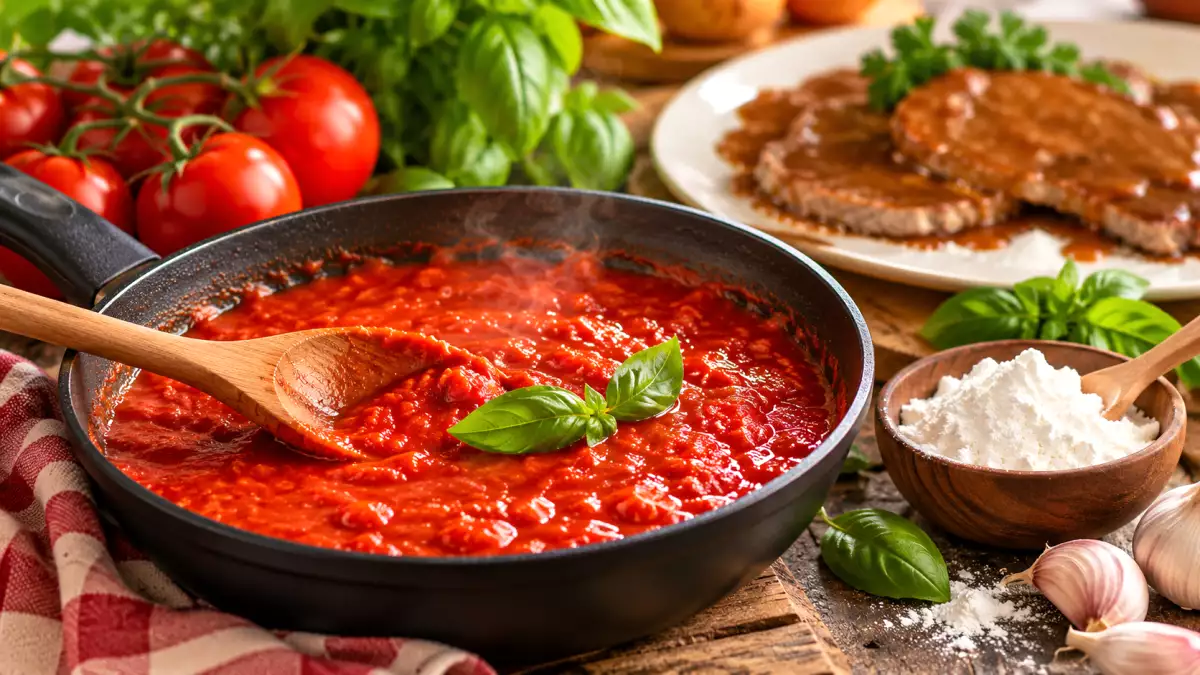
There’s no one-size-fits-all solution. Here are five methods to help you choose the right one and achieve a creamy sauce that clings to the spoon instead of sliding right off.
The secret to preventing lumps: never pour in dry starch
Lumps form when flour or starch comes into direct contact with a very hot liquid: the surface swells immediately, trapping the still-dry powder in the center. The result is small lumps that are difficult to dissolve, even when stirred vigorously.
The rule is simple: dissolve the starch in a small amount of cold liquid, or mix the flour with a fat before adding it. Then pour it in gradually, stirring with a whisk. Always wait before adding more thickener.
The rule is simple: dissolve the starch in a small amount of cold liquid, or mix the flour with a fat before adding it. Then pour it in gradually, stirring with a whisk. Always wait before adding more thickener.
1. Reducing the sauce: when it's enough to let the water evaporate
If the sauce already tastes good but is too watery, start by reducing it. Cook it uncovered and let it simmer gently in a fairly wide pan: the more surface area is exposed, the more easily the liquid evaporates.
It’s an ideal choice for tomato sauce, meat sauce, and cooking liquids. Stir occasionally, especially if it contains sugar, and taste it only toward the end: as the water evaporates, the salt, acidity, and flavors also become more concentrated.
Homemade bolognese sauce - ragù alla bolognese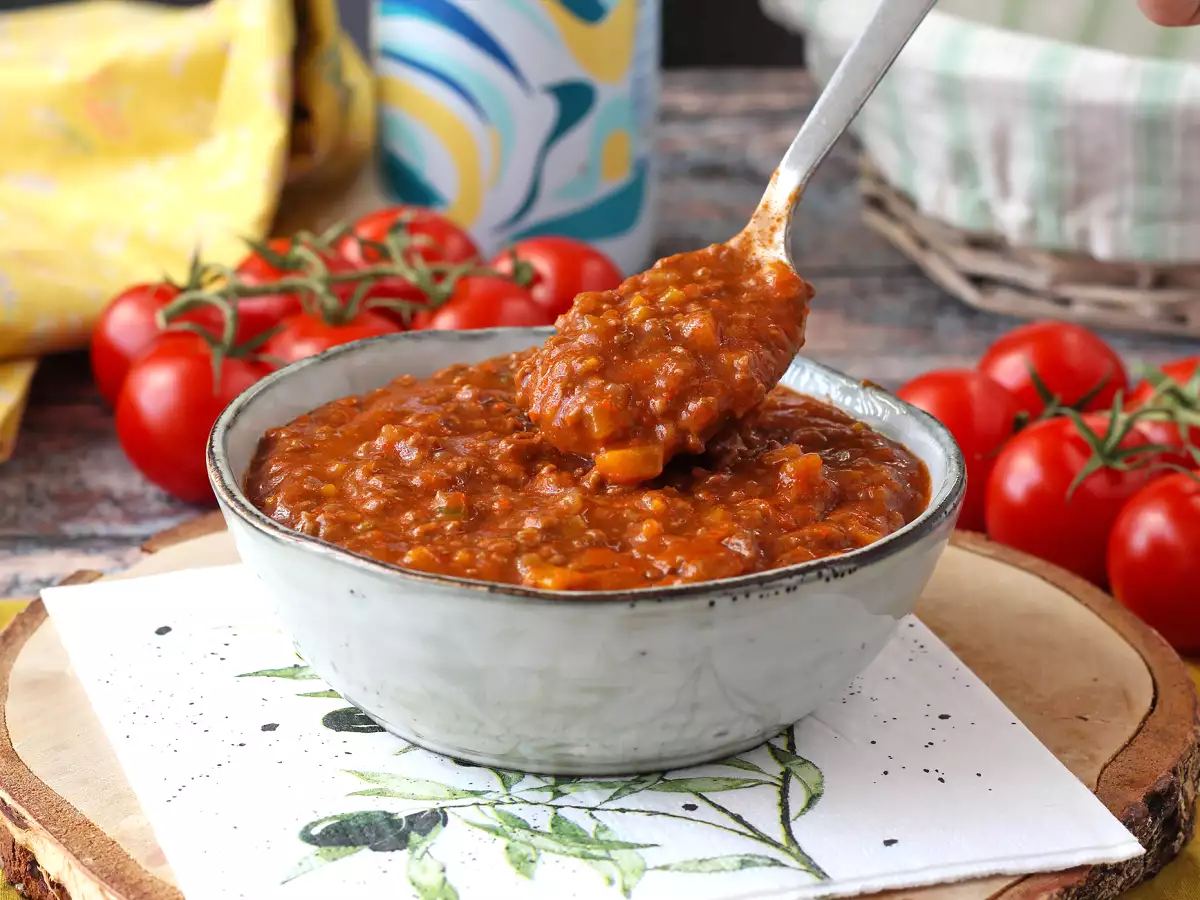
Fancy a good homemade Bolognese sauce , just like in Italy? This recipe for ragù alla bolognese is simple, authentic and full of flavor :) With finely chopped vegetables, well-seared meat, good red wine and slow cooking, you get a rich, flavorful...
2. How to thicken a sauce with cornstarch without lumps
Cornstarch is useful when you're short on time and want to preserve the sauce's flavor. For about 250 ml of sauce, start with one level teaspoon of cornstarch dissolved in two teaspoons of cold water.
Pour it in a thin stream into the simmering sauce, stirring constantly with a whisk. Wait about a minute: the consistency will change as it heats up. If needed, repeat with a small amount. Do not add cornstarch directly to the pot, and do not let it boil vigorously for longer than necessary: the sauce may lose some of its texture.
Pour it in a thin stream into the simmering sauce, stirring constantly with a whisk. Wait about a minute: the consistency will change as it heats up. If needed, repeat with a small amount. Do not add cornstarch directly to the pot, and do not let it boil vigorously for longer than necessary: the sauce may lose some of its texture.
3. Butter and flour: the roux used to thicken a sauce that’s already hot
For a meat sauce or roast gravy, try beurre manié: it’s made by mixing equal parts softened butter and flour. To start, 5 g of each is enough for about 250 ml of sauce; add a small piece at a time while stirring.
The butter helps distribute the flour without letting it clump. Let it simmer for a few minutes so the flour cooks and loses its raw taste. The sauce will be richer than one thickened with starch.
The butter helps distribute the flour without letting it clump. Let it simmer for a few minutes so the flour cooks and loses its raw taste. The sauce will be richer than one thickened with starch.
4. Roux is perfect for béchamel and white sauces
If you're making the sauce from scratch, a roux gives you more control: melt the butter, stir in an equal amount of flour, and cook briefly over low heat. Then add the milk or broth a little at a time, stirring with a whisk.
This method is particularly well-suited for lump-free béchamel and creamy sauces that need to hold their consistency. If it’s too runny, let it cook for a few more minutes before adjusting it.
This method is particularly well-suited for lump-free béchamel and creamy sauces that need to hold their consistency. If it’s too runny, let it cook for a few more minutes before adjusting it.
5. How to thicken a sauce without flour or cornstarch
Want to avoid both ingredients? Sometimes the solution is already in the pot. Scoop out a few spoonfuls of cooked vegetables, potatoes, or legumes, blend them with a little liquid from the sauce, and return the mixture to the heat.
This is a great idea for soups, vegetable stews, and rustic sauces: the texture becomes thicker thanks to the solid parts of the ingredients. It also works with a small amount of tomato paste in a sauce that can handle a more intense flavor. Remember, though, that blending also changes the texture and sometimes the taste: it’s best to proceed in small steps.
This is a great idea for soups, vegetable stews, and rustic sauces: the texture becomes thicker thanks to the solid parts of the ingredients. It also works with a small amount of tomato paste in a sauce that can handle a more intense flavor. Remember, though, that blending also changes the texture and sometimes the taste: it’s best to proceed in small steps.
Which thickener should you choose? It depends on the sauce.
Before you do anything, take a look at what’s in the pan. A clear sauce doesn’t require the same treatment as a cheese sauce. This quick guide will help you avoid unnecessary adjustments:
- Tomato sauce too runny: reduce it uncovered; if needed, add a little tomato paste.
- Roast gravy: diluted cornstarch or small pieces of beurre manié.
- Runny béchamel: cook for a few more minutes; a roux is ideal when making it from scratch.
- Vegetable sauce: Blend some of the ingredients for a natural texture.
- Yogurt-based or egg-based sauce: avoid vigorous boiling; stir gently.
How can I thicken a store-bought sauce without changing its flavor?
If the sauce is already seasoned just right, letting too much water evaporate could make it too salty. In this case, use a small amount of cornstarch diluted in cold water: it thickens quickly and has a fairly neutral taste.
For cream and cheese, cook over low heat. If you add cheese over too high a heat, it may curdle instead of making the sauce smooth. And be careful with the pasta cooking water: it helps the emulsion form while stirring in the cheese, but adding too much can make the sauce even more runny.
For cream and cheese, cook over low heat. If you add cheese over too high a heat, it may curdle instead of making the sauce smooth. And be careful with the pasta cooking water: it helps the emulsion form while stirring in the cheese, but adding too much can make the sauce even more runny.
Why does the sauce turn out sticky instead of creamy?
The problem isn't always a lack of thickener—sometimes it's too much. Too much cornstarch results in a gelatinous texture, while too much flour leaves a heavy mouthfeel and an unpleasant taste. Time matters, too: a sauce may seem thin while it's boiling but become thicker after sitting for a couple of minutes.
To avoid this, always add the thickener in small amounts and wait to see how it affects the sauce. If you’ve added too much, stir in a little broth, milk, or water—choosing the liquid that best suits the recipe.
To avoid this, always add the thickener in small amounts and wait to see how it affects the sauce. If you’ve added too much, stir in a little broth, milk, or water—choosing the liquid that best suits the recipe.
How do you remove lumps from a sauce that seems to have gone wrong?
If whisking isn’t enough and there are no chunks in the sauce, strain it through a fine-mesh sieve, gently pressing the lumps through with a spoon. Alternatively, use an immersion blender, keeping the blade completely submerged to avoid hot splashes.
For a sauce with chunks of meat, mushrooms, or vegetables, strain only the liquid portion and then recombine the ingredients. Finally, heat gently and check the consistency: removing lumps doesn’t mean you have to add more flour.
For a sauce with chunks of meat, mushrooms, or vegetables, strain only the liquid portion and then recombine the ingredients. Finally, heat gently and check the consistency: removing lumps doesn’t mean you have to add more flour.
The Spoon Test to Know When to Stop
The right consistency isn’t determined by time alone. Dip a spoon into the sauce, lift it out, let it cool slightly, and run your finger along the back of the spoon: if a clear trail remains and the sauce coats your finger with a thin layer, you’ve achieved the right consistency for many dishes.
Don’t overdo it: a pasta sauce should be runny and cling to the spaghetti, while a sauce served on the side can be thicker. The real goal is to thicken it just enough, without masking the flavor.
Don’t overdo it: a pasta sauce should be runny and cling to the spaghetti, while a sauce served on the side can be thicker. The real goal is to thicken it just enough, without masking the flavor.
 Francesco Rosso
A journalist in search of new horizons. As a lover of wine and simple dishes, I’ve decided to set out to discover new ways of approaching cuisine.
Comments