Can you safely eat fruit with mold after cutting away the spoiled part, or should you discard it?
Thursday 27 August 2026 10:00 - Adèle Peyches
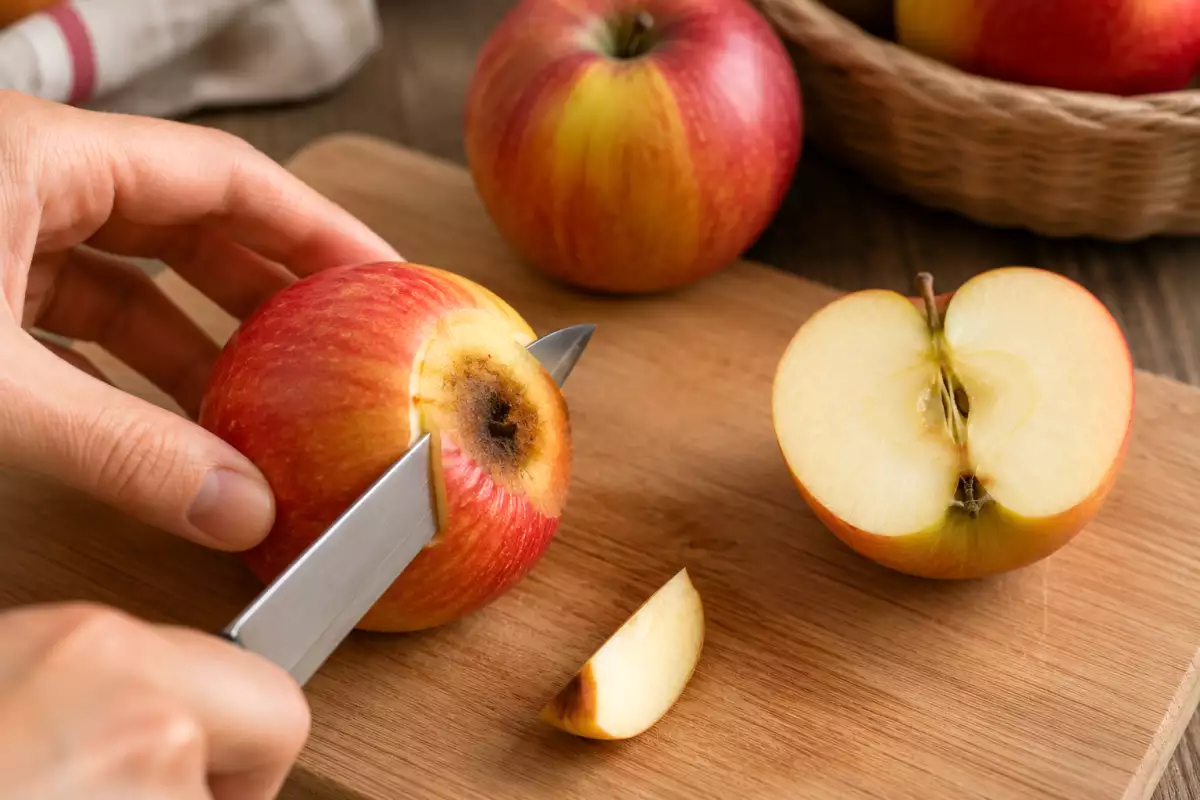
But not all foods react the same way. A strawberry, a tomato, a carrot, or a head of cabbage don’t have the same texture or the same water content. And that’s exactly what makes a big difference in how they respond.
Here’s how to tell the difference between foods that are best thrown out and those that can sometimes be salvaged—with caution!
Why visible mold doesn't always tell the whole story
The discolored part visible on the surface is just the tip of the iceberg. Depending on the food, mold can also grow deeper inside, especially in soft, moist, or porous foods.
That’s why you should avoid the overly simplistic “cut it out and keep the rest” rule. In some cases, this may be sufficient if the food is very firm. In others, the damaged area is only part of the problem.
Mold can also produce mycotoxins, undesirable substances that aren’t necessarily limited to the small visible spot. It’s therefore better to make decisions based on the type of food, rather than on a case-by-case basis based solely on visual inspection.
That’s why you should avoid the overly simplistic “cut it out and keep the rest” rule. In some cases, this may be sufficient if the food is very firm. In others, the damaged area is only part of the problem.
Mold can also produce mycotoxins, undesirable substances that aren’t necessarily limited to the small visible spot. It’s therefore better to make decisions based on the type of food, rather than on a case-by-case basis based solely on visual inspection.
Strawberries, peaches, very ripe tomatoes: it's better to throw them away
Soft fruits and very moist vegetables do not store well once mold appears. Strawberries, raspberries, peaches, apricots, very ripe plums, soft tomatoes, and pre-cut fruit are among the foods for which it’s best not to take any chances.
Their flesh contains a lot of water and is easily penetrated. Even if the spot appears small, the spoilage may have spread more widely throughout the flesh.
In a container of strawberries, immediately remove any moldy fruit. If the surrounding fruits are intact, firm, spot-free, and free of any unusual odor, they can be washed and eaten quickly. However, if several fruits are affected or if juice has leaked into the container, it’s best to err on the side of caution.
Their flesh contains a lot of water and is easily penetrated. Even if the spot appears small, the spoilage may have spread more widely throughout the flesh.
In a container of strawberries, immediately remove any moldy fruit. If the surrounding fruits are intact, firm, spot-free, and free of any unusual odor, they can be washed and eaten quickly. However, if several fruits are affected or if juice has leaked into the container, it’s best to err on the side of caution.
Carrots, cabbage, bell peppers: sometimes salvageable, but not just any old way
Firm vegetables don’t behave like soft fruits. A carrot, cabbage, bell pepper, or other firm-fleshed vegetable can sometimes be salvaged if the mold is very localized.
In this case, simply scraping the surface isn’t enough. You must cut well around and below the moldy area, keeping the knife away from the spot to avoid contaminating the rest. The standard recommendation is to remove at least 2.5 cm around and below the affected area.
This option is only viable if the vegetable is still firm, has no strange odor, no slimy parts, and no widespread mold. If the food is soft, damp, or severely damaged, don’t try to salvage it.
In this case, simply scraping the surface isn’t enough. You must cut well around and below the moldy area, keeping the knife away from the spot to avoid contaminating the rest. The standard recommendation is to remove at least 2.5 cm around and below the affected area.
This option is only viable if the vegetable is still firm, has no strange odor, no slimy parts, and no widespread mold. If the food is soft, damp, or severely damaged, don’t try to salvage it.
Bread, jam, yogurt: don't apply the same logic
Although the topic often centers on fruits and vegetables, the same question applies to other foods as well. And here again, texture matters a great deal.
Bread, pastries, jams, yogurt, fresh cheeses, sauces, prepared meals, and leftovers should generally be thrown out as soon as mold appears. They are too moist, too porous, or already prepared to be salvaged simply by removing the visible part.
Jam, for example, cannot be saved by scooping out the moldy layer with a spoon. The same goes for a dish of pasta, soup, or sauce that has mold on it: don’t taste it, don’t reheat it—just throw it away.
Bread, pastries, jams, yogurt, fresh cheeses, sauces, prepared meals, and leftovers should generally be thrown out as soon as mold appears. They are too moist, too porous, or already prepared to be salvaged simply by removing the visible part.
Jam, for example, cannot be saved by scooping out the moldy layer with a spoon. The same goes for a dish of pasta, soup, or sauce that has mold on it: don’t taste it, don’t reheat it—just throw it away.
Signs that mean you should throw it away without hesitation
Some signs leave little room for doubt. If food has a fermented odor, a slimy texture, a suspicious liquid, several moldy spots, or an unusual color, it’s best to throw it away.
You should also never taste food to check if it’s still good. The absence of a bad taste does not guarantee that it is safe to eat.
Another important point: if mold is present on food intended for a vulnerable person—such as a pregnant woman, an elderly person, a young child, or someone with a weakened immune system—you should exercise even greater caution.
You should also never taste food to check if it’s still good. The absence of a bad taste does not guarantee that it is safe to eat.
Another important point: if mold is present on food intended for a vulnerable person—such as a pregnant woman, an elderly person, a young child, or someone with a weakened immune system—you should exercise even greater caution.
How to prevent mold from spreading
The best approach is to take action before food spoils. Check summer fruits regularly, especially containers of berries, peaches, tomatoes, and apricots. Just one badly spoiled piece of fruit can speed up the spoilage of the others.
Also, avoid washing all fruits and vegetables before storing them. Moisture promotes mold growth. Instead, wash them just before eating or cooking them, then dry them thoroughly if you need to store them for a few hours.
Store delicate fruits in a cool place, keep baskets well-ventilated, remove damaged produce promptly, and don’t pack foods too tightly together. These are small steps, but they go a long way toward preventing unpleasant surprises.
Also, avoid washing all fruits and vegetables before storing them. Moisture promotes mold growth. Instead, wash them just before eating or cooking them, then dry them thoroughly if you need to store them for a few hours.
Store delicate fruits in a cool place, keep baskets well-ventilated, remove damaged produce promptly, and don’t pack foods too tightly together. These are small steps, but they go a long way toward preventing unpleasant surprises.
A simple rule to remember
For soft, moist, cut, or pre-cooked foods, it’s best to throw them away as soon as mold appears.
For very firm vegetables, a small moldy spot can sometimes be cut away, provided the rest of the vegetable is perfectly healthy.
When in doubt—especially if the smell, texture, or appearance has changed—the safest option is not to eat the food. The goal isn’t to automatically throw away everything with a minor flaw, but to know when the flaw is merely visible… and when it might be hiding something else.
For very firm vegetables, a small moldy spot can sometimes be cut away, provided the rest of the vegetable is perfectly healthy.
When in doubt—especially if the smell, texture, or appearance has changed—the safest option is not to eat the food. The goal isn’t to automatically throw away everything with a minor flaw, but to know when the flaw is merely visible… and when it might be hiding something else.
 Adèle Peyches
Editorial manager who just can't wait for winter to enjoy fondue! Passionate about gastronomy and always on the lookout for new culinary gems, I first studied law before returning to my first love: the taste of good products and the joy of sharing around the table :)
Comments