Cream, purée, or whole chestnuts: be careful not to mix them up in the kitchen!
Saturday 7 November 2026 21:00 - Adèle Peyches
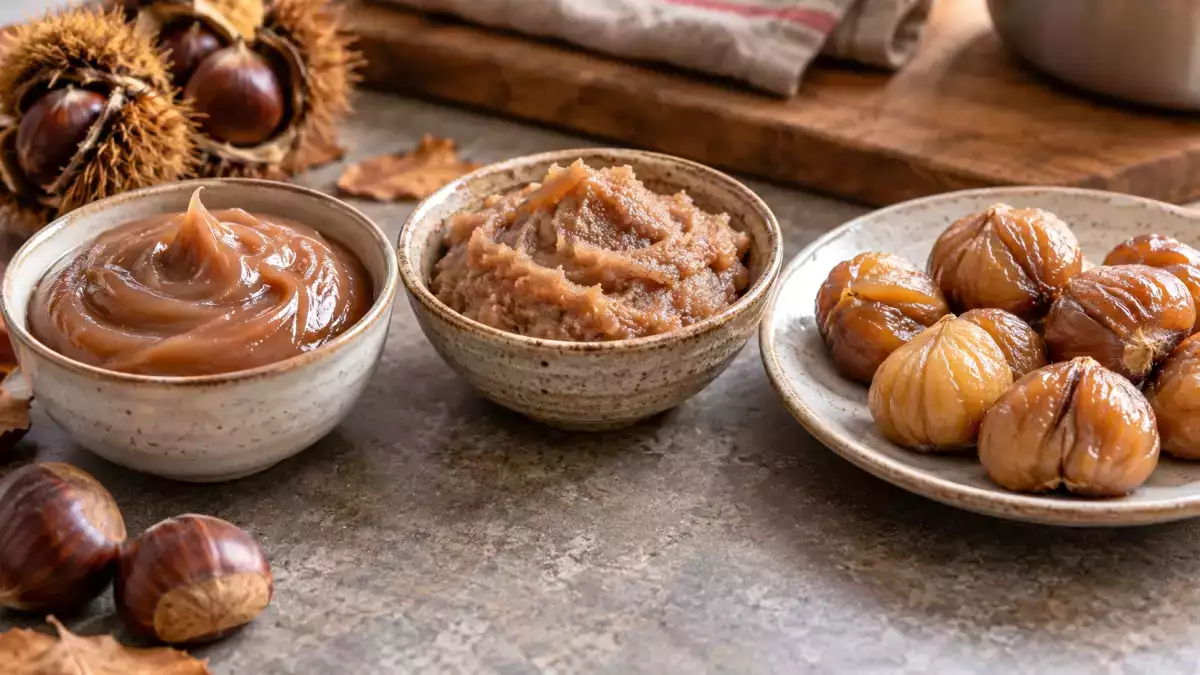
But when it comes to canned chestnuts, we’re often unsure. Chestnut cream, chestnut purée, whole chestnuts… Are they really the same thing? Can we substitute one jar for another?
We decided to clear things up to avoid any unpleasant surprises when it’s time to cook. Grab your recipes—we’ll explain the differences below ↓
Chestnut cream: the most indulgent
Chestnut cream is that smooth, sweet spread we love to put on a crepe or mix into yogurt.
It’s usually made from chestnuts cooked with sugar and, depending on the recipe, vanilla or other ingredients. It has a smooth texture and a particularly indulgent flavor.
Want to make a mousse, a verrine, or a Yule log? It can come in very handy. But be careful: it already contains sugar! If you replace it with plain chestnut purée without adjusting the recipe, the dessert may end up lacking sweetness.
Our advice? Always check the ingredient list, as the sugar content and texture can vary from one brand to another.
Chestnut purée: much more neutral
Chestnut purée is generally made from mashed chestnuts, sometimes with water, but without the added sugar characteristic of chestnut cream when sold plain.
It works well in both savory dishes and desserts, provided you adjust the seasoning accordingly. You can add it to soup, a sauce, or a garnish.
For a sweet recipe, you can add sugar as needed. But don’t automatically substitute 200 g of chestnut cream with 200 g of plain purée: the result won’t be the same.
And be sure to check the packaging! Some commercially available products have similar names but contain different ingredients.
Whole chestnuts: to keep them looking their best
Want to make a stuffing, serve them as a side dish for a festive meal, or add them to a gratin? Whole cooked chestnuts are often the best choice.
They’re available in jars, cans, vacuum-sealed packages, or sometimes frozen. Since they’re already cooked in many of these forms, they can be reheated or incorporated into a recipe by following the manufacturer’s instructions.
Their biggest advantage? They retain a texture and shape that you don’t get with mashed chestnuts.
However, they can sometimes be delicate: mix them gently so as not to break them into small pieces. For a stuffing, you can mash some of them while leaving others whole. This way, you’ll get a variety of textures in a single bite.
By the way, are they marrons or chestnuts?
Here’s a question that comes up every year! In culinary terms, the word “marron” is often used to refer to certain large, edible chestnuts, particularly in sweet dishes.
But beware of an important distinction: horse chestnuts are not edible and can cause poisoning. The ones you find under certain trees in cities should never be used for cooking.
For your recipes, be sure to choose chestnuts that are clearly labeled as edible or products sold in the grocery section.
You can enjoy fall walks and keep horse chestnuts for decorations, but certainly not for dessert ;-)
Which product goes with which recipe?
Let’s recap! For a mousse, dessert cream, or sweet Yule log, chestnut cream is often the simplest choice, since its natural sweetness is part of the final flavor.
For a soup, savory purée, or sauce, opt instead for plain chestnut purée, which you can season to your liking.
For poultry stuffing or a side dish, whole chestnuts are perfect if you want to have chunks in the dish.
But recipes can also combine different forms: whole chestnuts in a creamy stuffing, or a bit of purée in a sauce. The key is to maintain the right balance of sugar and moisture.
And if you buy a prepared product in advance for Christmas, check the expiration date and storage instructions before and after opening.
Our tips for making sure you get it right
Before you go grocery shopping, write down exactly what your recipe calls for. Just writing “chestnuts” isn’t always enough!
If you’re torn between two jars, compare the ingredients and nutritional values. A very sweet chestnut cream won’t work as well in a savory dish.
Once opened, these products should be stored according to the instructions on the package. If necessary, transfer any leftovers to a clean, resealable container, then put them in the refrigerator right away.
To avoid waste, use leftover chestnut cream in plain cottage cheese, or a small portion of plain chestnut purée in a vegetable soup.
See? You just need to know a few key differences to enjoy chestnuts without making a mistake!
And you—do you prefer them in a Yule log or with a nice Christmas roast? Tell us all about it in the comments ;-)
 Adèle Peyches
Editorial manager who just can't wait for winter to enjoy fondue! Passionate about gastronomy and always on the lookout for new culinary gems, I first studied law before returning to my first love: the taste of good products and the joy of sharing around the table :)
Comments