Don't forget these foods: what to remove from your refrigerator before switching to 'vacation mode'
Tuesday 4 August 2026 17:00 - Adèle Peyches
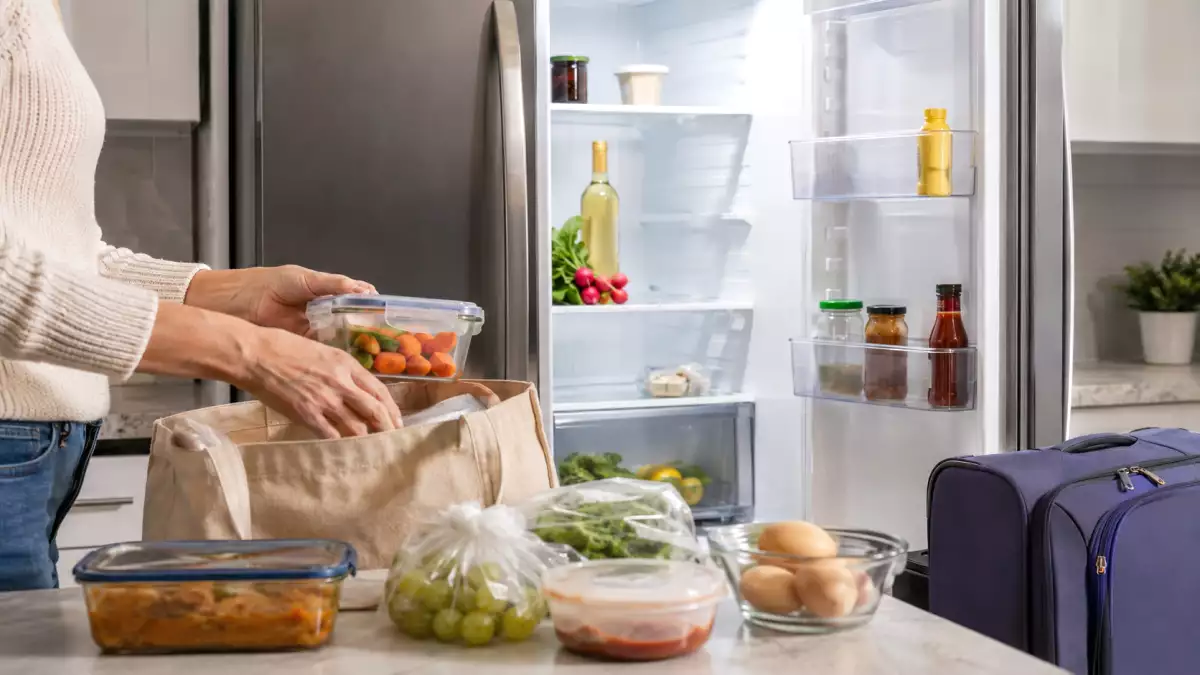
The trap is believing that this mode keeps food fresh as usual. In reality, some models allow the temperature in the refrigerator compartment to rise to around 15 °C. This is useful for reducing energy consumption when the fridge is nearly empty, but it’s not suitable for meat, fish, fresh dairy products, cooked leftovers, or homemade dishes.
Before you leave, the easiest thing to do is to sort through your food using a real checklist: eat it, freeze it, give it away, or throw it out!
Why "vacation mode" isn't a substitute for a real refrigerator
Vacation mode does not serve the same purpose as a standard setting. Its main purpose is to prevent an almost-empty refrigerator from running at full power while you’re away.
The problem is that perishable foods require a much lower temperature. ANSES recommends a temperature between 0 and 4 °C in the coldest part of the refrigerator. At this temperature, the growth of many bacteria is slowed.
So if your refrigerator has a “vacation mode” set to around 15 °C, you shouldn’t leave foods in it that normally require proper refrigeration. This isn’t a minor detail: at this temperature, the refrigerator becomes more of a temperate space than a traditional refrigeration compartment.
The problem is that perishable foods require a much lower temperature. ANSES recommends a temperature between 0 and 4 °C in the coldest part of the refrigerator. At this temperature, the growth of many bacteria is slowed.
So if your refrigerator has a “vacation mode” set to around 15 °C, you shouldn’t leave foods in it that normally require proper refrigeration. This isn’t a minor detail: at this temperature, the refrigerator becomes more of a temperate space than a traditional refrigeration compartment.
To be consumed before departure
This is the first category to tackle, especially if your departure is approaching. Make it a priority to use up foods that have already been opened or are nearing their expiration date in your meals.
Food to eat before you leave: leftovers from prepared meals, meat, fish, opened packages of ham, fresh cheeses, yogurt nearing its expiration date, opened containers of crème fraîche, prepared salads, hard-boiled eggs, and pre-cooked pasta or rice.
The idea isn’t to eat everything at the last minute, but to plan two or three simple meals before you leave: an omelet, a pasta salad, a gratin made with leftovers, a pan-fried vegetable dish, or a homemade sandwich. This prevents you from throwing food away and, most importantly, from leaving perishable items in a fridge that might not be set cold enough.
Food to eat before you leave: leftovers from prepared meals, meat, fish, opened packages of ham, fresh cheeses, yogurt nearing its expiration date, opened containers of crème fraîche, prepared salads, hard-boiled eggs, and pre-cooked pasta or rice.
The idea isn’t to eat everything at the last minute, but to plan two or three simple meals before you leave: an omelet, a pasta salad, a gratin made with leftovers, a pan-fried vegetable dish, or a homemade sandwich. This prevents you from throwing food away and, most importantly, from leaving perishable items in a fridge that might not be set cold enough.
Freeze if the product is suitable for freezing
Some foods can be easily saved if you freeze them before you leave. This is a good way to avoid waste, as long as you freeze items that are still good to eat, properly wrapped, and clearly labeled with the date.
You can often freeze: bread, raw meat, very fresh raw fish, cooled homemade meals, soups, sauces, cooked vegetables, and cut-up fruit for smoothies or compotes.
The best practice: freeze in flat portions, using appropriate containers or bags, and label them with the date and contents. When you return, you’ll know exactly what you have on hand instead of stumbling upon an unidentifiable block at the back of the freezer.
Warning: Don’t freeze food just to “save” something that’s questionable. If the smell, appearance, or date already concerns you before you leave, it’s best not to keep it.
You can often freeze: bread, raw meat, very fresh raw fish, cooled homemade meals, soups, sauces, cooked vegetables, and cut-up fruit for smoothies or compotes.
The best practice: freeze in flat portions, using appropriate containers or bags, and label them with the date and contents. When you return, you’ll know exactly what you have on hand instead of stumbling upon an unidentifiable block at the back of the freezer.
Warning: Don’t freeze food just to “save” something that’s questionable. If the smell, appearance, or date already concerns you before you leave, it’s best not to keep it.
Give it away Instead of throwing it away
If you’re leaving soon and some items can’t wait, consider donating them. This is often the best solution for food that’s still good but can’t be eaten in time.
You can give the following to a neighbor, family member, or friend: ripe fruit, fresh vegetables, unbroken eggs, unopened cheese, yogurt with a valid expiration date, bread, and unopened fresh produce.
The most convenient thing to do is to pack a small “rescue” bag the day before you leave. This way, you avoid having to frantically sort through everything at the last minute as you’re closing the door.
You can give the following to a neighbor, family member, or friend: ripe fruit, fresh vegetables, unbroken eggs, unopened cheese, yogurt with a valid expiration date, bread, and unopened fresh produce.
The most convenient thing to do is to pack a small “rescue” bag the day before you leave. This way, you avoid having to frantically sort through everything at the last minute as you’re closing the door.
Things that are easier to leave behind
Not everything has to be taken out of the fridge. Some items can handle being left out better, especially if they’re sealed, stable, and not past their expiration date. But again, you should read the label and take your appliance’s actual temperature setting into account.
Items that can sometimes be left out include: mustard, pickles, sauces with a high vinegar content, opened jams, unopened beverages, non-fragile jars, and condiments.
But be careful: “may be left out” does not mean “will be fine in all cases.” If the product clearly states that it should be stored between 0 and 4 °C, or if it is fragile, has been opened for a long time, has dirt on the rim of the jar, or is close to its expiration date, don’t take any chances.
Items that can sometimes be left out include: mustard, pickles, sauces with a high vinegar content, opened jams, unopened beverages, non-fragile jars, and condiments.
But be careful: “may be left out” does not mean “will be fine in all cases.” If the product clearly states that it should be stored between 0 and 4 °C, or if it is fragile, has been opened for a long time, has dirt on the rim of the jar, or is close to its expiration date, don’t take any chances.
The checklist before closing the door
1. Check your refrigerator’s user manual
. The vacation mode works differently depending on the model. Some models keep the freezer at its usual temperature and only raise the temperature in the refrigerator compartment.
2. Remove perishable foods
Meat, fish, fresh dairy products, leftovers, homemade dishes, and dishes containing eggs, cooked rice, or pasta: do not leave these in a fridge set to vacation mode.
3. Decide on a per-item basis
For each food item, choose: eat it, freeze it, give it away, or leave it.
4. Clean the empty spaces
A quick wipe with a sponge, a little drying, and coming back will be much more pleasant.
5. Don’t set a one-size-fits-all rule
There’s no magic timeframe after which you should always unplug the fridge. It depends on the contents, the model, the freezer, how long you’ll be away, and what the manual says.
. The vacation mode works differently depending on the model. Some models keep the freezer at its usual temperature and only raise the temperature in the refrigerator compartment.
2. Remove perishable foods
Meat, fish, fresh dairy products, leftovers, homemade dishes, and dishes containing eggs, cooked rice, or pasta: do not leave these in a fridge set to vacation mode.
3. Decide on a per-item basis
For each food item, choose: eat it, freeze it, give it away, or leave it.
4. Clean the empty spaces
A quick wipe with a sponge, a little drying, and coming back will be much more pleasant.
5. Don’t set a one-size-fits-all rule
There’s no magic timeframe after which you should always unplug the fridge. It depends on the contents, the model, the freezer, how long you’ll be away, and what the manual says.
Should you unplug the fridge while you're on vacation?
Not necessarily. If the fridge is empty, clean, and dry, unplugging it may make sense depending on your appliance and how long you’ll be away. But if the freezer is full, if your appliance has separate compartments, or if you’re leaving a few non-perishable items inside, the decision changes.
The right approach, therefore, isn’t to follow a one-size-fits-all rule, but to check three things: What’s left inside? What temperature does the vacation mode actually maintain? What does the user manual recommend?
In summary: vacation mode can be convenient, but it shouldn’t be used as an excuse to leave perishable foods in the fridge “as usual.” Before you leave, take your time sorting through your items, keep only what can be stored, and avoid unpleasant surprises when you return.
The right approach, therefore, isn’t to follow a one-size-fits-all rule, but to check three things: What’s left inside? What temperature does the vacation mode actually maintain? What does the user manual recommend?
In summary: vacation mode can be convenient, but it shouldn’t be used as an excuse to leave perishable foods in the fridge “as usual.” Before you leave, take your time sorting through your items, keep only what can be stored, and avoid unpleasant surprises when you return.
 Adèle Peyches
Editorial manager who just can't wait for winter to enjoy fondue! Passionate about gastronomy and always on the lookout for new culinary gems, I first studied law before returning to my first love: the taste of good products and the joy of sharing around the table :)
Comments