From parties to restaurants: can the tequeño become the next big Latin snack worldwide?
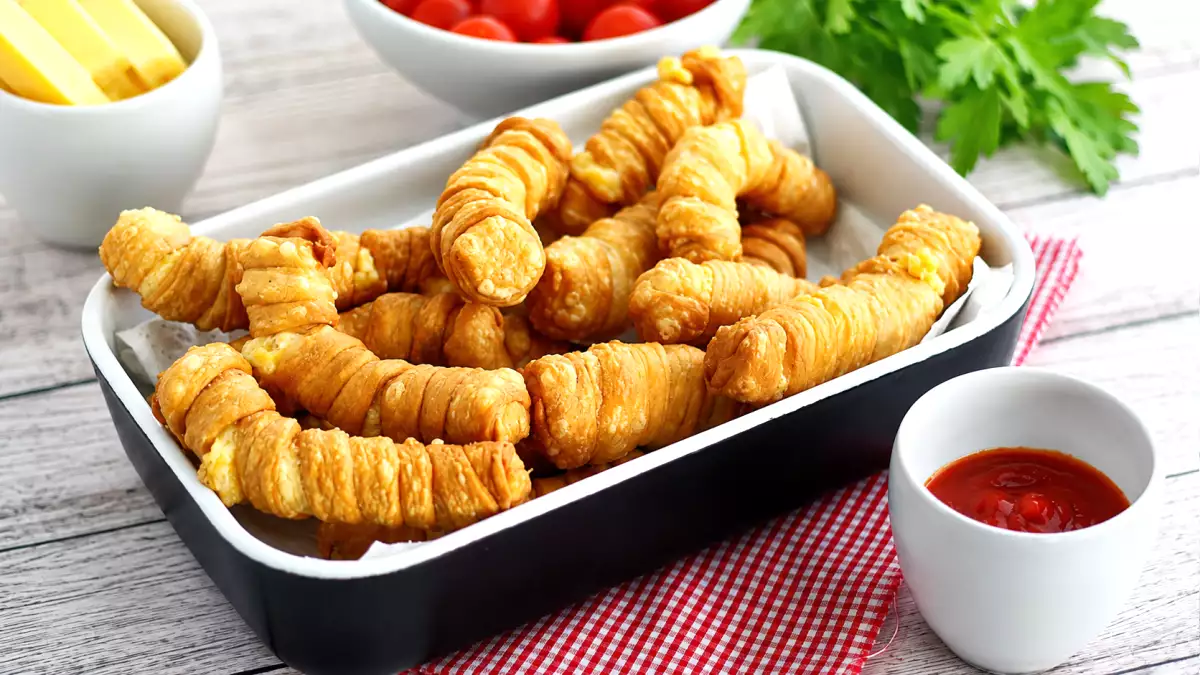
It originated in Venezuela, became a staple of Spanish tapas culture, and can now be found in cities like Paris and Lisbon. The tequeño has something many regional specialties would love to have: it requires virtually no explanation.
There are foods that, when they leave their country of origin, need a little instruction manual. You have to explain what’s in them, how to eat them, when they’re served, or why they’re special.
And then there’s the tequeño.
Crispy on the outside. Warm, stretchy cheese on the inside. You pick it up with your fingers, and it’s gone in three or four bites.
Perhaps that’s one of the reasons this Venezuelan snack has found a second life thousands of kilometers from home.
In Spain, it has long since ceased to be a rarity reserved for Venezuelan restaurants: it appears in bars, burger joints, delivery services, and the frozen food section of supermarkets. And if we zoom out on the map, interesting trends begin to emerge. In Paris, it’s served as an appetizer and a dish to share; in Portugal, there are shops specializing in tequeños and frozen versions to prepare at home.
It would still be an exaggeration to talk about a conquest of Europe. But it’s worth asking the question:
Does the tequeño have what it takes to become one of the next big Latin American snacks outside its home country?
What exactly is a tequeño?
The classic Venezuelan tequeño is seemingly simple: a stick of white cheese wrapped in wheat flour dough and fried until golden brown.
But its identity lies in its texture.
The dough must be crispy, while the cheese inside melts and becomes stretchy without completely disappearing. The result combines several elements that are hard to resist: fried food, melted cheese, contrasting textures, and a shape designed for eating with your hands.
Its origin is often linked to Los Teques, in the Venezuelan state of Miranda, although there are different accounts of its exact origins. As with so many popular recipes, its history belongs largely to home kitchens and oral tradition.
What is indisputable is its cultural significance. In 2023, Venezuela declared it a national cultural heritage.
And that’s particularly interesting because, outside of Venezuela, the tequeño is taking on a quite different life.
In Venezuela, it means a party; elsewhere, it's starting to mean an appetizer
For many Venezuelans, the word “tequeños” is synonymous with birthdays, weddings, baptisms, and family gatherings.
It’s the tray that makes the rounds among the guests. The one you eat while it’s still piping hot because no one wants to wait. The appetizer you’d better grab one of before they’re all gone.
But foods also migrate. And when they do, they don’t necessarily retain the same place in society as they did where they originated.
That is precisely what makes what has happened in Spain so interesting.
The influx of Venezuelans has increased significantly in recent years; in fact, Venezuela ranks among the top nationalities of people arriving in Spain in 2024.
Along with this migration came arepas, cachapas, hallacas, and tequeños.
But the tequeño had a particular advantage: Spain already had the perfect place for it.
The tapa. The appetizer. The snack. The dish served in the center.
There was no need to invent an occasion to eat it.
Just a change of calendar.
What in Caracas might signal a celebration could, in Madrid, become something to order while waiting for the hamburgers to arrive.
The secret of the tequeño: it needs no translation
This is perhaps the most interesting reason for its international potential.
Think about how difficult it can be to export certain national specialties. Sometimes they contain unfamiliar ingredients. Or flavors that require a certain familiarity. Or consumption rituals that are lost outside their original culture.
The tequeño has the opposite problem.
You understand it before you even try it.
France has a long-standing tradition of cheese and the apéro. Italy has fried foods and small bites to share. Portugal has its petiscos. Spain has tapas and aperitivos.
The tequeño is not equivalent to any of these, nor does it need to be. It simply finds in those cultures a dining occasion that already exists. In fact, it’s revealing to observe how it’s beginning to be described outside the Spanish-speaking world.
A Venezuelan restaurant in Paris presents its tequeños simply as cheese fritters, while another lists them directly among its appetizers. In Lisbon, you can easily find them described as “palitos de queijo enrolados em massa tenra.”
Three words are enough to get the idea: dough, cheese, fried.
For a food that aims to go global, that’s a huge advantage.
From Madrid to Paris and Lisbon: Small Clues
It’s important not to confuse signs with statistics: there is no data to support the claim that Europe is experiencing a “tequeño craze.”
But looking at how well it’s selling is revealing.
In Paris, it’s already appearing on the menus of Venezuelan restaurants as an appetizer or a dish to share, and on food delivery platforms it’s sold directly as a Venezuelan cheese beignet.
In Portugal, the phenomenon takes on another interesting form. Some businesses sell frozen tequeños to prepare at home, while specialty shops in Lisbon offer not only the classic cheese variety but also versions with guava and cheese, chocolate, or even gluten-free options.
And here we see another common sign that a dish is taking root far from its place of origin: it begins to evolve. This doesn’t mean these versions are replacing the traditional Venezuelan tequeño. It signifies something perhaps even more interesting: the format has begun to take on a life of its own, separate from the original filling.
That’s exactly what happens when a dish stops being just a recipe and becomes a culinary concept as well: dough rolled around something appetizing, a few minutes of frying or cooking, and a bite that’s easy to share.
It has another huge advantage for its international success: it was built with delivery in mind
There’s also a much less romantic—but probably decisive—reason. The tequeño is very easy to sell.
It requires no plate or utensils. It can be served individually. It works as an appetizer. It’s meant to be shared. It can be frozen. It’s quick to prepare and pairs well with different sauces and fillings.
In other words, it combines many of the characteristics sought after by contemporary dining. And food delivery platforms highlight precisely that versatility: in Lisbon, it can be ordered as an appetizer alongside arepas and cachapas; in Paris, it appears in the tapas and dishes-to-share categories.
Its international appeal, therefore, doesn’t depend solely on Europeans discovering Venezuelan cuisine. It depends on something much simpler: it’s a product that’s extremely easy to incorporate into our existing eating habits.
Would you like to try them at home?
The best way to understand why this snack travels so well is quite simple: try it.
Our recipe for cheese sticks made with homemade dough captures that undeniable magic: a golden, crispy exterior, melted cheese inside, and a shape that inevitably makes you reach for another one.
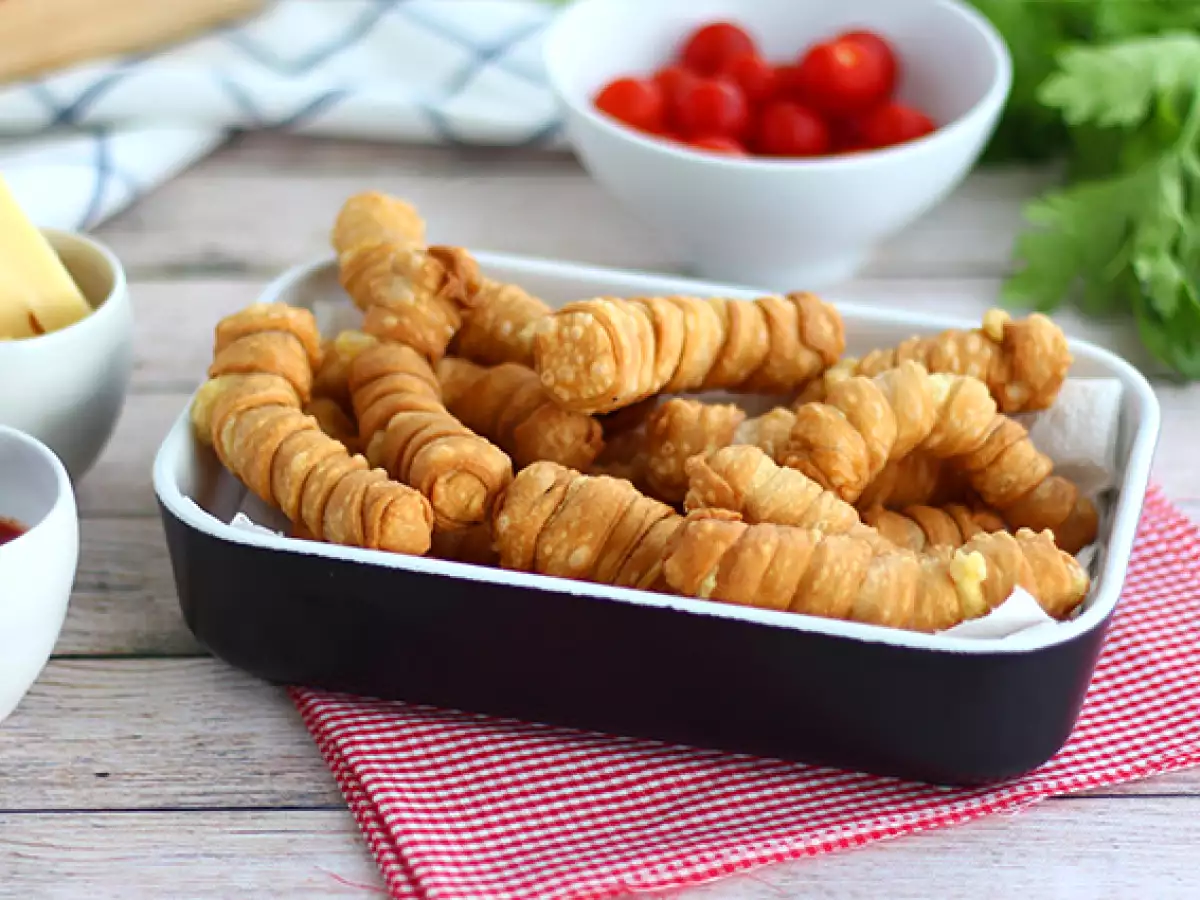
For all the cheese lovers out there, this incredibly easy recipe for crispy cheese sticks will make you happy! Cut your Emmental cheese into sticks, make a dough, and use it to wrap the cheese pieces. After a quick fry, you'll have a gooey inside and a...
Because while the tequeño’s international future may have migratory, cultural, and gastronomic explanations, after the first bite, a much simpler explanation emerges: it’s fried dough filled with hot cheese. And some ideas work in almost any language.
 Patricia González
Comments