Have you been eating open ham for days? Watch out for the risk of Salmonella
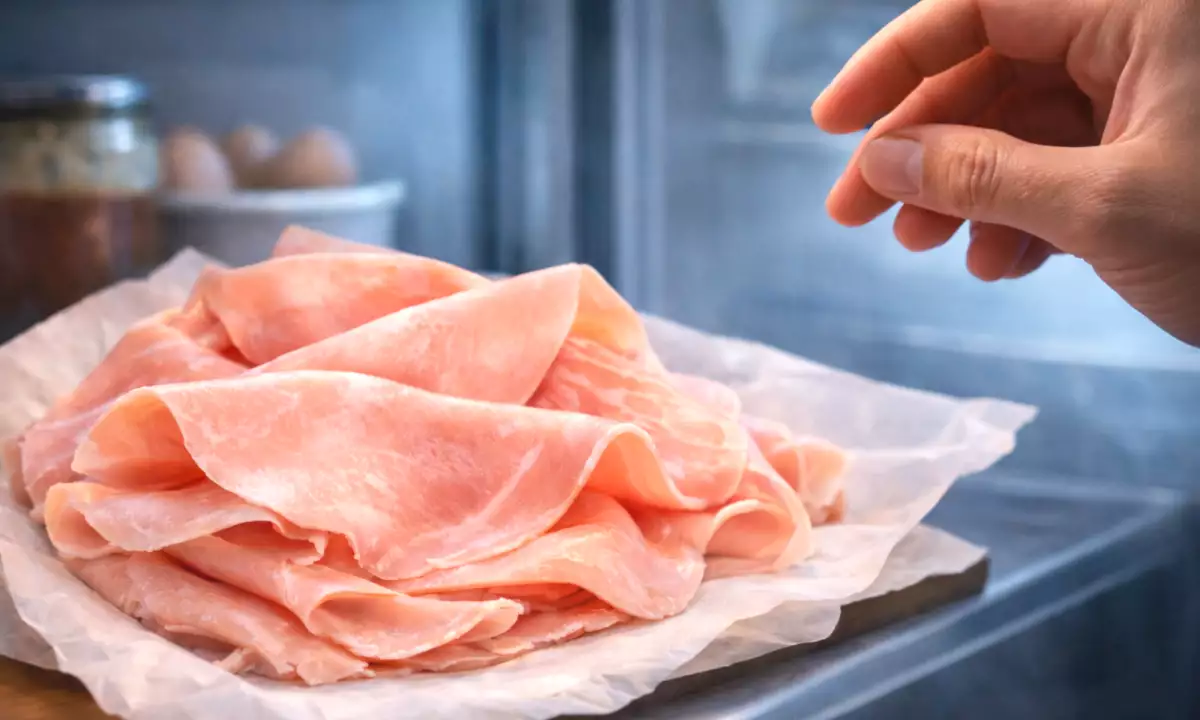
Let’s be honest: in a lot of American fridges there’s that pack of deli ham or turkey, half-used, wrapped in the original plastic or deli paper, hanging around “since… Monday? Last week? Who knows.”
The invisible risk: why the smell test doesn’t work
Most of us do the same thing: we sniff the ham, touch it quickly, and if it doesn’t smell sour or feel slimy, we assume it’s fine. The problem? Harmful bacteria like Salmonella and Listeria monocytogenes don’t necessarily change the smell, color or texture of food. You can’t see, smell or taste them. What you do smell when food “goes bad” are usually spoilage bacteria (the ones that ruin flavor and texture) but they’re not the same as the pathogens that can send you to the ER.
Meanwhile in the U.S., Salmonella alone is estimated to cause about 1.35 million infections, 26,500 hospitalizations and 420 deaths every year, and Listeria, though rarer, is one of the deadliest foodborne infections. So if your only safety check is your nose… you’re flying blind.
So how long is deli ham actually safe after you open it?
Here’s the part that really matters for everyday life. According to FoodSafety.gov (USDA/US HHS), opened luncheon meats (including deli-sliced ham) should be eaten within 3 to 5 days when kept properly refrigerated at 40°F (4°C) or below.
That includes:
- A vacuum-sealed pack you opened at home
- Ham, turkey, roast beef, etc. sliced to order at the deli counter
Beyond that 3–5 day window, the risk of dangerous bacterial growth goes up, even if:
- it smells fine
- the color looks normal
- the texture still seems okay
If it’s been a week since you opened it or had it sliced? From a U.S. food-safety standpoint, it belongs in the trash, not in a sandwich.
Why deli ham is so delicate
Deli ham (and other lunch meats) checks all the boxes bacteria love:
- high moisture
- a mild pH they thrive in
- it’s ready-to-eat (we usually don’t re-cook it)
On top of that, Listeria has a nasty superpower: it can survive and even grow in the refrigerator, unlike many other bacteria.
That’s why CDC and USDA pay so much attention to deli meats in recalls and outbreak investigations and why there are repeated U.S. outbreaks linked specifically to ham, turkey and other sliced cold cuts from delis and plants.
Fridge science: 5 mistakes that make deli ham riskier
To keep that pack of ham on the safe side of things, these are the big no-nos in an American kitchen:
1. Fridge too warm
The fridge should be at 40°F or below. Above that, you’re in what USDA calls the “danger zone” (40–140°F), where bacteria can multiply quickly. A cheap fridge thermometer is way more honest than the dial.
2. Storing it in the door
The door is the warmest, most variable part of the fridge. Deli meat is safer on a middle shelf or meat/cheese drawer, where the temperature is more stable.
3. Leaving it in deli paper or an open tray
Once you’re home, transfer the slices to an airtight container, ideally glass or a good-quality plastic with a tight lid. That:
- limits contact with air,
- slows oxidation,
- and reduces cross-contamination from other foods.
4. Handling it with your hands
We all do it, but it’s not ideal. Use clean tongs or a fork instead of grabbing slices with your fingers — hands are one of the biggest vehicles for bacteria in the kitchen.
5. Letting it sit out on the counter or buffet
USDA’s rule of thumb: perishable foods shouldn’t sit at room temperature for more than 2 hours (1 hour if it’s over 90°F). After that, they should be thrown away, not put back in the fridge “for later”.
Think lunch spreads, party platters, game-day snacks with a meat and cheese board… Once that time’s up, the leftover ham is done too.
Symptoms and who’s most at risk
Foodborne infections from deli meats range from “rough weekend” to life-threatening, especially with Listeria.
Typical symptoms (Salmonella, Listeria and other pathogens) include:
- nausea, vomiting
- stomach cramps
- diarrhea
- fever
High-risk groups in the U.S. include:
- pregnant people
- newborns
- adults 65+
- people with weakened immune systems (cancer treatment, transplants, certain chronic illnesses)
For these groups, CDC actually recommends reheating deli meats until steaming hot (165°F) or avoiding them cold altogether, because Listeria infection can be especially severe.
If someone in your household falls into these categories, it’s worth being extra strict.
Smart kitchen: less waste, more safety
Food waste is a real issue, and nobody likes throwing away perfectly good (and expensive) deli meat. But the solution isn’t pushing the limits of what’s safe; it’s planning a bit differently:
- Buy smaller packs or ask for less at the deli if you know you won’t use it in 3–5 days.
- Rotate proteins: ham one week, canned tuna or rotisserie chicken the next.
- Label containers with the open date so you’re not guessing.
- If you bought more than you’ll use in a few days, you can freeze portions (USDA suggests up to 1–2 months for best quality).
And when you find that lonely pack that’s been open “for a while”? Toss it without guilt. Your health is worth a lot more than a couple of slices of ham.
So let’s recap:
- Opened deli ham / lunch meat: 3–5 days max in the fridge at 40°F or below.
- You cannot trust sight or smell to detect Salmonella, Listeria or other dangerous bacteria.
- Deli meats are a known high-risk food in the U.S., especially for pregnant people, older adults and those with weak immune systems.
So the next time you grab that open pack of ham “that’s probably fine,” remember: the best ingredient in your kitchen is still common sense plus good food safety habits.
 Daniele Mainieri
Comments