Homemade mashed potatoes that are too runny: the mistake is sometimes made long before you add the milk...
Sunday 18 October 2026 21:00 - Adèle Peyches
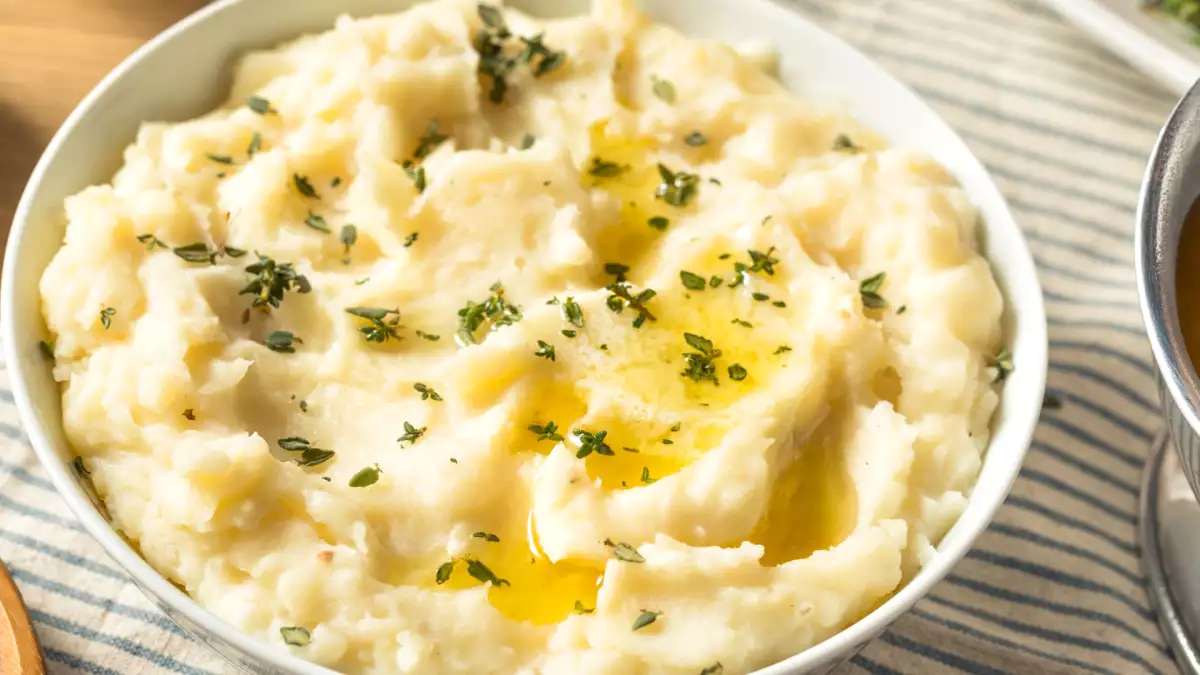
And the worst part is that we often blame the wrong culprit. Too much milk? Not enough butter? The wrong variety? In reality, the texture of mashed potatoes depends on several steps, and some mistakes happen long before you even start mashing them.
So if your mashed potatoes turn out runny, sticky, cold, or full of lumps, let’s start from the beginning. You’ll see—every problem has a logical explanation… and, most importantly, a simple solution.
Is your mashed potatoes too runny? First, check how long you cooked them.
Let’s start with the most common problem. You mash your potatoes, add a little milk, and… disaster: the mashed potatoes turn out much too runny.
The instinct is often to think you’ve added too much liquid. But that’s not necessarily the case. The potatoes may have already absorbed a lot of water while cooking, especially if they were peeled and cut into small pieces before being added to the pot.
And naturally, if your base is already very moist, just a few spoonfuls of milk are enough to throw off the texture.
The instinct is often to think you’ve added too much liquid. But that’s not necessarily the case. The potatoes may have already absorbed a lot of water while cooking, especially if they were peeled and cut into small pieces before being added to the pot.
And naturally, if your base is already very moist, just a few spoonfuls of milk are enough to throw off the texture.
The trick that makes all the difference: cooking whole potatoes with their skins on
That’s where this method gets interesting. Instead of peeling the potatoes before cooking, cook them whole, with their skins on.
Why? Simply because the skin limits direct contact between the flesh and the water. As a result, the potatoes absorb less moisture during cooking.
Once they’re tender, drain them, let them cool just enough to handle, then peel them and mash them while they’re still warm.
This takes a few extra minutes at the start, but you gain a lot more control over the texture. And when you want a smooth mashed potato without turning it into soup, that’s really appreciated.
Why? Simply because the skin limits direct contact between the flesh and the water. As a result, the potatoes absorb less moisture during cooking.
Once they’re tender, drain them, let them cool just enough to handle, then peel them and mash them while they’re still warm.
This takes a few extra minutes at the start, but you gain a lot more control over the texture. And when you want a smooth mashed potato without turning it into soup, that’s really appreciated.
Sticky purée? Above all, put that blender down
Another classic problem: mashed potatoes that become stretchy and almost stick to the spoon. In this case, the problem isn’t water anymore, but starch.
We know what you were thinking: “I’ll just give it a quick whirl in the blender to make it nice and smooth.” Except that the blades process the potatoes very quickly and release a huge amount of starch. The result? A sticky texture that’s more like glue than homemade mashed potatoes.
The right tool here is a potato masher, a food mill, or—for a small amount—a simple fork. The idea is to mash without overworking the mixture.
We know what you were thinking: “I’ll just give it a quick whirl in the blender to make it nice and smooth.” Except that the blades process the potatoes very quickly and release a huge amount of starch. The result? A sticky texture that’s more like glue than homemade mashed potatoes.
The right tool here is a potato masher, a food mill, or—for a small amount—a simple fork. The idea is to mash without overworking the mixture.
Chunks everywhere? It's not your potato masher's fault.
You mash, you keep at it, you try again… and there are still little hard chunks left? No need to keep hammering away at the utensil. The potatoes probably aren’t cooked enough.
For mashed potatoes, they need to be really tender all the way through. The tip of a knife should slide in easily, without any resistance.
If you’re cooking them whole with their skins on, try to choose potatoes that are roughly the same size. Otherwise, the smaller ones will be done long before the larger ones, and you’ll end up with uneven cooking.
For mashed potatoes, they need to be really tender all the way through. The tip of a knife should slide in easily, without any resistance.
If you’re cooking them whole with their skins on, try to choose potatoes that are roughly the same size. Otherwise, the smaller ones will be done long before the larger ones, and you’ll end up with uneven cooking.
Does your mashed potatoes get cold before it reaches the table? There's one small detail you might want to check.
You took the time to mash your potatoes while they were still hot… then you poured milk straight from the refrigerator over them. And of course, the temperature drops.
The right thing to do? Heat the milk before adding it. No need to boil it—it just needs to be warm.
Also, add the butter while the potatoes are still very hot so it melts easily. And if you make the mashed potatoes a few minutes ahead of time, keep them covered and warm rather than leaving them sitting on the counter.
The right thing to do? Heat the milk before adding it. No need to boil it—it just needs to be warm.
Also, add the butter while the potatoes are still very hot so it melts easily. And if you make the mashed potatoes a few minutes ahead of time, keep them covered and warm rather than leaving them sitting on the counter.
It's too runny, but it's already done—can we still save it?
Yes, all is not lost ;-)
If your mashed potatoes are just a little too runny, return them to low heat for a few moments and stir gently. Some of the moisture will evaporate.
Do you still have a cooked potato on hand? Mash it and then gradually stir it in. This makes much more sense than adding flour or cornstarch haphazardly, which risks completely changing the texture.
And above all, next time, add the milk little by little. You can always add more. Taking some out is much trickier.
If your mashed potatoes are just a little too runny, return them to low heat for a few moments and stir gently. Some of the moisture will evaporate.
Do you still have a cooked potato on hand? Mash it and then gradually stir it in. This makes much more sense than adding flour or cornstarch haphazardly, which risks completely changing the texture.
And above all, next time, add the milk little by little. You can always add more. Taking some out is much trickier.
The best method for a smoother purée
Want to avoid having to figure it out all over again at every dinner? Just keep this order in mind:
1. Choose potatoes that are suitable for mashed potatoes.
2. Cook them whole, with their skins on.
3. Peel them while they’re still hot.
4. Mash them without using a blender.
5. Add the butter.
6. Gradually pour in the hot milk.
And there you have it. No need for complicated techniques or secret ingredients. The real difference lies mainly in the moisture content, the cooking method, and how you handle the potatoes.
Once you’ve mastered these three points, your mashed potatoes should be much less likely to throw you a curveball when it’s time to sit down to eat ;-)
1. Choose potatoes that are suitable for mashed potatoes.
2. Cook them whole, with their skins on.
3. Peel them while they’re still hot.
4. Mash them without using a blender.
5. Add the butter.
6. Gradually pour in the hot milk.
And there you have it. No need for complicated techniques or secret ingredients. The real difference lies mainly in the moisture content, the cooking method, and how you handle the potatoes.
Once you’ve mastered these three points, your mashed potatoes should be much less likely to throw you a curveball when it’s time to sit down to eat ;-)
 Adèle Peyches
Editorial manager who just can't wait for winter to enjoy fondue! Passionate about gastronomy and always on the lookout for new culinary gems, I first studied law before returning to my first love: the taste of good products and the joy of sharing around the table :)
Comments