How to cook farro, soaked or unsoaked: step-by-step tips to make great farro every time, no-fuss
Wednesday 30 September 2026 21:00 - Adèle Peyches
Should you soak farro wheat before cooking it?
Soaking isn’t always necessary, but it’s very convenient if you plan ahead the night before.
Soaking the grains in cold water for about 12 hours allows them to begin rehydrating before cooking. Depending on the product, this can significantly reduce the time spent on the stove.
Biocoop, for example, recommends cooking one of its hulled spelt varieties for about 30 minutes after a 12-hour soak, compared to about an hour without soaking. Other brands may specify different cooking times.
After soaking, drain and rinse the grains before cooking them in fresh water.
Soaking the grains in cold water for about 12 hours allows them to begin rehydrating before cooking. Depending on the product, this can significantly reduce the time spent on the stove.
Biocoop, for example, recommends cooking one of its hulled spelt varieties for about 30 minutes after a 12-hour soak, compared to about an hour without soaking. Other brands may specify different cooking times.
After soaking, drain and rinse the grains before cooking them in fresh water.
How to cook farro in a pot
First, rinse the farro wheat under cold water. Then pour it into a pot with about three parts water for every part of grain.
Bring to a boil, then reduce the heat. The grains should continue to cook at a gentle simmer, without a constant, vigorous boil.
For standard, uncooked emmer wheat, allow 40 to 45 minutes. Sabarot, for example, recommends 40 minutes for its classic Velay emmer wheat, while Markal recommends 45 minutes.
After 35 to 40 minutes, taste a few grains. They should be tender but still slightly firm.
Bring to a boil, then reduce the heat. The grains should continue to cook at a gentle simmer, without a constant, vigorous boil.
For standard, uncooked emmer wheat, allow 40 to 45 minutes. Sabarot, for example, recommends 40 minutes for its classic Velay emmer wheat, while Markal recommends 45 minutes.
After 35 to 40 minutes, taste a few grains. They should be tender but still slightly firm.
How long does it take to cook farro wheat after soaking?
Soaking can save a lot of time, but there is no single time that applies to all packages.
Depending on the product, cooking time after soaking can range from 15 to 30 minutes. This depends on whether the beans are hulled, the variety, and how the beans were processed before packaging.
For this reason, it’s best to use the time indicated on the package as a starting point, then taste the grains before draining them.
Emmer wheat can handle an extra minute or two of cooking better than being taken off the heat too early while the center is still hard.
Depending on the product, cooking time after soaking can range from 15 to 30 minutes. This depends on whether the beans are hulled, the variety, and how the beans were processed before packaging.
For this reason, it’s best to use the time indicated on the package as a starting point, then taste the grains before draining them.
Emmer wheat can handle an extra minute or two of cooking better than being taken off the heat too early while the center is still hard.
Why do some packages cook in just 10 minutes?
A package that lists a 10-minute cooking time isn’t necessarily comparable to standard unprocessed farro wheat.
There are quick-cooking varieties available. For example, Sabarot sells farro wheat from the Velay region with a listed cooking time of 10 to 12 minutes.
So don’t automatically assume a 40- or 45-minute cooking time applies to all products. If your package indicates “quick-cooking,” follow those instructions first.
The best guide is still the texture: a cooked grain should be tender to the bite, without turning into mush.
There are quick-cooking varieties available. For example, Sabarot sells farro wheat from the Velay region with a listed cooking time of 10 to 12 minutes.
So don’t automatically assume a 40- or 45-minute cooking time applies to all products. If your package indicates “quick-cooking,” follow those instructions first.
The best guide is still the texture: a cooked grain should be tender to the bite, without turning into mush.
How much should I plan for per person?
For a side dish, allow about 60 to 80 g of dry farro wheat per person. Biocoop recommends 60 g per person for certain products, while Sabarot recommends 80 g for its standard package size.
If the farro wheat is mixed with plenty of vegetables, legumes, or a protein source, 60 g may be more than enough.
For a dish where the grain is the main ingredient, such as a hearty salad or spelt cooked risotto-style, you can use closer to 70 to 80 g per person.
If the farro wheat is mixed with plenty of vegetables, legumes, or a protein source, 60 g may be more than enough.
For a dish where the grain is the main ingredient, such as a hearty salad or spelt cooked risotto-style, you can use closer to 70 to 80 g per person.
Should you add salt to the cooking water?
Yes, you can cook farro wheat in lightly salted water. In fact, the cooking instructions for several French brands recommend using salted water.
Just be careful not to add too much salt if you plan to add cheese, olives, sauce, broth, or other ingredients that are already salty.
To add more flavor, you can also add a bay leaf, a sprig of thyme, a piece of onion, or a clove of garlic while it’s cooking.
Just be careful not to add too much salt if you plan to add cheese, olives, sauce, broth, or other ingredients that are already salty.
To add more flavor, you can also add a bay leaf, a sprig of thyme, a piece of onion, or a clove of garlic while it’s cooking.
How can you tell if farro wheat is cooked?
Don’t rely solely on the timer. Take a few grains and taste them.
Farro should be tender all the way through, but it can still have a slight bite. If it’s crunchy in the center or feels floury and hard, continue cooking for a few minutes.
Conversely, if the grains start to fall apart and the water becomes very thick, you’ve probably overcooked them.
As soon as the texture is to your liking, drain them immediately.
Farro should be tender all the way through, but it can still have a slight bite. If it’s crunchy in the center or feels floury and hard, continue cooking for a few minutes.
Conversely, if the grains start to fall apart and the water becomes very thick, you’ve probably overcooked them.
As soon as the texture is to your liking, drain them immediately.
Should you rinse farro wheat after cooking?
For a hot side dish, this isn’t usually necessary. Simply drain the grains and serve them with a drizzle of olive oil, a little butter, or the sauce from the main dish.
For a cold salad, a very quick rinse under cold water can help stop the cooking process and cool the grains. Then drain them thoroughly so the salad doesn’t get soggy.
You can also spread them out on a large plate or baking sheet for a few minutes to help them cool faster.
For a cold salad, a very quick rinse under cold water can help stop the cooking process and cool the grains. Then drain them thoroughly so the salad doesn’t get soggy.
You can also spread them out on a large plate or baking sheet for a few minutes to help them cool faster.
How to prevent emmer wheat from becoming too mushy
The first mistake is to cook it much longer than necessary. The second is to leave it in the hot water once it’s already tender.
So start tasting it before the recommended cooking time is up. As soon as the grains are ready, drain them immediately.
For a salad, let them cool without transferring them to a container right away. For a hot dish, season them right after draining.
If you’re looking for a loose, fluffy texture, also avoid stirring the pot constantly.
So start tasting it before the recommended cooking time is up. As soon as the grains are ready, drain them immediately.
For a salad, let them cool without transferring them to a container right away. For a hot dish, season them right after draining.
If you’re looking for a loose, fluffy texture, also avoid stirring the pot constantly.
How to use cooked farro
Farro can be used almost like rice. It works very well in a mixed salad with roasted vegetables, tomatoes, cheese, tuna, fresh herbs, or a lemon vinaigrette.
It can also be served with meat, fish, or simmered vegetables. Its texture also makes it suitable for thick soups and risotto-style dishes.
It can also be served with meat, fish, or simmered vegetables. Its texture also makes it suitable for thick soups and risotto-style dishes.
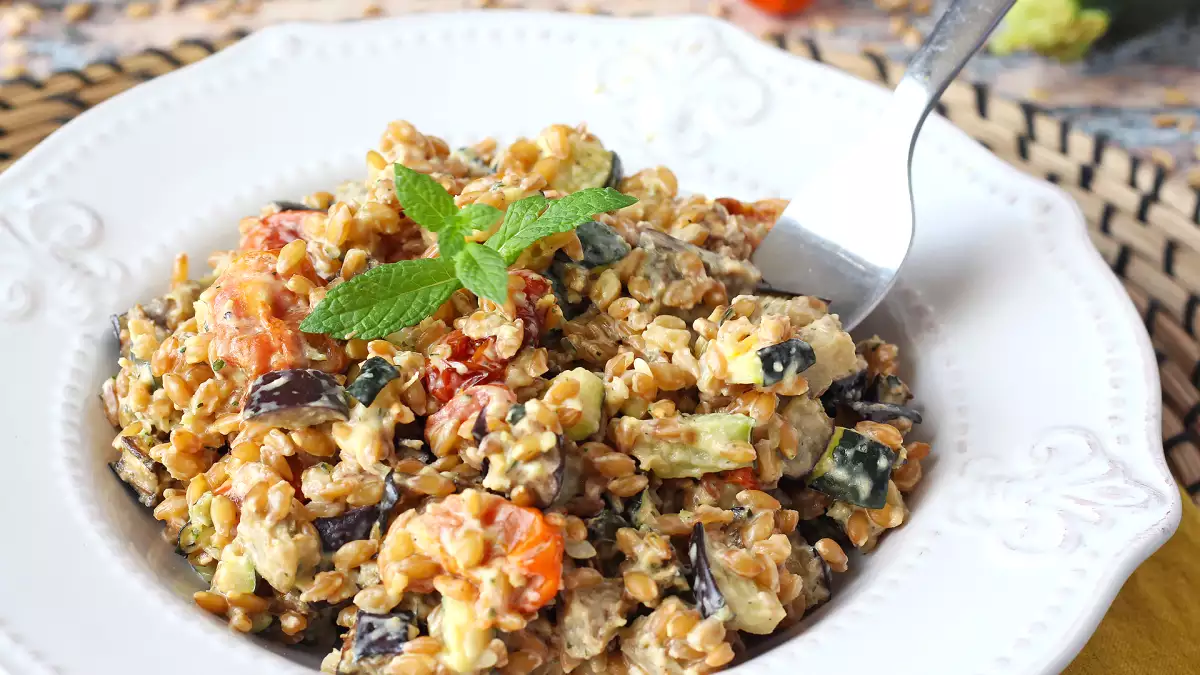
Creamy farro salad with zucchini, eggplant and cherry tomatoes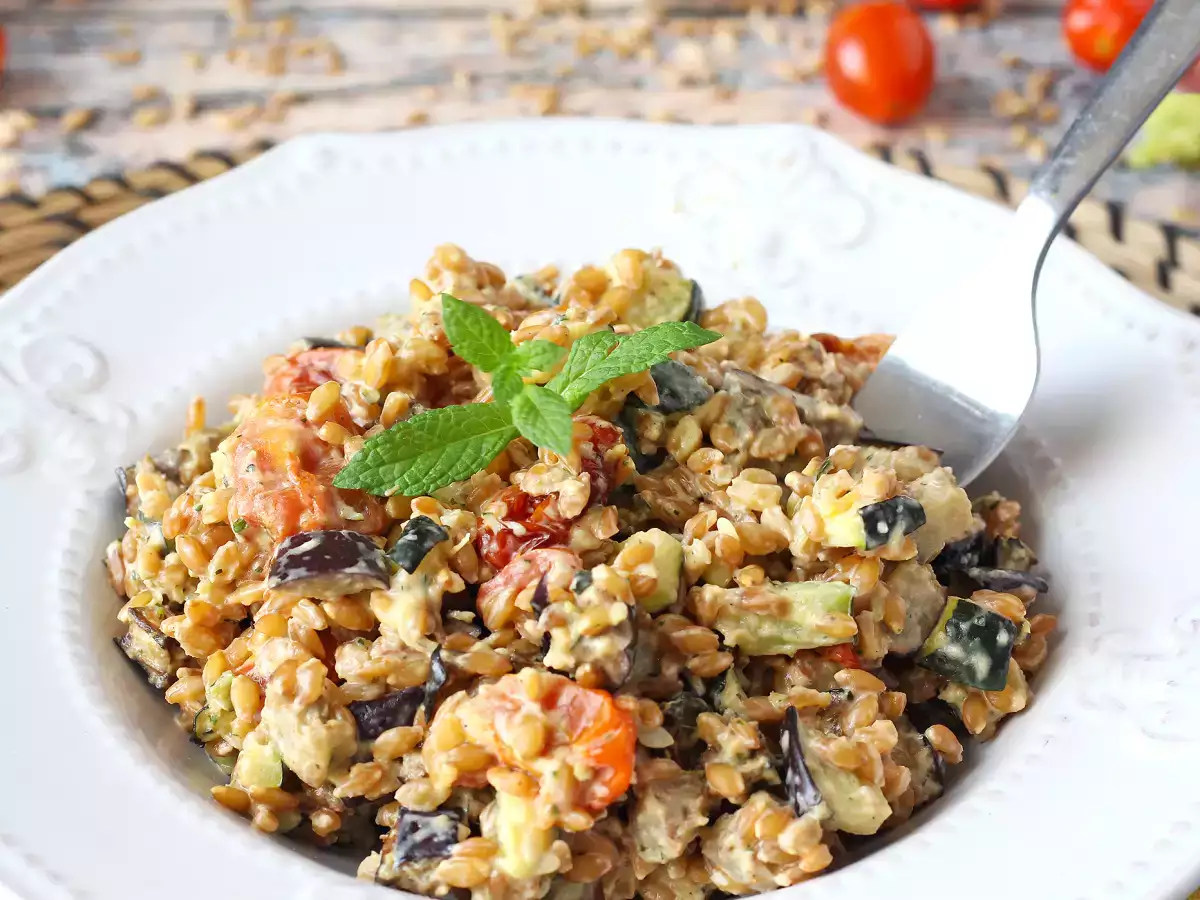
Perfect for the warmer months, this farro salad with zucchini , eggplant and roasted cherry tomatoes wins you over at the first bite with its extraordinary balance of flavors. The sweetness of the oven-roasted vegetables meets the freshness of...
Farro and tuna salad: a light, tasty recipe that's perfect year-round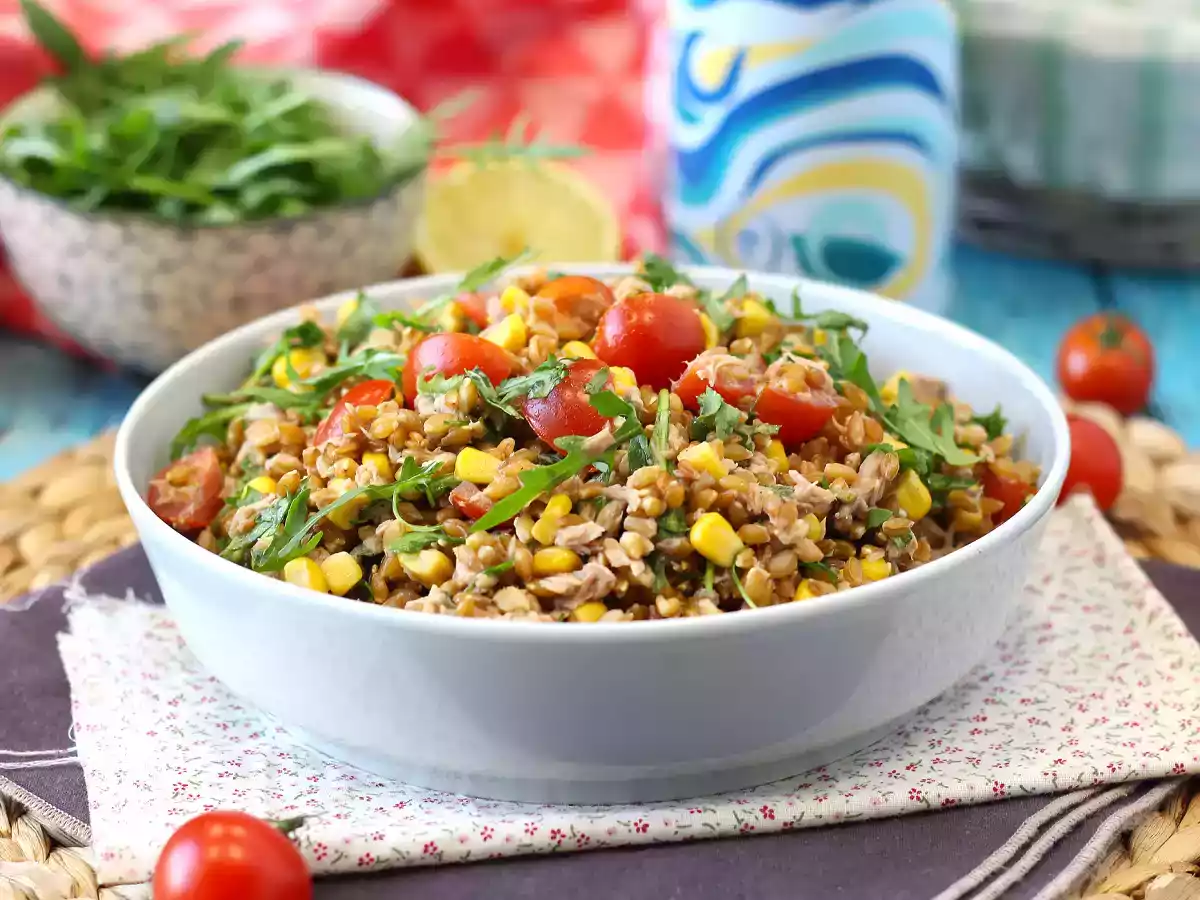
Farro and tuna salad is a fresh, balanced dish that's perfect for any occasion. Great as a light lunch, a meal to take to work or a quick dinner, it's an ideal choice for those who want to eat healthy without sacrificing taste. In our version,...
How to plan ahead to stay ahead
Since cooking traditional farro wheat takes quite a while, it’s convenient to prepare several servings at once.
After cooking, let the grains cool quickly, then store them in the refrigerator in a sealed container. You can then add them to a salad, reheat them in a skillet with vegetables, or stir them into soup.
When serving, add the seasoning and fresh ingredients at the last minute to maintain a pleasant texture.
After cooking, let the grains cool quickly, then store them in the refrigerator in a sealed container. You can then add them to a salad, reheat them in a skillet with vegetables, or stir them into soup.
When serving, add the seasoning and fresh ingredients at the last minute to maintain a pleasant texture.
 Adèle Peyches
Editorial manager who just can't wait for winter to enjoy fondue! Passionate about gastronomy and always on the lookout for new culinary gems, I first studied law before returning to my first love: the taste of good products and the joy of sharing around the table :)
Comments