Salsify: a simple trick to keep your fingers from getting sticky
Wednesday 11 November 2026 10:00 - Adèle Peyches
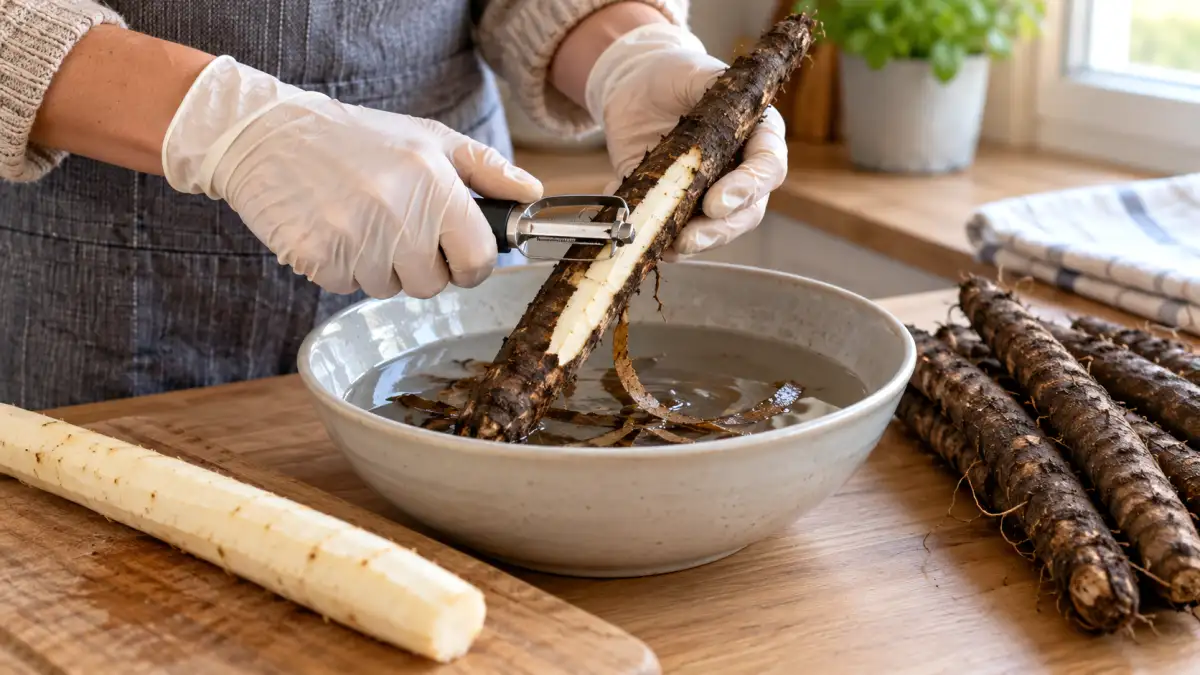
The only problem? Peeling them! As soon as you start, your fingers get sticky and the flesh of the roots begins to turn brown… Not exactly pleasant!
Check out our tips for preparing salsify with ease. It’s not complicated at all—we promise! Follow the guide ↓
1 - Why do salsify roots stick together?
When you cut certain types of salsify, a white, sticky liquid may ooze out. This is a natural latex found in the plant.
It’s particularly common in scorsonera, those long black roots often sold under the name “salsify.”
This liquid can stick to your hands, the peeler, and the cutting board. That’s why it sometimes feels like everything gets sticky after just a few minutes of prep!
It’s particularly common in scorsonera, those long black roots often sold under the name “salsify.”
This liquid can stick to your hands, the peeler, and the cutting board. That’s why it sometimes feels like everything gets sticky after just a few minutes of prep!
2 - Our best tip: gloves
This is the simplest—and certainly the most effective—tip for keeping your hands clean: put on gloves suitable for cooking before you begin.
Brush or rinse the roots to remove the dirt, trim the ends, and then peel them with a vegetable peeler.
You can also cut very long root vegetables in half to handle them more easily.
And above all, keep your knife and cutting board on a stable surface. Don’t risk cutting yourself just to go faster!
Brush or rinse the roots to remove the dirt, trim the ends, and then peel them with a vegetable peeler.
You can also cut very long root vegetables in half to handle them more easily.
And above all, keep your knife and cutting board on a stable surface. Don’t risk cutting yourself just to go faster!
3 - A lemon bath to prevent them from turning black
Have you noticed that salsify sometimes turns brown shortly after peeling? This is a normal reaction when it comes into contact with air.
To keep it looking fresh, prepare a large bowl of cold water with a little lemon juice.
As you peel the roots, place the pieces in the water. The lemon helps slow down the browning process.
Handy, isn’t it? This way, you can finish preparing everything without rushing.
To keep it looking fresh, prepare a large bowl of cold water with a little lemon juice.
As you peel the roots, place the pieces in the water. The lemon helps slow down the browning process.
Handy, isn’t it? This way, you can finish preparing everything without rushing.
4 - Can you cook them before peeling them?
Yes, this is another method worth knowing! Some roots can be parboiled with their skins on, then peeled once they’ve cooled enough to handle.
This technique works more or less well depending on the size and variety. Very thin salsify roots may become too soft.
If you try this, wash the roots thoroughly before cooking, and be careful not to burn yourself when peeling them.
This technique works more or less well depending on the size and variety. Very thin salsify roots may become too soft.
If you try this, wash the roots thoroughly before cooking, and be careful not to burn yourself when peeling them.
5 - How do you cook them?
Once peeled, cook the salsify in water until tender, then drain them.
At Ptitchef, we love to sauté them with a pat of butter, parsley, and a squeeze of lemon. Simple and delicious!
You can also add them to a gratin, a vegetable stir-fry, or mashed potatoes.
Since their flavor is quite delicate, there’s no need to add too many spices right from the start.
At Ptitchef, we love to sauté them with a pat of butter, parsley, and a squeeze of lemon. Simple and delicious!
You can also add them to a gratin, a vegetable stir-fry, or mashed potatoes.
Since their flavor is quite delicate, there’s no need to add too many spices right from the start.
6 - And how do you remove latex from kitchen utensils?
Quickly clean your peeler, cutting board, and knife with hot water and dish soap before the residue dries.
If your fingers still feel sticky, a little vegetable oil can sometimes help remove the residue before washing them thoroughly with soap. Avoid household cleaners that are harsh on the skin.
See, black salsify isn’t that hard to prepare after all!
And you—do you prefer it in a gratin or simply sautéed in butter? Tell us everything ;-)
 Adèle Peyches
Editorial manager who just can't wait for winter to enjoy fondue! Passionate about gastronomy and always on the lookout for new culinary gems, I first studied law before returning to my first love: the taste of good products and the joy of sharing around the table :)
Comments