Keep freshly bought grapes crisp longer with this super-simple trick you’ll wish you knew sooner
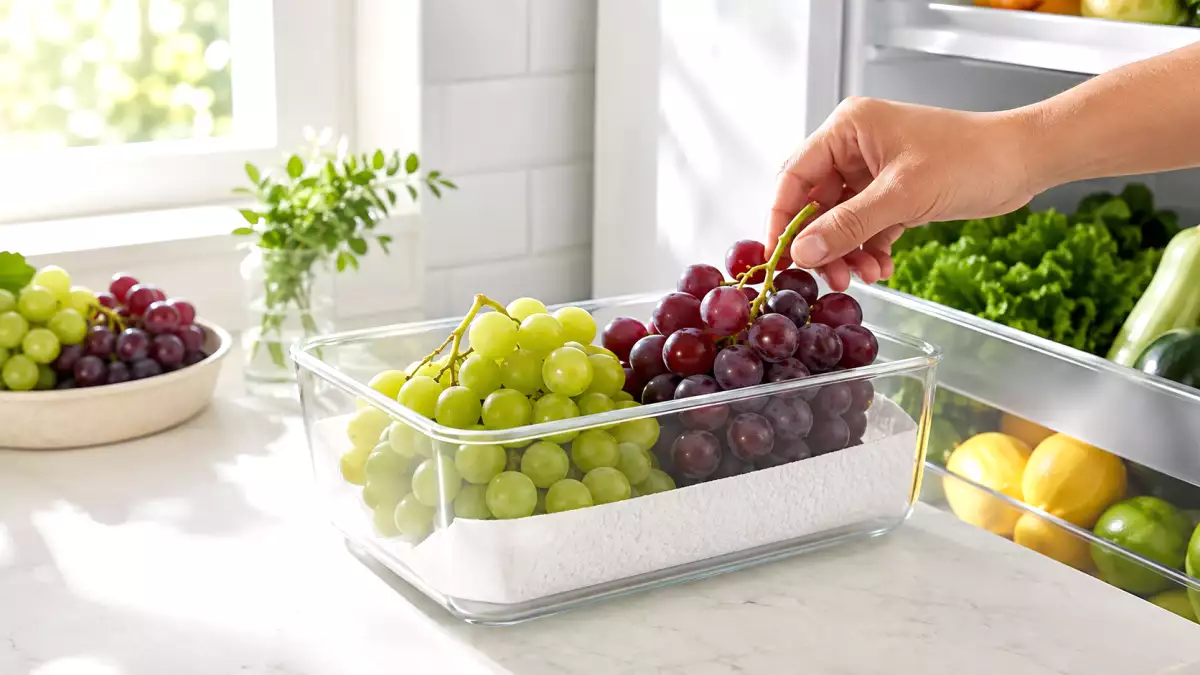
You've just bought a nice bunch of grapes, brought it home feeling satisfied, and are already imagining sweet, fresh, and crisp grapes for breakfast, a snack, or after dinner. But then the classic little fridge drama strikes: after two days, some grapes turn mushy, moisture appears in the bag, and the bunch no longer looks as inviting as it did at the produce stand.
Often, it’s not about the quality of the grapes, but how they’re stored right after you get home from the grocery store. The simple step that can make all the difference is this: immediately remove any damaged or overripe grapes and store the bunch in a dry place, without washing it first. It may seem like a small detail, but it helps slow down mold, moisture, and the loss of crispness.
Basically, grapes need three things: cold, dry conditions, and air. If you treat them this way from the very beginning, they can last several days longer—even up to a week—especially when they’ve been purchased fresh and in good condition.
You might also be interested in:
 Turn grapes into a chilled, irresistible treat with one simple kitchen trick everyone should try
Frozen grapes, a healthy and refreshing summer snack: find out how to freeze grapes the right way, how long to leave them in the freezer, how to serve them, and why they’re the perfect summer trick for when you’re craving something sweet and cool.
What to do as soon as you get home
Why is this so important? A damaged grape releases moisture and sugars, creating the perfect environment for the others to spoil as well. It’s a bit like leaving a bruised apple in a basket: silently, but with great determination, it ruins the rest.
The right thing to do, then, is to separate the healthy grapes from the damaged ones. There’s no need to remove all the grapes from the stem; in fact, whenever possible, it’s better to leave the clusters whole or in small sprigs. The stem helps maintain a certain structure and reduces handling, which can crush the grapes and accelerate spoilage.
Should you wash grapes before putting them in the fridge?
The natural whitish coating often seen on the grapes, called bloom, isn’t dirt—it’s the fruit’s natural protection. Removing it too early can make the grapes more delicate and less durable during storage.
When you’re ready to eat them, rinse them under cool running water and pat them dry gently. If you prefer to wash a portion in advance, dry them very thoroughly with paper towels and consume them shortly thereafter. The golden rule remains: store them dry in the fridge, wash them just before serving.
Where should you store grapes to make them last longer?
However, avoid sealing them in a completely airtight container while they’re still in their moist packaging. Ideally, use a clean container, a micro-perforated bag, or the original tray if it allows for minimal airflow. The goal is simple: limit condensation without letting the grapes dry out too much.
If there’s a lot of moisture in the tray, you can place a sheet of dry paper towel at the bottom and replace it when it gets wet. It’s a small step, but very useful for absorbing excess moisture and keeping the grapes crispier.
How to keep grapes crisp: mistakes to avoid
Grapes may seem hardy, but they’re actually quite sensitive to moisture, bumps, and sudden temperature changes. To store them better, avoid these common mistakes:
- Washing them right after you buy them, because water promotes mold and causes the grapes to become mushy.
- Leaving them in a closed, damp bag, especially if it’s a plastic bag without holes.
- Storing them near strongly scented foods, because the refrigerator can transfer unpleasant odors.
- Don’t crush them under other foods, because damaged grapes spoil more quickly.
- Ignoring spoiled grapes, as they can ruin the entire bunch.
The trick isn’t to overcomplicate things, but to do less and do it better: a quick check, no pre-washing, an airy container, and the refrigerator. This way, the grapes stay firmer and more enjoyable to eat.
How long do grapes last in the refrigerator?
Of course, the initial condition matters a great deal: a bunch that’s already very ripe will last less time than one with firm berries and a still-green stem. When you’re grocery shopping, take a good look at the color, firmness, and presence of soft berries in the package. A good purchase is half the battle when it comes to storage.
How can you tell if the grapes are no longer good?
It’s best not to eat them if they show signs of mold, have a fermented odor, have slimy grapes, or have a very soft texture. A few shriveled grapes aren’t necessarily a problem, but if the bunch looks dull and damp, it’s time to sort through them carefully.
Is it better to store grapes on the stem or to remove the berries from the stem?
If, on the other hand, you want to prepare a snack to take to the office, school, or the gym, you can wash a portion, dry it carefully, and store it in a small container. In this case, however, treat it as something to be eaten quickly, not a solution for storing it for several days.
A practical tip: divide the bunch into two parts right away. One part stays whole and dry in the fridge to last longer, while the other becomes the portion ready to be washed and eaten shortly thereafter.
The simple anti-waste method
It’s also a useful habit for reducing food waste: fewer grapes thrown away, more fresh snacks, and more satisfaction every time you open the fridge. The next time you buy grapes, don’t just leave them in the fridge and hope for the best. Take sixty seconds to prepare them : the grapes will thank you, and so will your wallet.
 Daniele Mainieri
Comments